Abai Institute / Qazaq Art / NATIONAL DISHES

NATIONAL DISHES

NATIONAL DISHES
Kazakh dishes are a vivid reflection of the nomadic lifestyle, harmony with nature, and the rich history of the people, formed over centuries.

National Dishes

Kazakh dishes are a vivid reflection of the nomadic lifestyle, harmony with nature, and the rich history of the people, formed over centuries. This is a unique value, embodying the genetic memory and cultural identity of the nation. Today, our national cuisine is not only the pride of Kazakhstan but also sparks particular interest among foreign guests and gourmets, becoming a cultural brand recognized at the international level.


Meat Dishes: The Foundation of Nomadic Civilization +

Meat Dishes: The Foundation of Nomadic Civilization

It is impossible to imagine Kazakh national cuisine without meat dishes; it is from these products that the majority of the national menu consists. In the traditions of nomads, formed over centuries, meat dishes played a special strategic and cultural role.

The main reason for this feature is animal husbandry, which was the primary source of subsistence for our ancestors. Meat of the "four types of livestock" became not only nutritious food but also the main treat, adapted to the nomadic way of life, suitable for long-term storage, and demonstrating the generosity of the hospitable Kazakh people.

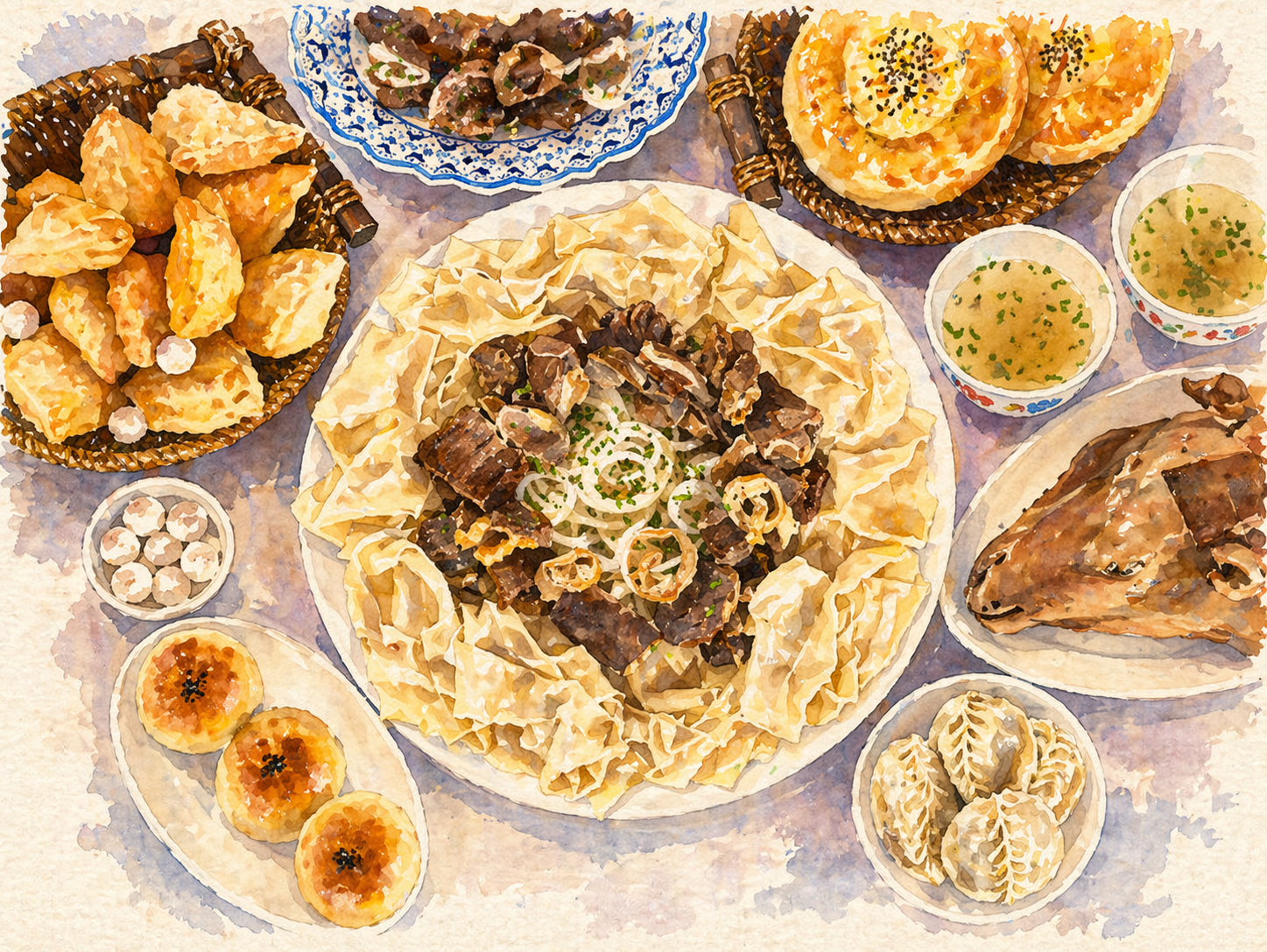
Asylğan et (popularly also called beşbarmaq) – is the most famous and revered dish, which has become a symbol of Kazakh cuisine. This is not just food; it emphasizes national identity as the "main dish of the Kazakhs."

  • The art of meat preparation: For the preparation of the dish, horse meat, mutton, or beef is traditionally chosen. The meat is first divided into large pieces and placed in a large amount of water. During the boiling process, salt, pepper, and aromatic spices are added, after which it simmers over low heat. When the meat is ready, it is separated from the bones and finely sliced.
  • Secrets of the dough: An important part of the dish is the rolled-out dough (jaima). It is kneaded from flour, water, salt, and sometimes eggs to a dense consistency. Then the dough is rolled out very thinly and cut into small rectangles. These pieces of dough are boiled in a fatty and rich meat broth, which gives them a special taste and softness.
  • The culture of serving: The finished dough is laid out on a wide platter (tabaq), and the meat is piled on top of it. To give the dish a beautiful appearance and improve the taste, it is topped with onions simmered in broth (tūzdyq), fresh herbs, and spices.

Qazy (horse meat sausage) – is the juiciest and most valuable delicacy of Kazakh cuisine, prepared from horse meat. The technology of creating this dish is considered the pinnacle of the nomads' art of meat preservation; it is distinguished by its particular richness and nutritional value.

  • Selection and processing: To prepare qazy, the ribs and the loin part of the horse are used. Whole and cut ribs are selected with great care, and the cartilage is removed from their inner side. When masters slice the meat on the ribs, they attach special importance to preserving the integrity of the meat and fat, maintaining their balance.
  • Preparation: The prepared ribs are salted and kept in a cool place for 2–3 days. After the salt is completely absorbed, the meat is washed in cold water and tightly stuffed into a specially prepared casing (intestine). During the filling process, an even distribution of meat and fat is ensured, after which both ends are firmly tied.
  • Drying and smoking: To preserve the semi-circular shape of the qazy, it is hung on a pole or rope for 8–10 hours for airing. After this, it is kept in smoke (smoked) for 13–27 hours. This process not only enhances the aroma of the dish but also allows it to be stored for a long time without spoiling.
  • Serving: Qazy is boiled over low heat for 2–2.5 hours. It can be consumed both hot and as a cold appetizer. This treat, which graces the honorable table for guests, is usually served along with boiled meat (asylğan et).

Qarta (rectum delicacy) – is one of the most exquisite and honorable parts of horse meat. It is a true delicacy of Kazakh cuisine, the preparation of which requires great precision and adherence to a specific technology.

  • Preparation and salting: The process begins with the complete cleaning of the qarta and its thorough, multiple rinsing in cold water. The cleaned qarta is salted with fine salt and kept in a cool place for 1–2 days for the salt to be fully absorbed.
  • The art of drying and smoking: After salting, both ends of the qarta are firmly tied with thread and hung for drying in specially designated areas. Then it is smoked in smoke for 12–18 hours. This process gives the product a characteristic aroma and a golden hue. Upon completion of smoking, the qarta is dried in the open air for another 2–3 days.
  • Boiling and serving: Before boiling, the qarta is rinsed with cold water and placed in boiling water. To preserve the tenderness of the dish, it should simmer over low heat. The finished qarta is sliced into rings with a sharp knife and beautifully arranged on a flat dish. For aesthetics and flavor enhancement, it is topped with fresh onions and aromatic dill.

Jal (neck fat delicacy) – is a particularly nutritious and very soft part of horse meat, cut from the cervical vertebra. This dish is considered one of the most honorable treats in Kazakh cuisine.

  • The art of curing: After butchering the carcass and skinning, the jal is cut from the cervical vertebrae whole. Its thick part is notched to a depth of two fingers, and the thin part to three fingers, after which it is sprinkled with fine salt. Jal, prepared during soğym (the winter slaughter period), is hung in juniper smoke for 1–2 hours and carefully cured. This method allows the product to remain fresh for a long time without spoiling its taste.
  • An honorable gift: Jal is an obligatory status part of the meat that is placed in bas tabaq (the main platter), qos tabaq, or syı tabaq, intended for the most respected guests. It does not lose its unique taste qualities whether hot or chilled.
  • Modern application: Today, jal, along with qazy, qarta, and şūjyq, has become one of the main delicacies adorning the festive table. Thanks to its tender structure and nutritional value, it is a rare treat that elevates the level of any menu.

Jaia – is one of the most select and especially honorable parts of horse meat. It is a true delicacy, which is cut from the hip part (rump) of the horse and is highly valued for its nutritional value and taste qualities.

  • Mastery of preparation: After butchering the carcass and skinning, the jaia is cut in a single piece. During the processing, the meat is sliced into layers approximately 10 cm thick, forming pieces weighing from 0.5 to 5 kg. This allows the meat to boil evenly and facilitates the deep penetration of salt.
  • Preparation and smoking: To reveal the flavor of the sliced jaia, it is sprinkled with salt and left to marinate for 1–2 hours. After this, the meat is hung in smoke and smoked in a special way for 14–18 hours. The smoking process gives the jaia a characteristic brownish tint and a unique aroma.
  • Place on the dastarqan: Jaia is a table decoration intended for the most respected guests. Usually, it is added to boiled meat (beşbarmaq) and served in such platters as bas tabaq, qos tabaq, or syı tabaq together with qazy and qarta.

Bas (head) – is a traditional dish in Kazakh cuisine with a special status. This is a treat with a unique serving ritual, usually prepared for major holidays, solemn feasts (as-toı), or for welcoming the most respected guests.

  • Preparation and cleaning: Bas is prepared primarily from a sheep's head, less often from horse or beef. Immediately after slaughter, the head is separated, and its internal cavities are thoroughly cleaned. The skin and bone base are cleared of hair (singed), after which it is repeatedly and thoroughly rinsed with water.
  • Boiling technology: The head is placed in a large cauldron, covered with cold water, and brought to a boil. After removing the first foam, salt and necessary spices are added. To ensure all parts of the head, including the brain and tongue, become soft and tasty, it must be simmered over low heat for 4–6 hours.
  • Serving and significance: The boiled head is laid out on a separate platter and drizzled with tūzdyq (a sauce made of onions and herbs). According to Kazakh tradition, the head is always placed at the head of the table and is presented to the eldest or most guest of honor. The person receiving the head carves it and distributes it among those present in a strict order (ear, palate, eye fat, etc.).

Curing meat (sürleu) – is an ancient method that not only extends the shelf life of meat but also gives it a special aroma and unique taste. This process transforms the product into a true delicacy while preserving its natural properties.

  • Selection and preparation of meat: For curing, the highest quality, fatty, and juicy parts of livestock slaughtered for soğym are mainly selected. Immediately after slaughter, the meat is cleared of excess membranes and butchered into pieces of a convenient size.
  • Salting and conditioning: At this stage, salt and necessary spices are thoroughly rubbed into each layer of meat. Salt not only adds flavor but also, acting as a natural preservative, regulates the internal moisture of the meat. The salted meat is placed in special containers and kept in a cool place for several days. During this time, the meat is completely saturated with salt and "matures."
  • Drying and storage: The salted meat is hung to dry in an open, well-ventilated dry place. The drying process can last several days until excess moisture is completely removed. In some cases, the meat is additionally subjected to smoking in the smoke of special wood species (arşa (juniper), birch).

Jaubüırek – is a national dish that is prepared very quickly from fresh products immediately after the slaughter of livestock; it is highly valued among shepherds and travelers. This dish is distinguished by its speed of preparation and exceptional nutritional value.

  • Preparation method: Immediately after butchering the carcass, the softest parts are selected – the liver and tail fat. The liver and fat are sliced into thin layers and alternately skewered (on a spit or special wooden skewers). Thus, when roasting over a fire, the tail fat melts, softening the liver and giving it a special flavor.
  • Flavor combination: The meat is sprinkled with fine salt, pepper, and spices to taste, then roasted over the embers of an open fire. The combination of liver and fat promotes rapid digestion of the dish and does not create heaviness for the heart. Serving the finished dish with onion rings and garlic makes the taste even more intense.
  • Cultural significance: Jaubüırek is prepared as the first treat during slaughter, not only in field conditions but also at home. It can be served either before the main meat dish or alongside it. Today, this dish is considered an honorable treat that enriches the menu of the national dastarqan and is especially valued at festive feasts.

Quırdāq – is one of the most famous dishes of the Kazakh people, which since ancient times has been prepared from fresh meat and offal of freshly slaughtered livestock. This dish is characterized by its speed of preparation, high nutritional value, and unique taste.

  • Composition and preparation: The main feature of quırdāq lies in the method of its preparation. It is prepared from fresh meat, as well as parts such as the heart, liver, lungs, kidneys, and tripe. First, tail fat or internal fat is melted in a qazan, then meat and offal are added alternately, gently frying them. To fully reveal the flavor of the dish, a large amount of onions, salt, and pepper are added, and later – potatoes and various spices.
  • Types and features: In Kazakh cuisine, there are several types of quırdāq:
    1. Jaña quırdāq (Fresh): A nutritious dish prepared from fresh products immediately after slaughter.
    2. Qara quırdāq (Black): A type of quırdāq prepared primarily from lungs and liver with the addition of a large amount of onions; through long frying, the dish acquires a dark color and a very rich flavor.
  • Cultural significance: Quırdāq is an integral part of any celebration (toı-tomalaq), memorial dinner (as-jıyn), and hospitable şanyraq. It is considered one of the most filling dishes that give a person strength, especially on cold winter days. This is an honorable treat served as "soğym basy" (the start of winter meat preparation) or "şüıınşi" (good news), bringing relatives and loved ones together at the table.

Sırne – is an exquisite dish that occupies a special place in the hospitality culture of the Kazakh people; it is prepared from young lamb meat using specific technologies. This treat is highly valued for its softness, easy digestibility, and exceptionally delicate aroma.

  • Importance of meat selection: The name of the dish is directly related to its main raw material. Sırne is usually prepared from the meat of a young lamb or yearling whose tendons have not yet toughened. The meat is separated from the bones and divided into large pieces, while the bones (shanks and vertebrae) are chopped and placed in the qazan along with the meat.
  • Preparation technology: The main feature of sırne lies in its simmering method. First, the meat is lightly seared in its own juice, after which onions, salt, pepper, and various aromatic spices are added. The qazan is tightly covered with a lid to prevent air from escaping, and the dish simmers for a long time without the addition of water, in its own juice and steam. This method guarantees that the meat will become so soft that it literally melts in your mouth.
  • Flavor combination: Optionally, vegetables such as potatoes and carrots can be added to sırne. This increases the nutritional value of the dish and makes its taste even richer and more intense.
Flour Dishes: The Beauty and Blessing of the Dastarqan +

Flour Dishes: The Beauty and Blessing of the Dastarqan

In the traditional Kazakh menu, dishes made from flour occupy a special place. They are not only a symbol of satiety and prosperity but also an integral part of a centuries-old culture of hospitality.

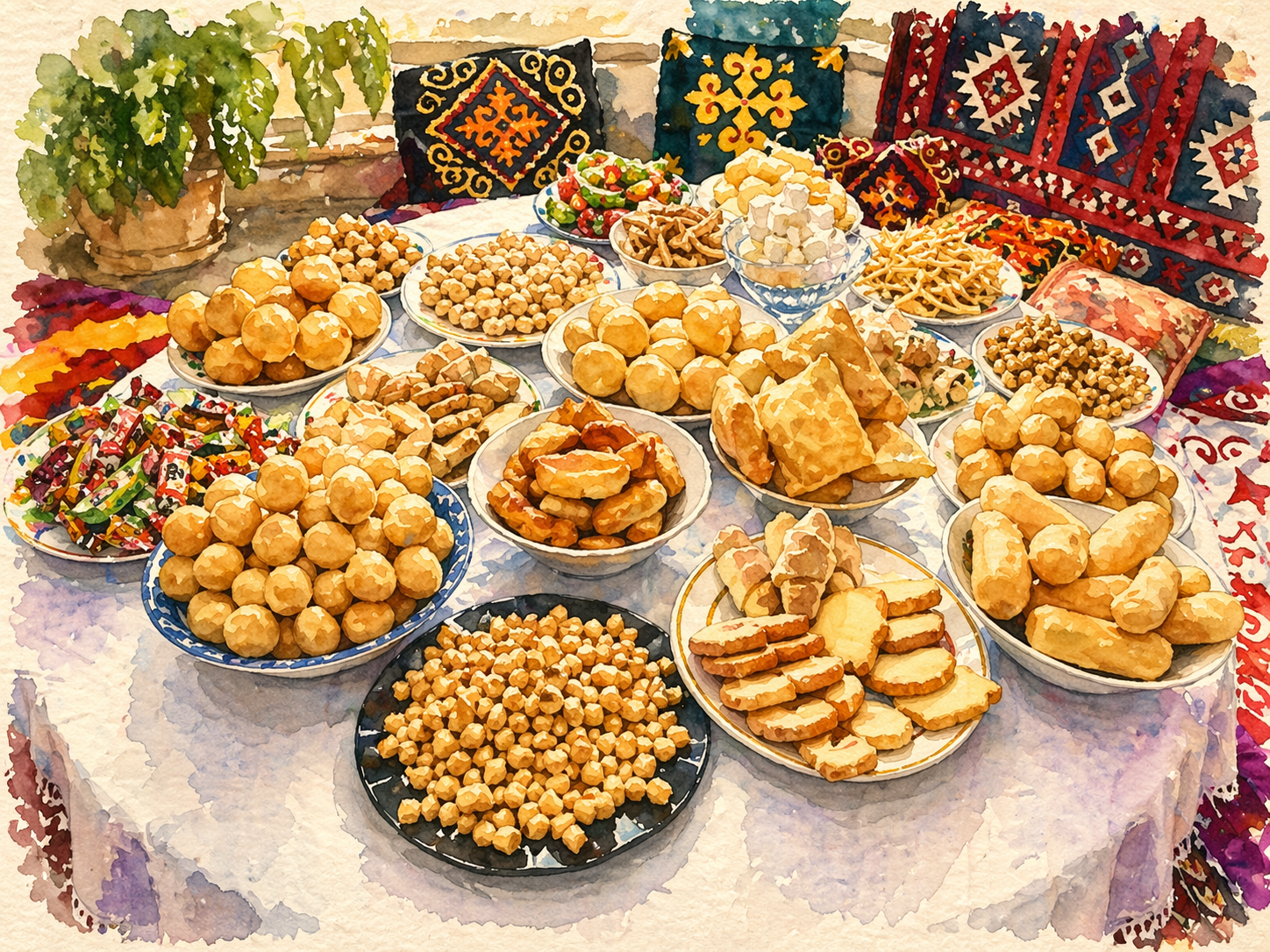
Baursaq – is one of the most famous and beloved national dishes of the Kazakh people, representing delicious dough deep-fried in oil. For a Kazakh child, baursaq is not just bread cooked in oil; it is a symbol of home comfort and well-being, a sign of good intentions, a bright image of hospitality, good mood, and abundance. No holiday, celebration, or daily tea party is complete without baursaq.

  • Preparation and dough composition: The taste of baursaq directly depends on the kneading of the dough. Its main composition includes premium flour, water or milk, yeast, eggs, salt, and sugar. To give a special flavor, airan (fermented milk drink) or sour cream is sometimes added instead of milk. The dough can be either yeast-based (soft and fluffy) or unleavened (dense and crispy).
  • Preparation technology: After the mixed dough rises, it is rolled out and, depending on regional traditions, cut into circles or small quadrangles. Then the baursaqs are fried in a qazan in a large amount of hot oil. Fried on both sides to a golden color, baursaqs turn out crispy on the outside and soft, like cotton, on the inside.
  • Cultural significance and serving: Baursaq is the first treat served to every guest who enters a Kazakh home. It is served with tea along with honey, sour cream, or the main meat dish. Existing folk well-wishes, such as "be sweet, like a baursaq" or "be strong and prosperous, like a baursaq," emphasize the revered place of this dish in the national identity.

Taba nan (pan bread) – is one of the most revered and nutritious types of bread in Kazakh cuisine. As the name suggests, this bread is baked between two pans (taba), buried in the hot ashes of a campfire or simmering in the heat of a furnace. Its indescribable aroma and taste remind every Kazakh of the warmth of their native aul (village), the endless steppe, and their mother's hands.

  • Nutritional value and dough kneading: The quality of taba nan directly depends on the purity of the flour and the mastery of the kneading. If the dough is kneaded not with water, but with warm milk or thick airan (fermented milk drink), adding a little butter or horse fat, the taste of the bread will be truly exceptional. The dough can be either yeast-based or unleavened, but it must be dense and homogeneous. The finished dough is rolled out to the size of the pan, and patterns are applied to the top or punctures are made with a fork.
  • The secret of baking over fire: The main feature of taba nan lies in the method of its preparation. The dough, placed between two preheated pans, is put into red-hot coals or the heat of a furnace. Slowly simmering on the coals, the bread becomes covered with a golden crispy crust, while the inside remains soft as cotton and very aromatic. Real taba nan preserves the natural warmth of the fire and a light scent of smoke, which favorably distinguishes it from ordinary store-bought bread.
  • The blessing of the dastarqan: Taba nan is a symbol of prosperity and abundance. Serving hot bread to the table, spread with fresh butter or sour cream, is the ultimate delight of the Kazakh dastarqan. This bread is considered the most filling and sacred dish both when welcoming guests and on a long journey.

Salma – is one of the oldest and most widely distributed hot dishes in Kazakh cuisine. This dish represents a magnificent combination of a rich broth made from simmered meat and hand-cut noodles (salma). It is not only a filling meal but also a blessed dish that gives strength and warms on cold days.

  • Nutritional value of broth and meat: The base of salma is a fatty and nutritious broth made from horse meat, mutton, or beef. The meat is cut into large pieces, placed in a qazan, and simmered for a long time over low heat after the foam is removed. Thanks to this method, the flavor of the broth becomes rich and its color transparent. The finished meat is removed, preparing the broth for the addition of the noodles.
  • Secrets of homemade noodles: As the name suggests, the main feature of the dish lies in the rolling and "placing" (salynuynda) of the dough. Dense dough, mixed from flour, water, salt, and eggs, is left to "rest" to become elastic. Then it is rolled out very thinly and cut with a knife into narrow strips or small quadrangles. These hand-cut noodles are boiled in the boiling broth, where they soak up the meat flavor and become tender.
  • Serving at the dastarqan: Salma is a thick, nutritious, and very filling dish. When ready, it is poured along with the broth into large bowls (kese) or deep dishes, topped with pepper, onions, or fresh herbs. It is one of the most warming and revered dishes, which is necessarily placed before a traveler or served during harsh winter days.

Şelpek – is a traditional type of bread, deeply connected with the spiritual identity of the Kazakh people and considered sacred. It is not just food, but a symbol of reverence for the spirits of ancestors, good intentions, and prayers. The tradition of "ııs şyğaru" (spreading the smell of fried oil) is closely linked to the baking of şelpeks, which is why they are prepared in Kazakh homes with special respect.

  • Kneading and dough shape: The dough for şelpeks is kneaded from wheat flour with water or milk. Eggs, a little salt, and sugar are added, after which it is allowed to "rest" well. The main feature of şelpek is its perfectly round and very thin shape. There is a belief that the round shape represents the sun or the circle of life.
  • The secret of frying in oil: Şelpek is lowered into a large amount of red-hot oil (vegetable oil or animal fat) and fried very quickly. The thin dough instantly puffs up, and as soon as both sides acquire a golden hue, it is removed. Crispy on the outside and soft, oil-soaked on the inside, şelpek fills the room with an aroma that for Kazakhs is a sign of blessing.
  • Cultural and religious significance: Şelpeks are most often prepared in the number of seven (jetı şelpek), sometimes nine. They are necessarily placed on the dastarqan on Fridays, during Aıt holidays, or during memorial dinners. People believe that "angels fly into the house where şelpeks are fried," and consider this dish a harbinger of goodness. This bread, which pairs perfectly with both tea and main dishes, is one of the most sacred elements of the national menu.

Qattama – is one of the most delicious and labor-intensive types of bread in Kazakh cuisine. This multi-layered bread, fried in oil, is distinguished by its crispy texture, nutritional value, and a special method of preparation. Qattama is considered an honorable dish, served to the most esteemed guests and adorning the festive dastarqan.

  • Secrets of multi-layering: The main feature of qattama lies in the technology of rolling the dough. Unleavened or yeast dough is rolled out very thinly, after which its surface is generously spread with butter, sour cream, or rendered fat. Then the dough is tightly rolled into a log and rolled out again into a circular shape. Thanks to the multiple repetitions of this process, many thin layers are formed inside the bread.
  • Preparation on a pan: Qattama is usually baked on a red-hot pan (taba) with the addition of a small amount of oil. During the frying process, the layers of dough separate, becoming crispy on the outside and tender on the inside. The golden crust and the aroma of melted butter make this bread incredibly appetizing.
  • Serving to the table: Qattama is served hot with tea. It is customary to break it into pieces by hand, emphasizing its layered structure. This bread pairs perfectly with thick cream (qaımaq), honey, or jam. Qattama is a symbol of prosperity, embodying the hospitality and culinary mastery of the hostess.
Dairy Dishes: The Decoration of a Rich Dastarqan and the Key to Health +

Dairy Dishes: The Decoration of a Rich Dastarqan and the Key to Health

In the traditional menu of the Kazakh people, a special place is occupied by dairy dishes, which are revered as "aq" (white/sacred). For a nomadic people whose life relied on the four types of livestock, dairy products were not only nutritious food but also a guarantee of health, as well as a symbol of abundance.
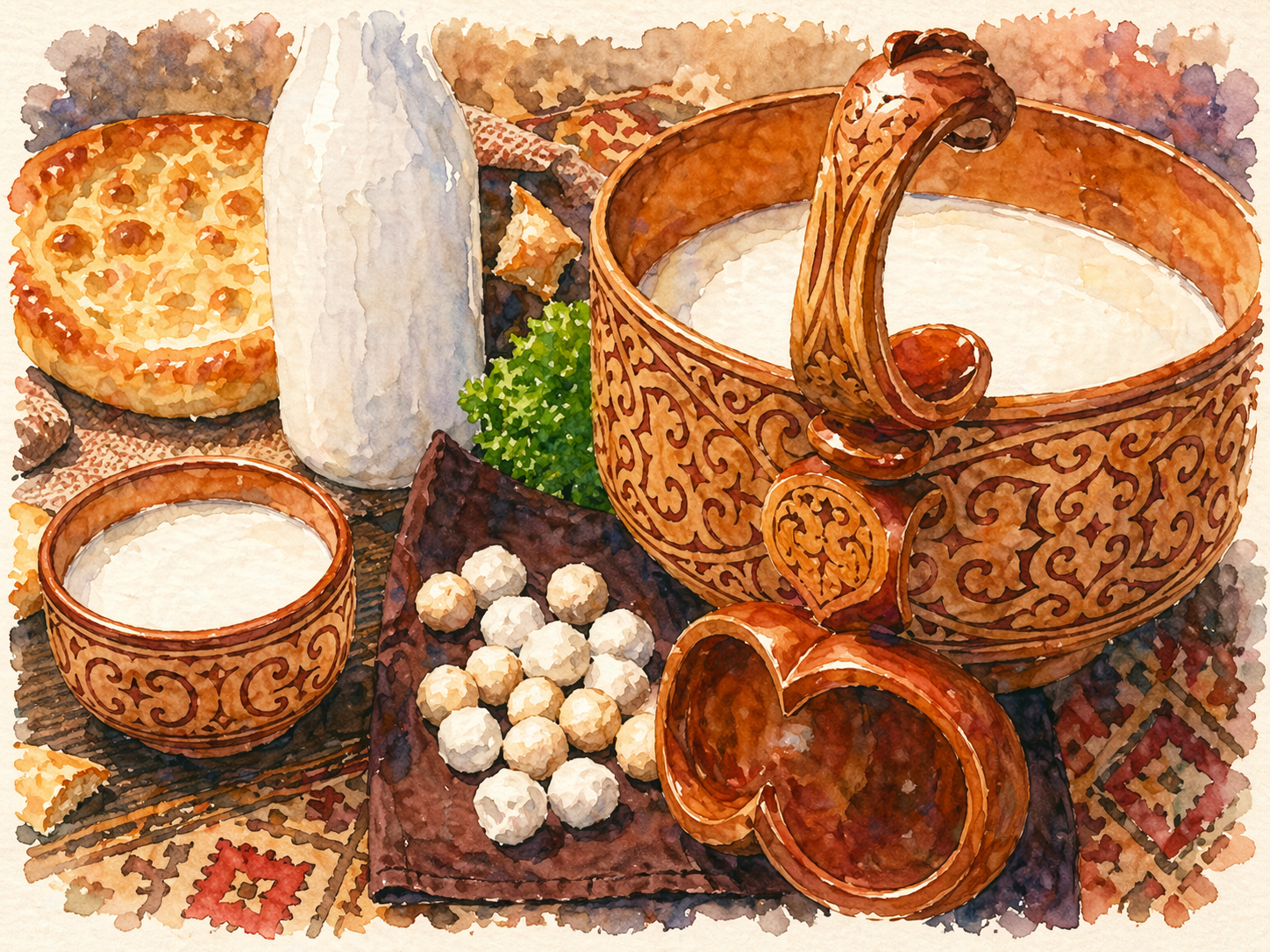
Airan – is the blessing of the Kazakh dastarqan, a sacred "white treat" considered a drink that quenches thirst and strengthens health. This beverage, fermented from the milk of the four types of livestock, has been one of the most revered products in the menu of not only the Kazakh people but the entire Turkic world since ancient times.

  • Art and method of preparation: The quality of airan directly depends on the nutritional value of the milk and the fermentation method. First, freshly milked milk is boiled, then cooled to a warm state. After that, "ūııtqy" (the starter from a previous batch of airan or a special leaven) is added, and it is wrapped warmly. After a few hours, the milk curdles and turns into a thick, soft-as-velvet airan with a pleasant sour taste. Its thickness and flavor change depending on the fat content of the milk and the fermentation time.

  • Medicinal properties: Our people highly valued the properties of airan for improving digestion and strengthening immunity. It is a natural medicine that regulates stomach function and cleanses the body of harmful substances. Especially in intense heat, it is an indispensable drink that quenches thirst, refreshes the body, and relieves fatigue.

  • Place on the dastarqan: Airan is the first treat offered to any traveler who stops by a Kazakh home. It is drunk at the daily tea table, after heavy meat dishes to improve digestion, or simply to quench thirst. Also, airan is considered the main base of the "aq" (white foods), as other nutritious products such as qūrt, ırımşık, and süzbe are made from it.

Qatyq – is a very thick and nutritious national dish prepared from the very essence of milk. It is valued for its exceptional taste qualities and medicinal properties for the body.

  • Preparation: Boiled milk (cow or sheep) is evaporated over low heat to reduce its water content. After this, a special starter is added, and it is left to ferment in a warm place. The result is a product that is much thicker than airan and possesses a soft, velvety taste.

  • Benefits and application: Thanks to its rich content of beneficial bacteria, qatyq improves digestion and strengthens health. Qatyq can be consumed as a standalone dish, added to meat dishes, or eaten with hot bread.

Qoıyrtpaq – is a nutritious and thirst-quenching national dish prepared from a mixture of milk and sorpa (broth) or another beverage. It is valued for its unusual taste combination and lightness for the body.

  • Preparation: The main feature of qoıyrtpaq lies in mixing dairy products with meat broth or other drinks. After the meat is cooked, milk or qatyq is added to its fatty broth, enriching the flavor with spices. The milk softens the taste of the meat, making the dish very nutritious and aromatic.

  • Types and significance: Qoıyrtpaq can be thick (containing meat) or liquid (in the form of broth). Also, during travels or while grazing livestock, it was prepared by mixing airan with qūmys (mare's milk) or water.

Şalap – is one of the most famous Kazakh drinks, which instantly quenches thirst and refreshes the body. It is a very light-on-the-system and healing treat prepared from a combination of airan and water.

  • Preparation: To prepare şalap, thick airan or qatyq is mixed with clean spring water (sometimes with sparkling water). To ensure the taste of the drink is not too sour, the ratio of water to airan is carefully balanced. Sometimes, a little salt or fresh herbs are added to give it an aroma and a special flavor.

  • Significance: Şalap is an indispensable drink, especially in intense heat. It improves digestion and refreshes the body after consuming heavy meat dishes.

Qūmys (mare's milk) – is the most sacred and healing drink of the Kazakh people, prepared by the careful fermentation of mare's milk. It is not just a drink, but a symbol of strength, health, and hospitality.

  • The art of preparation: Qūmys is prepared from freshly milked mare's milk (saumal). It is brought to the desired condition in special vessels (most often in an oak churn – kübı or in a leather skin – torsyq) by adding a special starter and beating it for a long time using a pıspek (churn staff). During the beating process, the milk ferments, acquiring a characteristic pleasant sour taste and aroma.

  • Healing property: Qūmys is a natural medicinal drink rich in vitamins and probiotics. It helps with lung diseases, improves digestion, calms the nervous system, and boosts immunity.

Şūbat – is a fatty and very nutritious medicinal drink prepared from camel milk. This "white treat," which is thicker than qūmys, is a true healing remedy in the scorching steppe.

  • Preparation: A starter is added to camel milk, and the drink is brought to readiness through mixing (shaking). Unlike qūmys, it does not require long beating with a churn staff, but reaches the desired condition through natural fermentation.

  • Benefits: This vitamin-rich drink serves as medicine for the gastrointestinal tract and helps with lung diseases. Due to its high nutritional value, it quickly provides strength and satisfies hunger.

Balqaımaq – is the most exquisite and delicate dessert of Kazakh cuisine. It is a melt-in-the-mouth sweet delicacy born from the harmony of dairy cream and honey (or sugar).

  • Preparation: Freshly collected raw cream is boiled over low heat until oil appears on the surface. A little flour, honey, or sugar is added, and it is stirred until a homogeneous thick mass is obtained. Properly prepared balqaımaq acquires a yellowish tint and exudes a magnificent aroma.

  • Application: Balqaımaq is an honorable dish of the tea dastarqan. Eating it together with hot taba nan (pan bread) or baursaqs is a true delight. This dish is considered not only a sweet dessert but also a very nutritious, strength-giving food.

Cream (Kılegeı) – is the most select, fatty, and delicate part that gathers on the surface of freshly milked milk. It is one of the purest and most nutritious dairy products on the Kazakh dastarqan.

  • Preparation: Freshly milked raw milk is left to settle in a warm place, or boiled milk is cooled, after which the thick layer gathered on the surface (cream/qaımaq) is removed. Depending on the density and fat content, it can be in the form of liquid cream or thick qaımaq.

  • Application: Cream is the main ingredient that gives flavor to tea. It is also an indispensable product for preparing various desserts, balqaımaq, and increasing the nutritional value of dishes.

Qaımaq – is the most nutritious and valuable essence that gathers on the surface of milk. This noble "white treat" brings prosperity to the Kazakh dastarqan and manifoldly enhances the taste of food.

  • Preparation: Boiled milk is placed in a cool place to wait until a layer of fat settles on the surface. When the milk has completely cooled and reached the desired condition, the thick qaımaq is carefully removed with a special spoon. Its fat content and taste directly depend on the nutritional value of the milk and the settling time.

  • Application: Qaımaq is an indispensable treat that transforms the taste of tea and perfectly complements taba nan (pan bread) and baursaqs. Additionally, it is a true natural product eaten by mixing with talqan or used to increase the nutritional value of various dishes.

Qūrt – is a unique product formed in the nomadic life of the Kazakh people, convenient for long-term storage and very nutritious. It is a valuable item that gathers all the beneficial properties of milk, which is rightfully called the "natural preservative of the steppe."

  • Preparation: Airan (or qatyq), fermented from boiled milk, is poured into a special canvas bag to separate it from the whey. The resulting thick mass (süzbe) is transferred to a qazan and boiled, after which qūrt of various shapes (round, oblong) is molded by hand and dried by placing it on special racks – öre. Qūrt, once completely hardened and dried under the sun's rays and the influence of natural wind, does not spoil for many years.

  • Significance and benefits: Qūrt is a source of protein and calcium. It strengthens teeth, improves digestion, and is an indispensable food on the road, as it perfectly quenches both thirst and hunger. Salty qūrt saves one from thirst, while unsalted or sweet qūrt is valued as a dessert.

Süzbe – is a nutritious dish prepared by separating the whey from fermented milk products (airan, qatyq). It is both the base for qūrt and a standalone nutritious delicacy.

  • Preparation: Fermented airan or qatyq is poured into a canvas bag and hung high. After the liquid whey drains away, a thick, soft, and pleasantly sour mass remains inside the bag – süzbe. According to the traditional method, no acids are added to it; the product is obtained through a natural fermentation process.

  • Benefits and application: Süzbe is very rich in protein and calcium. It can be eaten in its pure form, added to tea, or, by salting and drying it, made into qūrt. Also, if fresh süzbe is served mixed with cream, it turns into a magnificent treat that adorns the dastarqan.

Uyz (colostrum) – is a very thick, yellowish, and extremely nutritious milk obtained in the first days after livestock gives birth. Our people revere colostrum as a symbol of abundance and a special delicacy that possesses healing properties for the health of both the young animals and humans.

  • Preparation and types: Colostrum is milked immediately after the offspring is born and is boiled in a qazan. It comes in two types: "soft colostrum" (jūmsaq uyz), which curdles during boiling and becomes similar to porridge, and "hardened colostrum" (qatyrğan uyz), which thickens and solidifies after boiling. Hardened colostrum is sliced like bread and served to guests as the most honorable treat.

  • Healing properties: Uyz is a true source of natural immunity. It is very high in proteins, vitamins, and protective cells. It strengthens the body and increases the ability to resist diseases.

İrımşık (cheese curd) – is a high-calorie national dish that embodies all the value and benefits of milk. In Kazakh cuisine, there are two main types: white irımşık (fresh) and red irımşık (dried).

  • Preparation: Fresh milk is heated and fermented by adding a starter or rennet (māıek). After the milk curdles and the whey separates, it is boiled for a long time over low heat. If boiled until the whey completely evaporates, the product acquires a red tint and a sweetish taste, turning into "red irımşık." It is then strained and dried in the sun.

  • Benefits and application: İrımşık is an inexhaustible source of calcium and protein, an indispensable product for strengthening teeth and bones. It can be eaten with tea, mixed with butter, or added to talqan. Due to its long shelf life, this delicacy was the primary food for Kazakh warriors and travelers during campaigns and journeys.

Sary mai (butter) – is a traditional dish obtained from cow, sheep, or goat milk. It is most often prepared in a saba (a leather vessel for qūmys made from large cattle hide), in a torsyq (leather flask), or in a wooden churn (kübı). Raw milk is poured into the vessel to make airan or qatyq; sometimes a mixture of curdled and raw milk is used. When the vessel is full and the starter is beaten (pısıp), the butter separates.

  • Processing and storage: The butter is laid out on two or three layers of gauze and squeezed by hand. In the past, the butter was "cleaned with a knife" (qylşyqtaıtyn) to remove any hairs or impurities. The strained butter is placed in cold water to wash away buttermilk residues, and after cooling, it is laid out in a flat dish, kneaded by hand, and patted with palms to squeeze out excess water. Then the butter is salted and transferred to a container. Sary mai is stored in a sheep or goat stomach (qaryn) or in the cecum (büıen).
Grain Crops: The Strength of Steppe Cuisine +

Grain Crops: The Strength of Steppe Cuisine

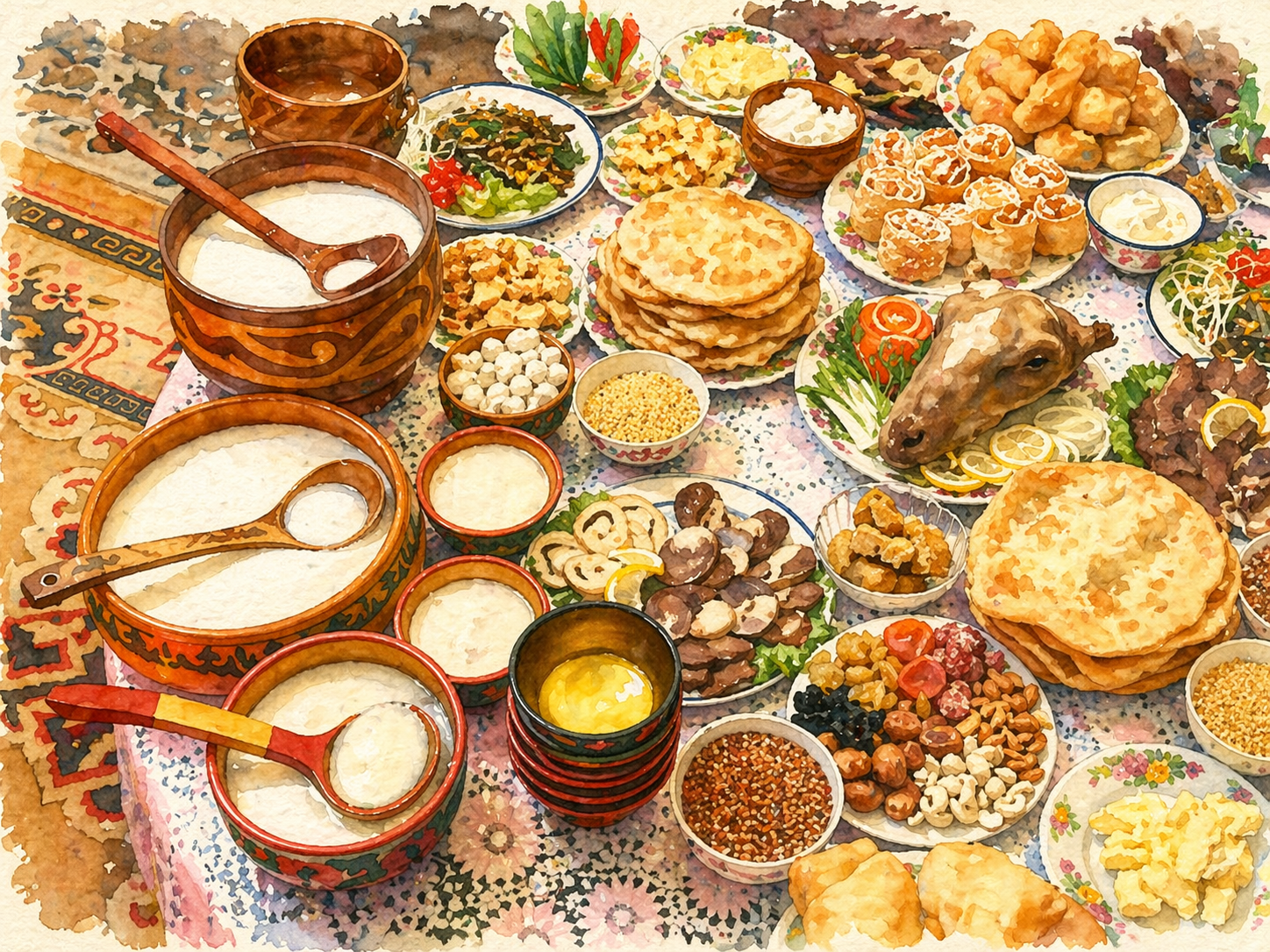
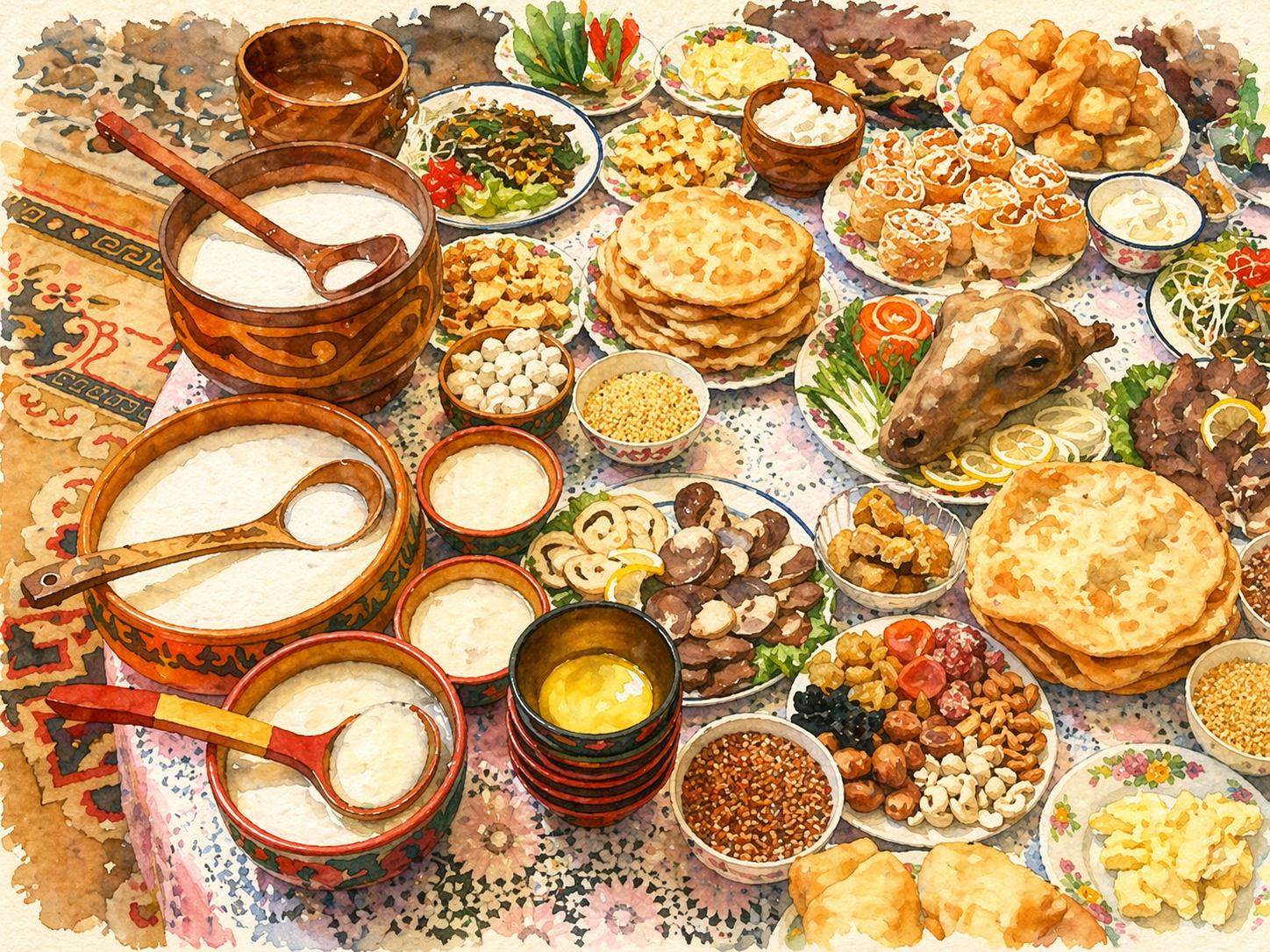
The menu of the Kazakh people consists not only of meat and milk but also of nutritious grain crops. In the nomadic lifestyle, a unique school of preparing filling, high-calorie dishes resistant to long journeys was formed through the processing of crops such as wheat, millet, and barley.

Talqan – is a traditional Kazakh dish. It is mainly prepared from crushed wheat or barley. To prepare talqan, the grain is roasted and ground. This dish is most often eaten mixed with water or milk, in a sweetened or soured form. The Kazakh people often took talqan on long trips and also served it at gatherings and holidays. It is considered very beneficial for health.

Tary (millet) – is one of the traditional dishes of the Kazakhs, known as a national product. Millet is a small grain crop that can be used in the same way as wheat or rice. Dishes made from tary are traditionally found in the daily diet of the Kazakh people and are beneficial for health.

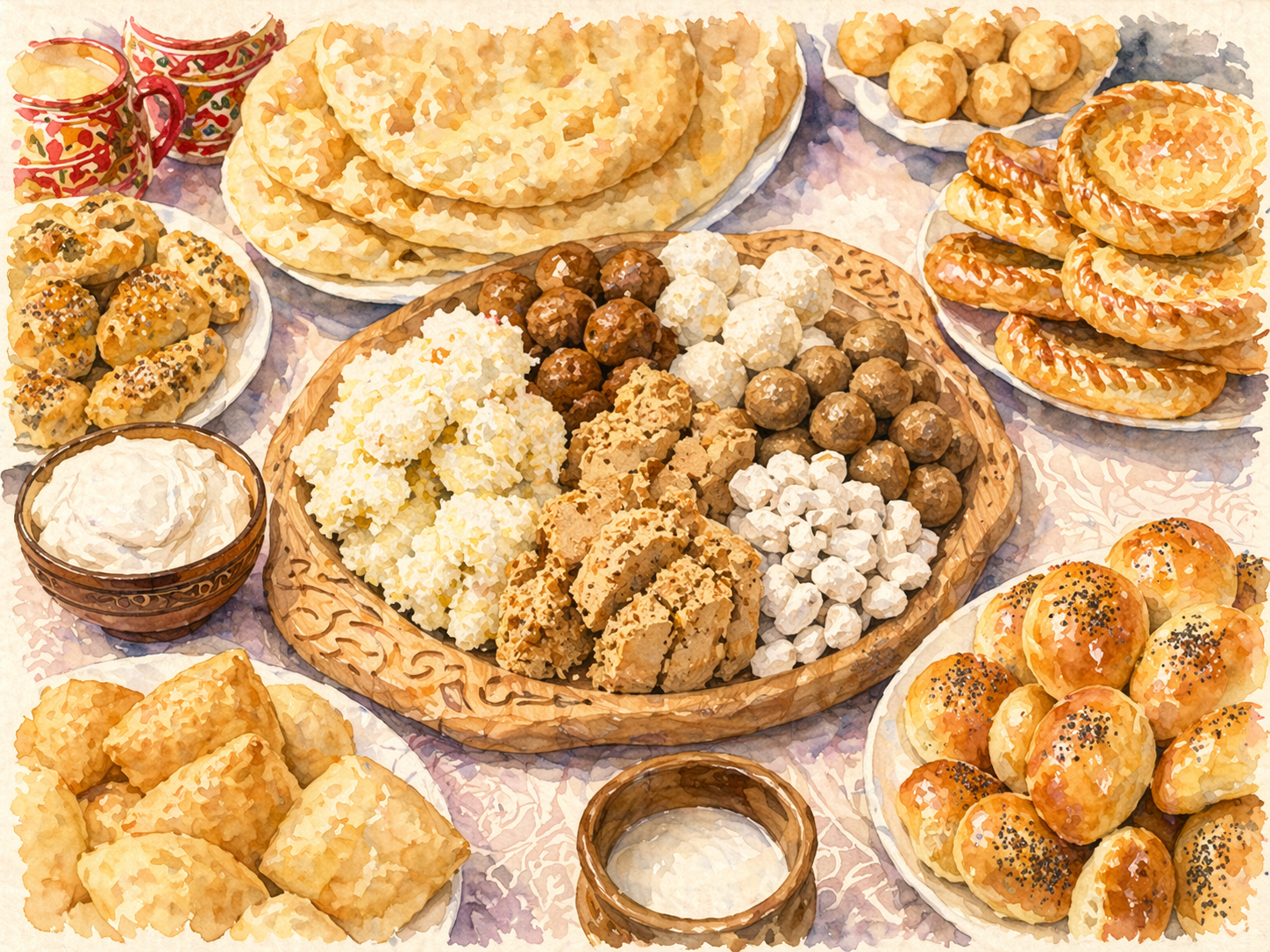
Jent – is a traditional Kazakh dish. It is mainly made from crushed wheat or barley, sometimes adding butter, honey, or sugar. Jent is prepared without boiling, in dry form, shaped by hand or using special molds. Jent is most often used as a dessert served at weddings, large celebrations, or to guests of honor.

Maısök – is one of the traditional Kazakh dishes, prepared mainly from meat and dairy products. Maısök is most often made by mixing tail fat, meat, and dairy products. For this, the meat is finely chopped, fried, or boiled. Then tail fat and dairy products (süt, airan, or qatyq) are added. It is stored in special vessels. Maısök is very tasty and filling; it is usually served on Kazakh dastarqans during large gatherings or special holidays. It can also be stored for a long time without losing its taste qualities.

Roasted wheat (quırylğan bıdaı) – is a traditional Kazakh dish. Its preparation is simple, yet it possesses a special flavor. To prepare roasted wheat, take clean wheat and wash it well. The wheat should be poured into a qazan or pan and roasted dry over medium heat. The wheat must be stirred frequently, otherwise it may burn. It is best to roast it to a golden-brown color. At this point, the flavor of the wheat unfolds, and it becomes crispy. Roasted wheat is easy to prepare, and this dish can also be stored for future use. It is most often used as a light snack or as an ingredient in main dishes.