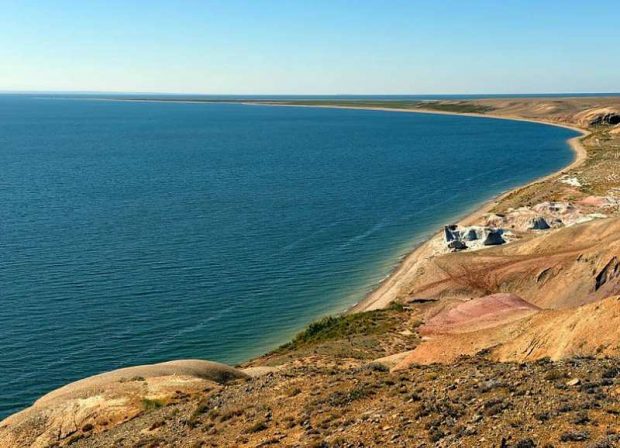
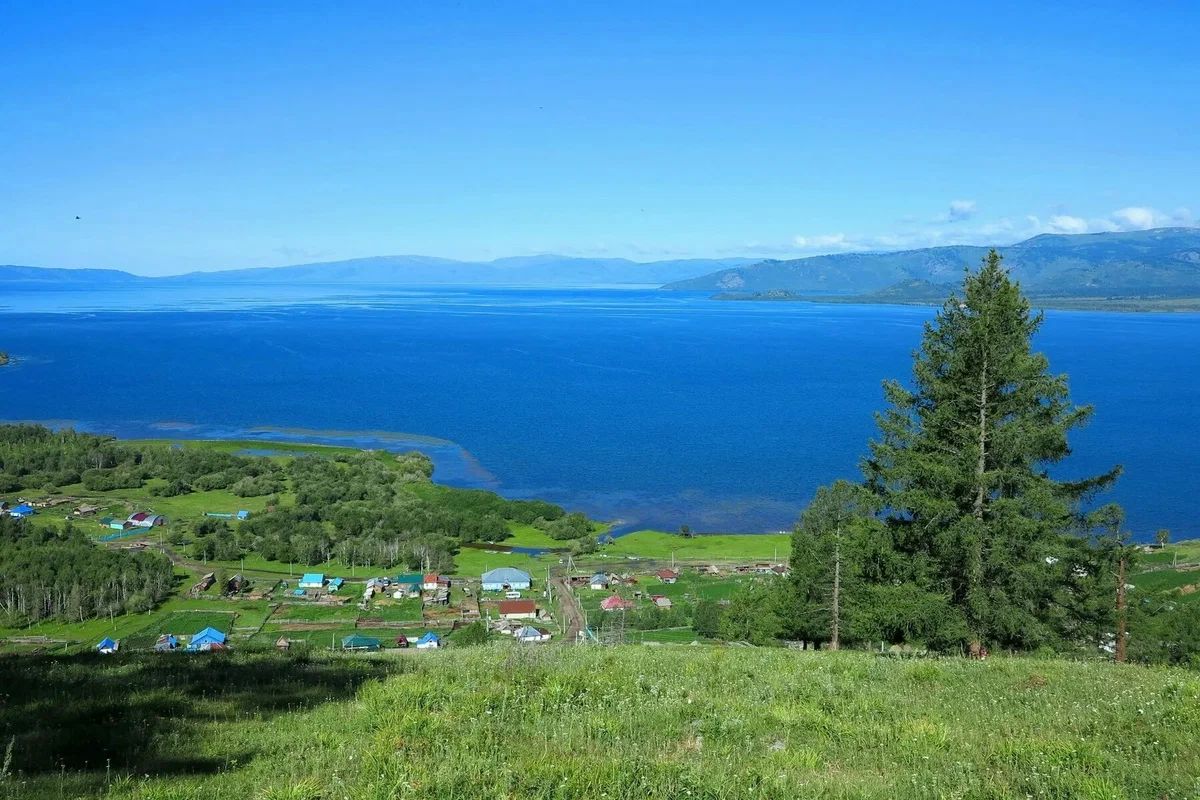
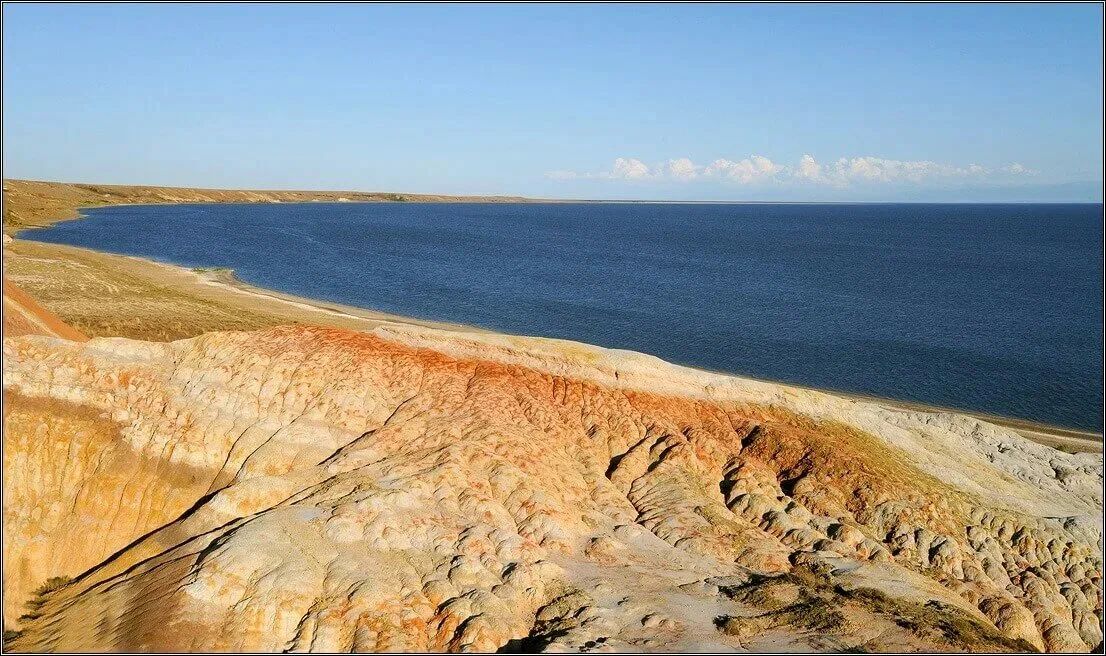
Lake Zaysan is a unique and ancient lake in Kazakhstan. It is located in the eastern part of the country, in the Zaysan District of the East Kazakhstan Region, within the Zaysan Basin between the Altai Mountains and the Saur-Tarbagatai ranges. According to scientists, the lake formed approximately 60 million years ago during the Cretaceous period as a result of tectonic activity. Therefore, Zaysan belongs to the type of tectonic dammed lakes with gently sloping shores.
There are several theories about the origin of its name. Some researchers connect it with the Mongolian word “saihan,” meaning “beautiful” or “splendid,” while others trace it to the Oirat word “zapasun,” meaning “fish.” Historical records show that in 1650 the Kalmyks called the lake Zhaisan. According to legend, during a period of famine, they survived thanks to the abundance of fish in the lake and began to call it a “life-giving” and “blessed” place.
Zaysan is a large freshwater lake. It is about 100 km long, 30 km wide, covers an area of around 1,800 km², and has an average depth of about 8 meters. The lake is home to more than 23 species of fish, 17 of which are commercially important. Among the most valuable species are taimen, pike, burbot, crucian carp, perch, whitefish, and roach.
The lake is also known for unusual natural phenomena: in the evening, when the stars appear, sounds similar to a ringing or humming of wires can sometimes be heard from the water surface. Because of this, it is sometimes referred to as the “Ring Echo.”
In the past, the region had a much richer wildlife population, including Bactrian camels, Przewalski’s horses, kulans, goitered gazelles, saiga antelopes, bustards, and even tigers. However, due to human activity, many species have disappeared or become rare.
Today, Lake Zaysan is considered one of the cleanest lakes in the region, as it is fed by mountain rivers formed from snow and rainwater. Its shores are mostly low and covered with dense reeds, with some rocky cliffs in places.
In 1960, part of its water system became incorporated into the Bukhtarma Reservoir. The border with China lies about 60 km to the east of the lake.
In summer, the water temperature rises to about 22°C, attracting tourists. From November to April, the lake surface is usually covered with ice.
Source: jjtv.kz