Abai Institute / Kazakh Culture / TRADITIONS AND CUSTOMS

TRADITIONS AND CUSTOMS

TRADITIONS AND CUSTOMS

Traditions and Customs

Kazakh traditions and customs represent the spiritual foundation of the nation and a worldview shaped over centuries. Every rite serves as a golden bridge, preserving the continuity of generations and the core values of nobility, respect, and hospitality. Kazakh traditions are more than just a heritage of the past; they are an intrinsic part of our identity today.
Kazakh Wedding Traditions +

Kazakh Wedding Traditions

Wedding traditions in Kazakhstan represent a structured system of unwritten rules and customs that mark the most significant event in an individual's life. While some practices like early marriages or bride kidnapping have been phased out by law and modern ethics, core principles such as the prohibition of intermarriage within seven generations (Jeti Ata) remain strictly observed.

Key Stages of the Tradition:

  • Matchmaking and Engagement (Quda Tusu). This phase begins with a mediator (zhaushy) and leads to the official engagement between the two families. During the "Bata Ayaq" stage, all wedding arrangements, including the bride price (kalynmal), are finalized.
  • The First Meeting (Uryn Kelu). Following the official engagement, the groom is permitted to visit the bride’s village for the first time. This event serves as an initial introduction between the couple through songs and festivities.
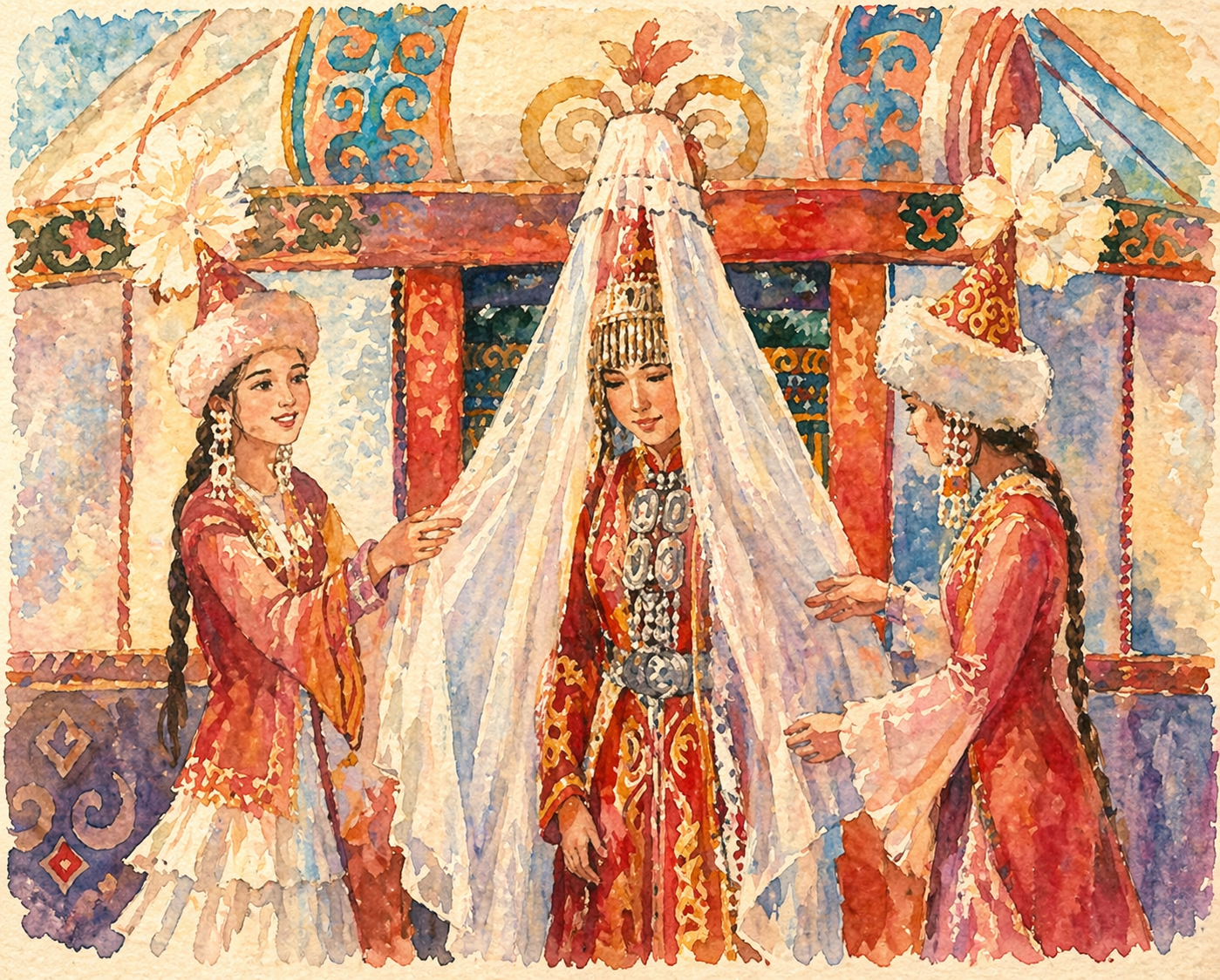
  • The Bride’s Farewell (Qyz Uzatu). A solemn ceremony where the bride says goodbye to her parental home. She is formally presented with the "Saukele" (bridal headdress). By tradition, she must not look back as she departs for her new life.
  • The Arrival (Kelin Tusiru) and Betashar. Upon entering the groom’s home, the bride steps over the threshold with her right foot. During the "Betashar" ceremony, her face is unveiled as she is formally introduced to her new relatives.
  • Neke Qiyu (Religious Marriage). A spiritual wedding ceremony performed at a mosque in the presence of witnesses. After the prayers and rituals, the couple is officially recognized as husband and wife under Islamic tradition.
Traditions of hospitality +

Traditions of hospitality

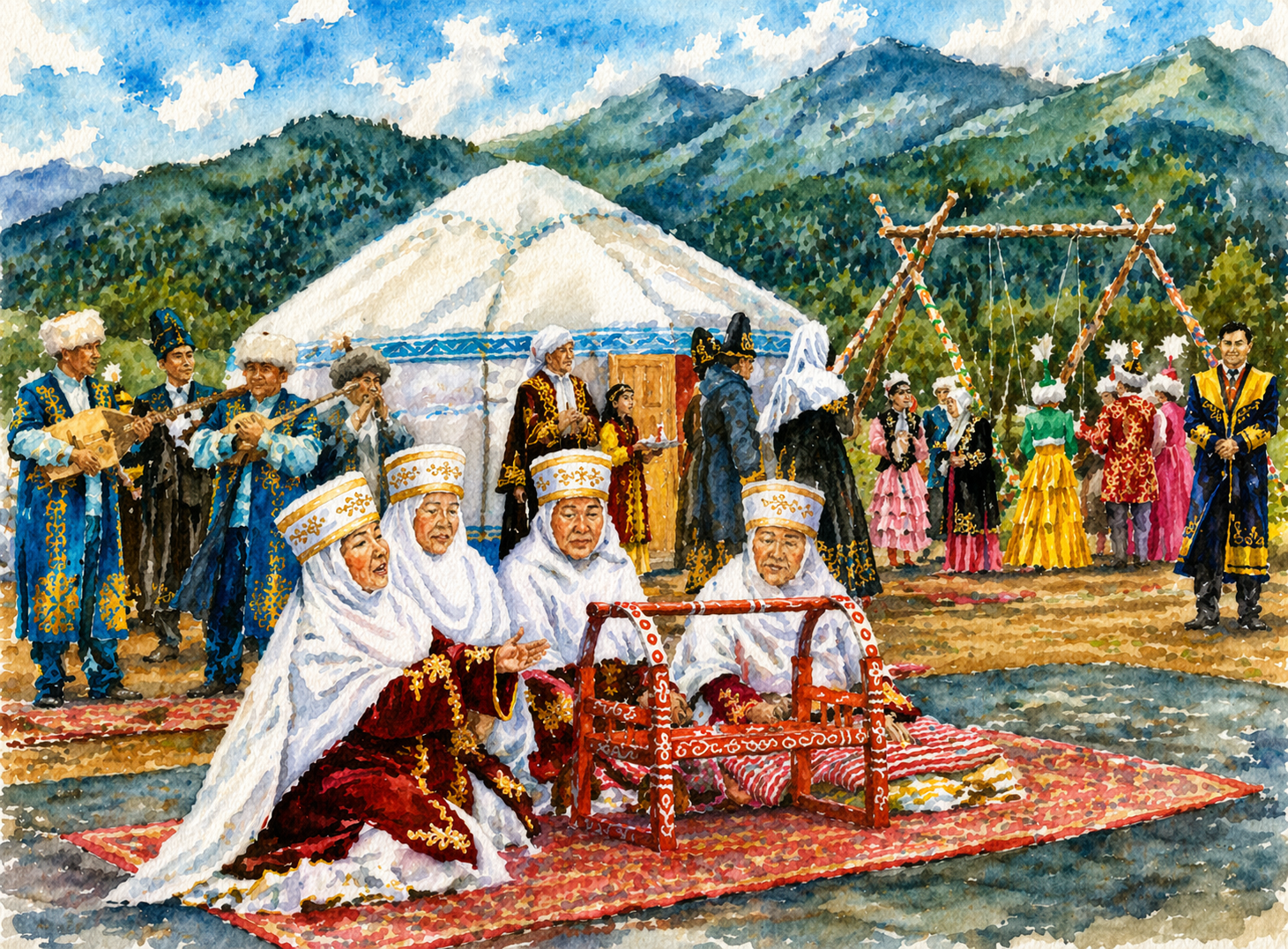
Hospitality lies at the very heart of the Kazakh national identity and is regarded as a paramount moral duty. In Kazakh culture, a guest is believed to bring blessings to the home. Welcoming a traveler with honor, offering the seat of respect, and serving the finest food is an unwritten law of the Great Steppe.

Key Customs of Hospitality:

  • Konakasy. The tradition of providing a feast for a guest. Failing to offer food was considered a grave social disgrace.
  • Types of Guests. Guests were categorized into three types: the invited "Arnaiy konak," the "Kudaiy konak" (a traveler sent by God), and the unexpected "Kydyrma konak." All were greeted with equal warmth and sincerity.
  • Bata (Blessing). Spiritual guidance and well-wishes given by elders to the hosts upon departure.
  • Traditions of Honor. Special meals for the elderly (Bel koterer), the guest's artistic performance (Konakkade), and welcoming new neighbors with a feast (Erulik) were essential for community bonding.
  • Sharing Joy. Gifts for good news (Suyunshi), the tradition of scattering sweets and coins during celebrations (Shashu), and a gift for meeting a daughter-in-law or a newborn for the first time (Korimdik) represent the collective celebration of life's blessings.
Qyrqynan şyğaru +

Qyrqynan şyğaru

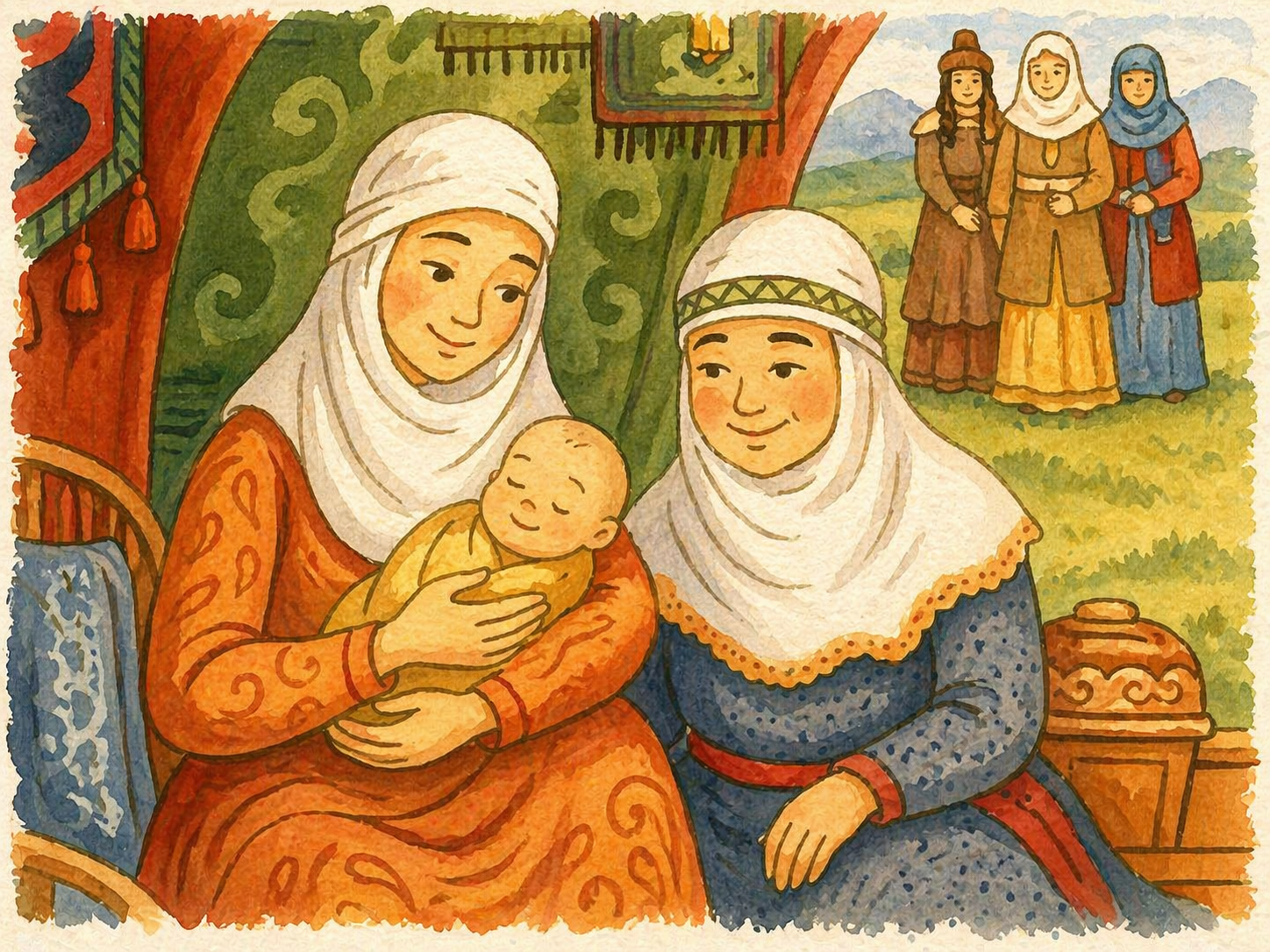
"Qyrqynan şyğaru" is a sacred rite performed forty days after a child's birth. In Kazakh tradition, this period marks the infant's transition into the physical world, symbolizing spiritual purification and the gathering of vital strength.

Highlights of the Ceremony:

  • Timing. Following ancient beliefs, the rite is performed earlier for boys (on the 37th-39th day) to foster courage. For girls, it is held slightly later (on the 41st-43rd day) to encourage a gentle and modest character.
  • The Sacred Bath. The infant is bathed in water enriched with silver jewelry, coins, and 40 grains. Forty spoons of water are poured over the child, with each spoon carrying a wish for a bright future.
  • The Role of Kindik Sheshe. The central figure of the ritual is the "Kindik Sheshe" (the Godmother). She performs the bath and is honored as the child's spiritual second mother.
  • The First Haircut. After the bath, the infant's hair and nails are trimmed for the first time. The hair is often kept as a talisman, representing the continuity of life and protection.
  • Naming and It Koilek. A religious leader (Mulla) whispers the baby's name into their ear. The first shirt worn by the baby (It Koilek) is filled with treats and given away to children or those hoping for a child of their own.
  • Kalzha. The ceremony concludes with the preparation of "Kalzha," a nutritious soup intended to restore the mother's health and energy.
Besikke Salu: The Infant’s First Cradle +

Besikke Salu: The Infant’s First Cradle

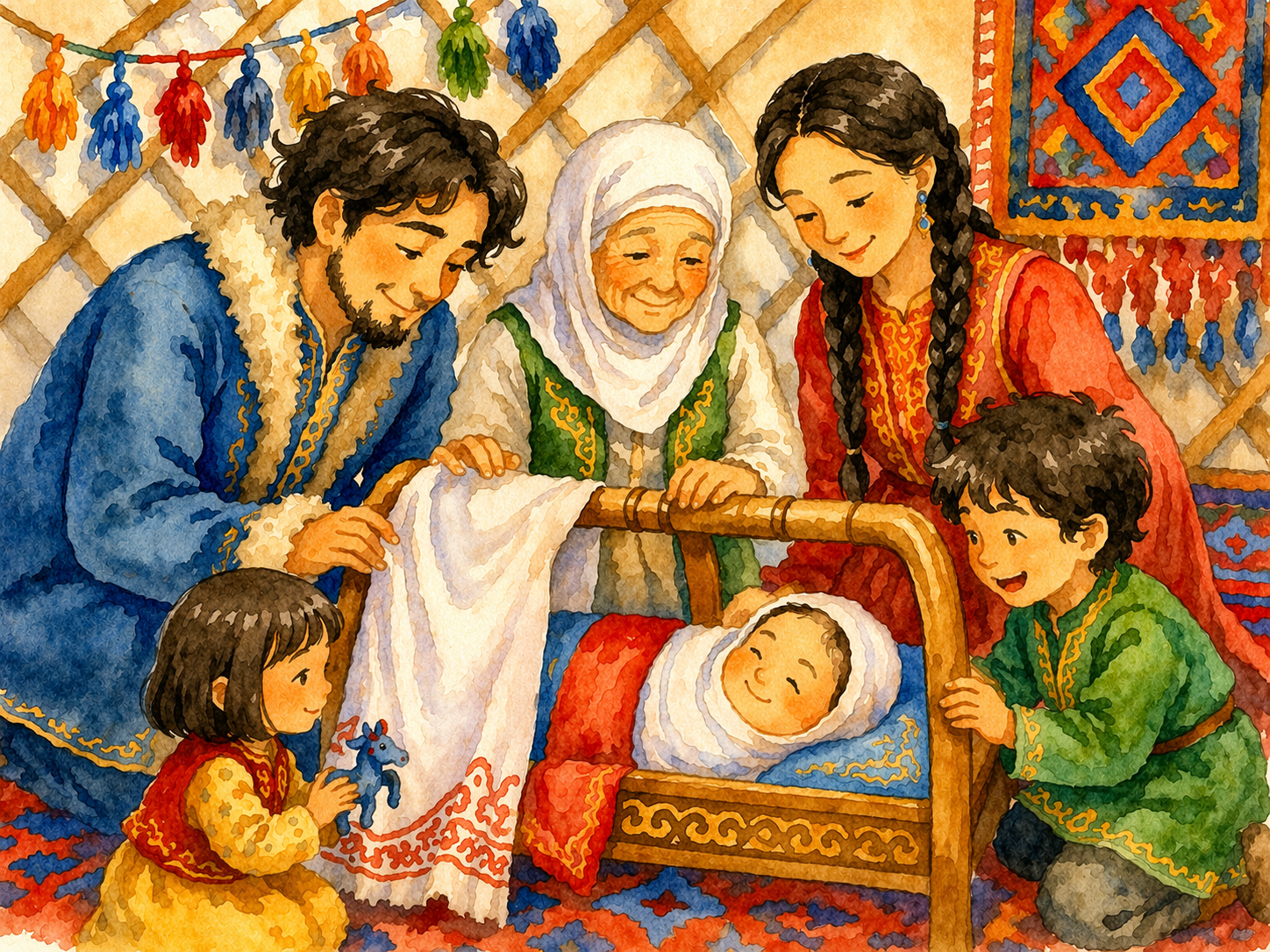
"Besikke Salu" is one of the most sacred and significant rites marking the beginning of a newborn's life. In Kazakh culture, the cradle (besik) is far more than a bed. It is considered a hallowed space that symbolizes protection, growth, and the very starting point of one’s destiny.

Key Highlights of the Ceremony:

  • Besik Toy. This ceremony is traditionally a grand celebration involving relatives and the community. Elders offer their blessings, wishing the child a bright and prosperous future.
  • Lineage and Honor. Traditionally, the cradle is provided by the mother’s side of the family (nagashy), reinforcing the bonds between maternal and paternal lineages.
  • Sacred Rituals. The honor of placing the infant in the cradle is given to an esteemed elderly woman. The cradle is purified with sacred herbs, and sweets are distributed through a ritual called "thyshtyrma," symbolizing health and abundance.
  • The Lullaby. The ceremony is enriched by the "Besik Zhyry" (Cradle Song), through which the mother imparts her boundless love and the nation’s spiritual values to the child from the very start.
Sundet Toy +

Sundet Toy

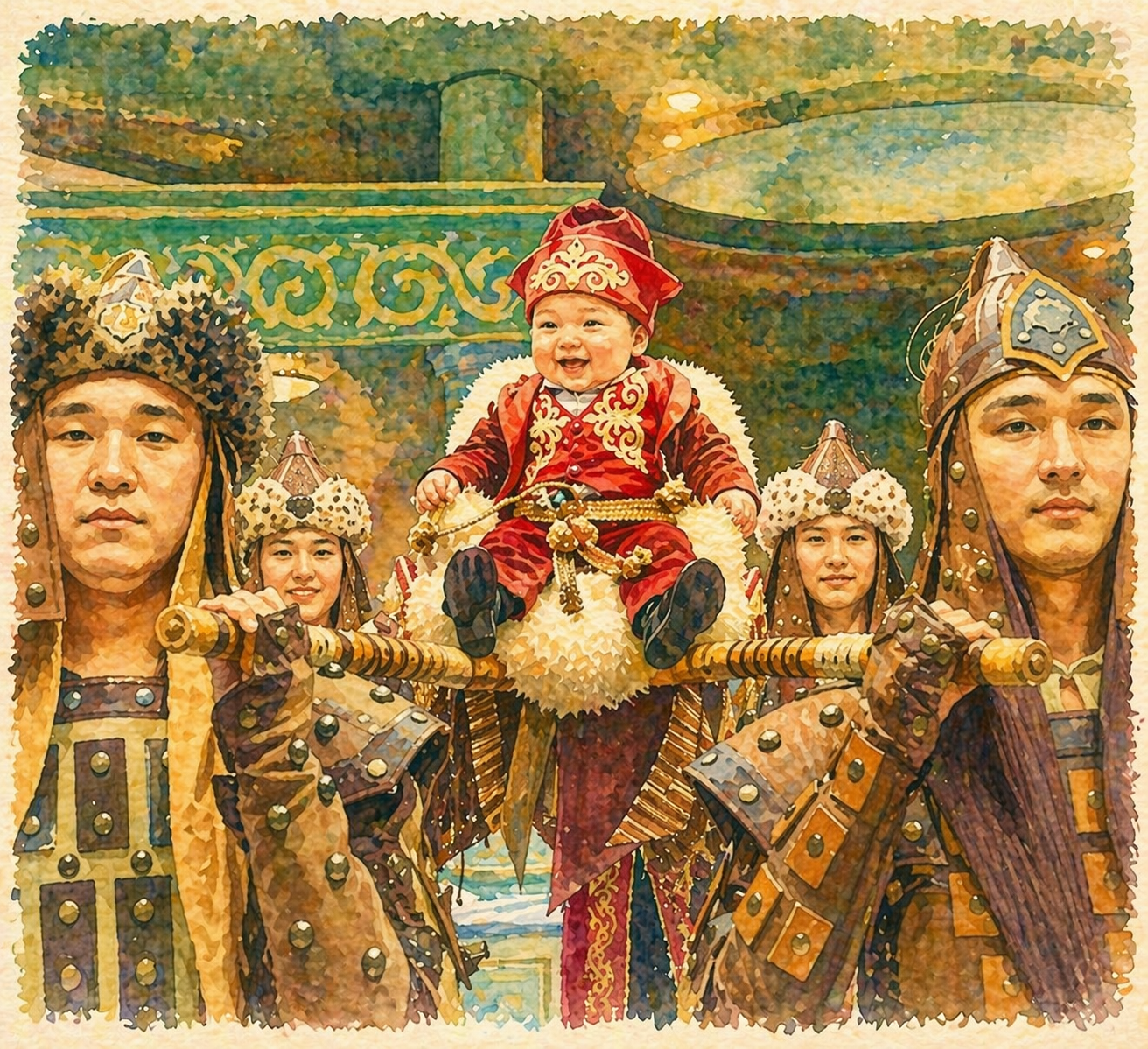
Sundet Toy is a paramount milestone in the life of every Kazakh boy. This ceremony marks his formal entrance into the Muslim community and symbolizes the beginning of his journey toward adulthood. It is more than a religious ritual; it is a profound family tradition celebrating cultural identity and growth.

Key Aspects of the Tradition:

  • Age. Traditionally, the rite is performed during the odd-numbered years of a boy's life, such as at age 3, 5, or 7. This timing is considered spiritually and physically significant for the child.
  • Preparation. The procedure is carried out by professional specialists. Parents play a vital role in preparing the boy emotionally, explaining the significance of the event to ensure he feels proud of this new stage in his life.
  • Announcement. Historically, the news of the upcoming celebration was shared with the community a day in advance. Neighbors would tie scarves around the boy's neck as a gesture of well-wishes. Wednesday is often chosen for the rite, as it is traditionally viewed as a lucky day.
  • The Celebration. Following the rite, a grand feast is organized. The boy is honored as a "true man," showered with sweets (shashu), and presented with valuable gifts such as horses, livestock, or keepsakes.
  • Significance. Sundet Toy is a festive event that strengthens family bonds and instills a sense of responsibility and cultural belonging in the young boy from an early age.
Тұсаукесер – сәбидің алғашқы қадамы +

Tusaukeser: A child's first steps into the big wide world

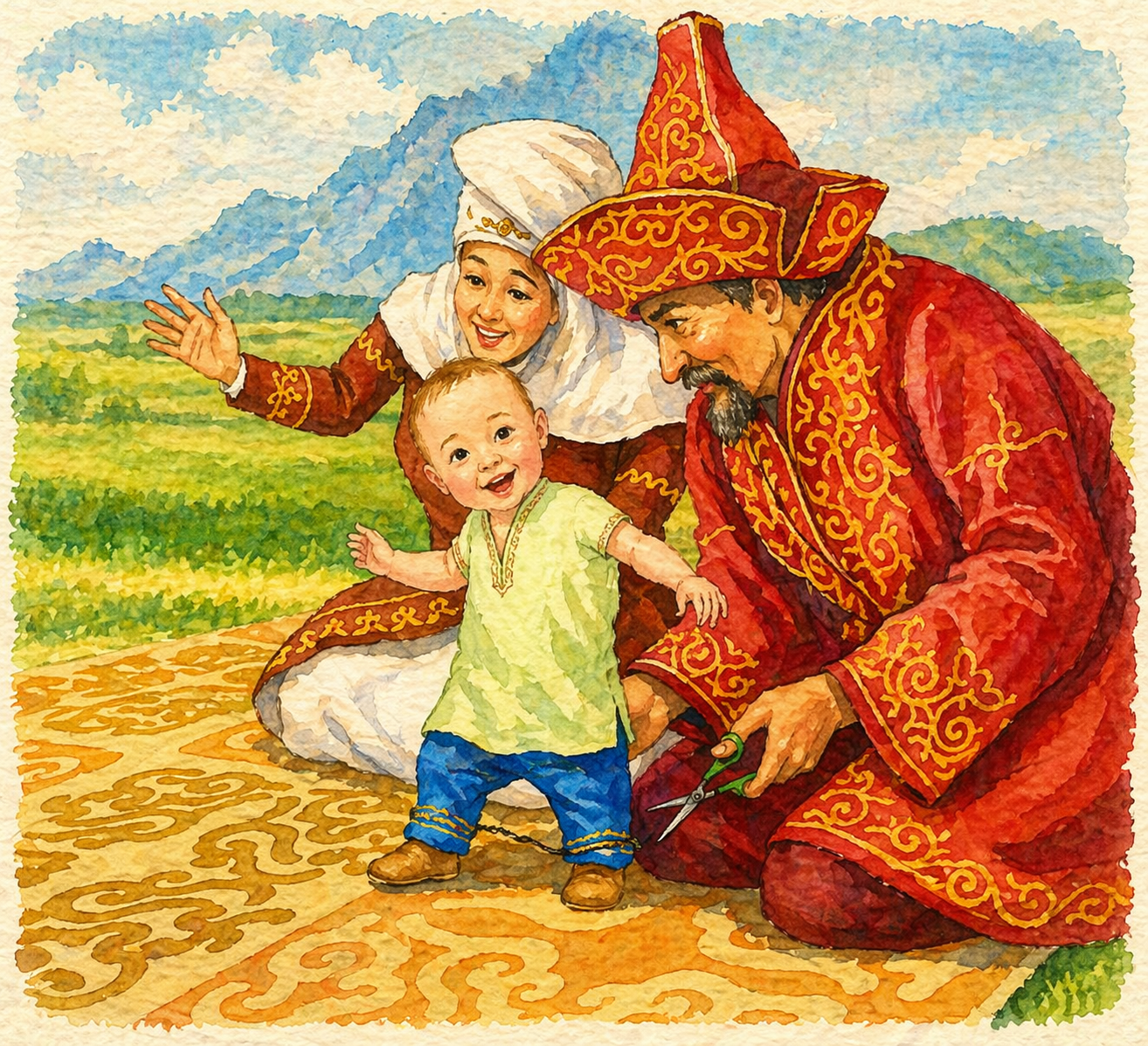
Tusaukeser is one of the most ancient and cherished Kazakh traditions, performed when a child takes their very first independent steps. This ceremony marks a vital stage in a child’s development, embodying the parents' wishes for their child to walk through life with confidence and resilience.

Key Highlights of the Tradition:

  • Timing. There is no fixed date for this ritual. It is celebrated when the baby begins to walk, which often coincides with their first birthday.
  • The Multicolored Rope and the White Path. The infant’s legs are loosely tied with a multicolored cord (ala zhip), teaching the value of honesty and integrity. The white cloth (aq zhol) spread out before the child symbolizes a bright and untroubled destiny.
  • Cutting the Fetters. The honor of cutting the cord is given to a respected person with an exemplary character. They guide the child by the hand along the white path, symbolically leading them into a successful future.
  • The Choice. Various items such as books, money, or musical instruments are placed at the end of the path. The first item the child picks up is playfully interpreted as an omen of their future talents or profession.
  • Shashu and Symbolism. Celebratory sweets and coins are scattered during the walk. The white cloth used for the ceremony is often gifted to a couple hoping for children as a gesture of shared blessing.