 Қазақша
 Русский








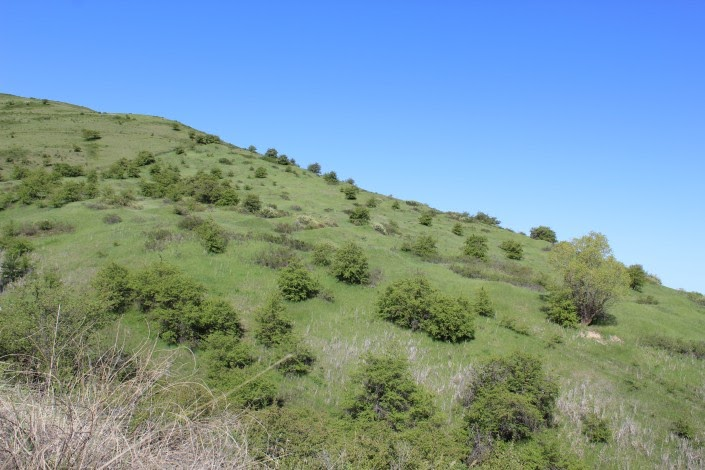
Mynsheit is a hill located in southern Kazakhstan. It is regarded as a witness to a tragic history. According to legend, in 670 AD, thousands of Arab missionaries arrived in this area. Their exact number is unknown: some accounts say 10,000, while others mention 15,000. They reportedly came to spread Islam. However, the local tribes did not warmly welcome the foreigners.
The leader of the Arabs was called Myrseit. Here he met and fell in love with a local girl. Her father agreed to marry his daughter to Myrseit, but on one condition: she had to secretly learn the weak points of the Arab warriors and report them to her relatives.
Myrseit himself revealed his weakness to his wife. He said that during the Qurban Ait prayer, neither he nor his warriors were allowed to fight; they could only pray. The young woman informed her family about this.
According to the legend, while Myrseit and his warriors were praying during Qurban Ait, the local tribes suddenly attacked and beheaded them all, including the Arab leader himself. Only a few people managed to escape. Among them was Myrseit’s pregnant wife.
Some time later, she gave birth to a son. After growing up and becoming a man, he returned to Turkistan many years later to avenge his father and continue the spread of Islam.
According to one version, the place was named Mynsheit in honour of Myrseit, the leader of the Arab warriors. According to another interpretation, “Myn Shiit” means one thousand victims who fell in the name of the Almighty.
Today, the site receives relatively few tourists. On average, around 200 people visit each year. Near the hill there is a mosque and a large garden.