 Қазақша
 Русский








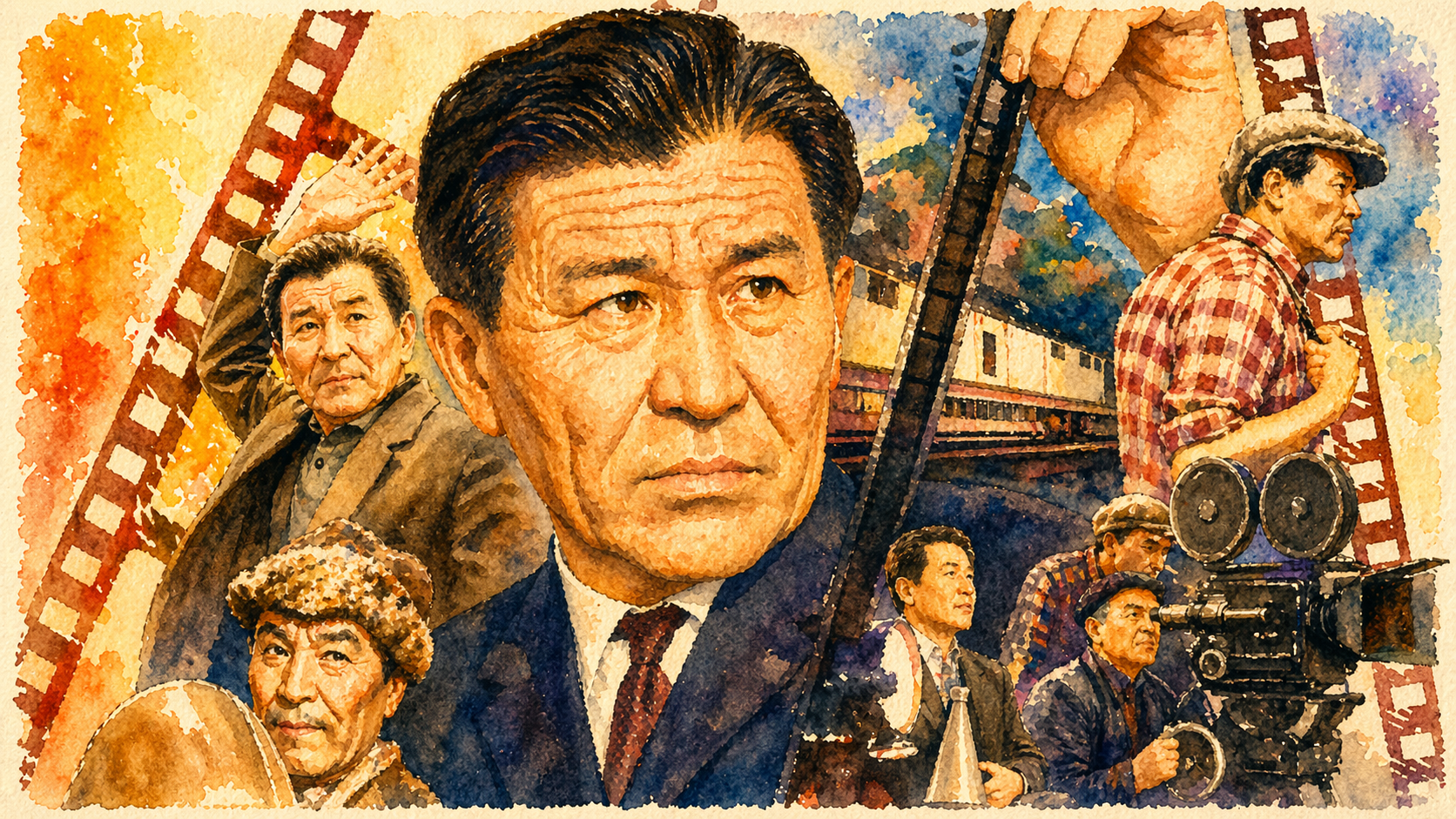
Kazakh cinema is not just a branch of art, but a great chronicle that has captured on screen the historical destiny, spiritual quests, and cultural evolution of the nation. Having traveled the path from its first steps in the 1920s to today's victories on an international level, Kazakh cinema has overcome several complex stages.
I. The Formation of Kazakh Cinema and the Transformation of Almaty into the "Cinema Capital"
The foundation of cinema on Kazakh soil was laid in the 1920s, when the Soviet government undertook the modernization of the eastern republics. At that time, cinema—as a new, high-tech, and impressive medium of information—turned into the main propaganda force, conveying state policy to the people.
- The first step: The film "Amangeldy," released in 1938 and dedicated to the leader of the 1916 uprising, Amangeldy Imanov, marked the beginning of the professional history of Kazakh cinema.
The years of World War II played a decisive role in the fate of the city of Almaty. The evacuation of the "Mosfilm" and "Lenfilm" film studios to Almaty in 1941–1945 transformed the city into the main center of film production for the entire Soviet Union. 80% of wartime films were shot right here. World-class masters who arrived in Almaty during this period, such as S. Eisenstein and M. Donskoy, shared their experience with Kazakh specialists, professionally strengthening the foundation of the "Kazakhfilm" studio.
II. The Era of Shaken Aimanov and Genre Revival
In the 1960s–1970s, a true genre breakthrough occurred in Kazakh cinema. At the origins of this period stood a bright star of national cinema – Shaken Aimanov.
- Lyrical comedies: The films "Our Dear Doctor" and "Angel in a Tyubeteika" brought warmth and humanistic values to Kazakh cinema. These works are considered the origins of modern Kazakhstani musical comedies.
- Children's cinema and animation: Abdolla Karsakbayev's film "My Name is Kozha" received high praise at the Cannes Film Festival, demonstrating the level of Kazakh children's cinema to the entire world. Additionally, the history of domestic animation began in 1967 with Amen Khaidarov's cartoon "Why the Swallow's Tail is Forked?"
- Steppe Westerns (Easterns): The vast steppes of Kazakhstan and the Zhetysu mountains became the ideal location for filming historical-revolutionary adventures. Abdolla Karsakbayev's film "Anxious Morning" is the best example of this direction.
III. The "New Wave" and the Spirit of Independence
In the late 1980s, a "new wave" entered Kazakh cinema, led by Rashid Nugmanov and Amir Karakulov. Their style was close to the European school of "auteur cinema." Rashid Nugmanov’s film "The Needle" shattered Soviet stereotypes and showcased the breath of a new era.
After gaining Independence, filmmakers began to openly cover previously forbidden historical topics—the Holodomor, repressions, and the Jeltoxan uprising. Works such as "Surzhekei – The Angel of Death," "The Fall of Otrar," and "Batyr Bayan" served to restore the historical memory of the people. The mega-project of the early 2000s, "Nomads," demonstrated the potential of Kazakh cinema in creating large-scale historical canvases.
IV. Modern Cinema: Commercial Success and the Festival Parade
Today, Kazakh cinema is one of the most dynamically developing industries in the post-Soviet space. Two main directions clearly stand out:
- Commercial direction: Modern genre cinema, which began with Akan Satayev's film "Racketeer," is now achieving great box-office success through comedies and family dramas. The work of Bayan Alaguzova and Askar Uzabayev, "Cocktail for a Star," became a successful example of developing cinema as a business.
- Auteur direction (Arthouse): Directors such as Emir Baigazin, Adilkhan Yerzhanov, and Farkhat Sharipov have forced the world to recognize the phenomenon of Kazakh cinema at festivals in Berlin, Venice, and Cannes.
- Historical achievement: The victory of Samal Yeslyamova in the "Best Actress" category at the Cannes Film Festival for her role in the film "Ayka" is the highest peak of Kazakh cinematography on a global level.
Today, domestic cinema is in a unique state, like the merging of two rivers: on one side, genre cinema is developing, resonating with the people and reflecting the colors of everyday life; on the other, auteur works are lining up, bringing fame to the name of Kazakhstan on high international stages.
The diverse works that have seen the light of day during the period of sovereignty are a vivid reflection of the revival of historical truth and the landmarks of a new era. The future of Kazakh cinematic art is bright, as the foundation of this spiritual value lies deep, and the space for development is infinite. Domestic cinematography, while preserving its original character and inner purity, will continue to be an important industry, occupying a worthy place in the global cultural space.