 Қазақша
 Русский








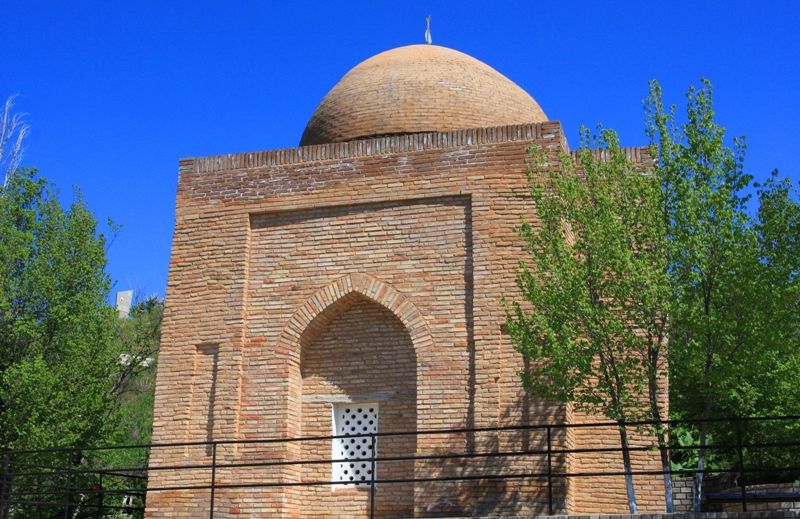
Ibrahim Ata Mausoleum is one of the ancient historical and religious monuments of the Turkistan region. It is located in present-day Sairam and is regarded as one of the sacred sites holding an important place in the spiritual history of Kazakhstan. The mausoleum is dedicated to Ibrahim Ata, the father of the great thinker and Sufi leader Khoja Ahmed Yasawi.
According to historical accounts and oral traditions, Ibrahim Ata was an educated, pious, fair, and highly respected man of his time. He promoted Islamic teachings and encouraged people to live with morality, honesty, and unity. His family was considered one of the notable spiritual lineages of the Sairam region.
He is believed to have lived during the 11th–12th centuries. His son, Khoja Ahmed Yasawi, later became one of the greatest spiritual figures of the Turkic world. For this reason, Ibrahim Ata’s name is closely connected with Yasawi’s life and early spiritual development.
In legends, Ibrahim Ata is portrayed as a kind, wise, and farsighted person. He devoted great attention to raising his son, introducing him from an early age to knowledge, piety, and moral values. Some traditions also state that he was respected by the local community and helped resolve disputes.
Over the centuries, the mausoleum has been rebuilt and renovated several times. The current structure reflects traditional Central Asian architectural style. It is constructed of fired brick and crowned with a dome. Although modest in appearance, the monument holds great historical and spiritual value.
Inside the mausoleum, the burial chamber occupies the central place. Visitors come here to offer prayers, honour their ancestors, and seek spiritual peace. It is considered one of the important stops for pilgrims visiting the sacred places of the Turkistan region.
From a scholarly perspective, Ibrahim Ata Mausoleum is valuable as a monument connected with the Yasawi era and the spread of Islamic culture across Kazakhstan.
Today, Ibrahim Ata Mausoleum remains one of Kazakhstan’s sacred places and an important spiritual centre visited by pilgrims from across the country and abroad.