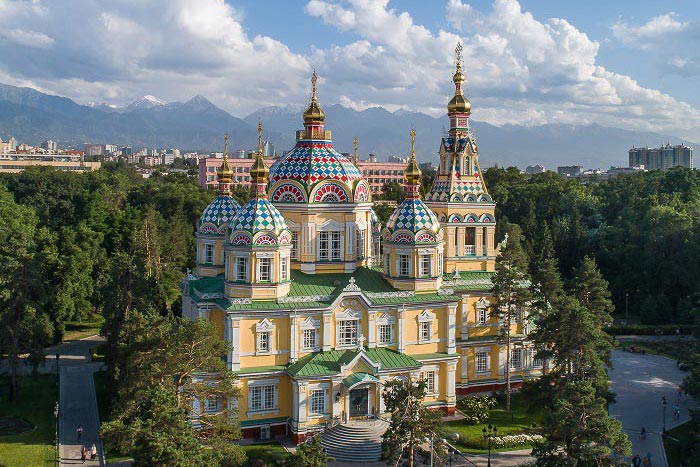
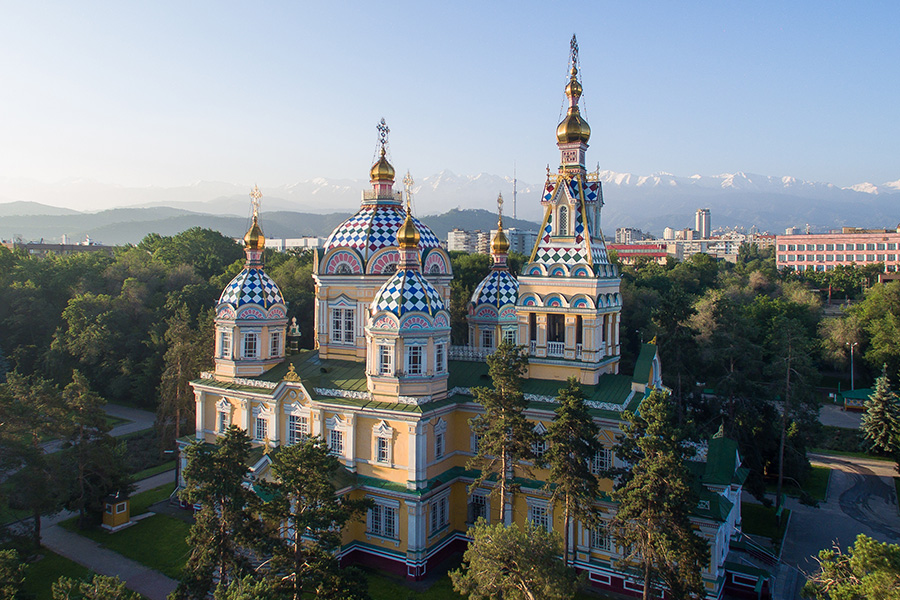
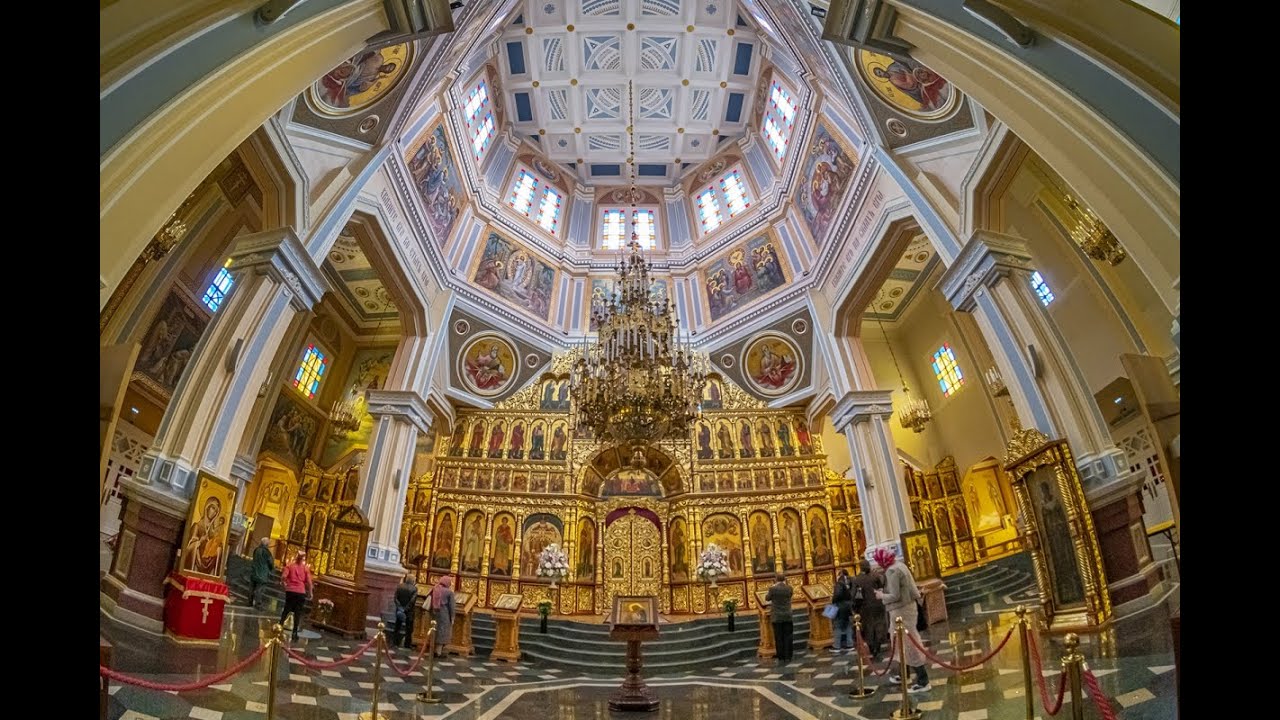
Ascension Cathedral (Zenkov Cathedral) is one of the most famous historical and spiritual landmarks of Almaty, Kazakhstan. Its history dates back to the second half of the 19th century and is closely connected with the development of the city of Verny (the former name of Almaty). In 1855, the Verny fortress was founded, and by 1867 it had become an important administrative center of the Turkestan Region. As the city's population grew, the need for a large Orthodox church became increasingly evident.
In 1871, the Turkestan Diocese was established, with Verny serving as its center. In 1872, following the arrival of Bishop Sofoniya, a decision was made to build a cathedral. The planned church was designed to accommodate approximately 1,500 worshippers. However, financial difficulties and delays in planning postponed the project for many years.
In 1882, an architectural competition was held, and the design proposed by G. Serebrennikov was selected. However, the devastating 1887 earthquake destroyed much of Verny and forced the project to be reconsidered. After the disaster, earthquake resistance became a key requirement for all major constructions.
At the end of the 19th century, the cathedral project was revised. In 1899, a design by architect Borisoglebsky was adopted and later improved by engineer Andrey Pavlovich Zenkov.
Construction of the cathedral took place between 1904 and 1907. Zenkov introduced innovative engineering solutions to ensure the building's seismic stability. The cathedral was built using a wooden frame reinforced with metal connections and supported by a solid concrete foundation. As a result, a remarkable structure approximately 41 meters high was created, making it one of the tallest wooden buildings in the world.
During the 1911 earthquake, one of the strongest in the region’s history, the cathedral suffered only minor damage. This demonstrated the effectiveness of Zenkov’s engineering methods and significantly increased the building’s historical importance.
In 1929, during the Soviet era, the cathedral was closed and religious services were suspended. Over the following decades, the building served various purposes, including a radio station and a local history museum. Although its interior was altered, the main structure remained intact.
After Kazakhstan gained independence, efforts began to restore the cathedral to its original function. In 1994, the first religious service was held again, and in 1995 the building was officially returned to the Orthodox Church. Extensive restoration work followed.
Today, the Ascension Cathedral is one of Almaty’s most important spiritual and cultural landmarks. It serves not only as an active place of worship but also as a unique architectural and engineering monument of Kazakhstan, protected by the state as a valuable part of the country's historical and cultural heritage.
Source: mitropolia.kz