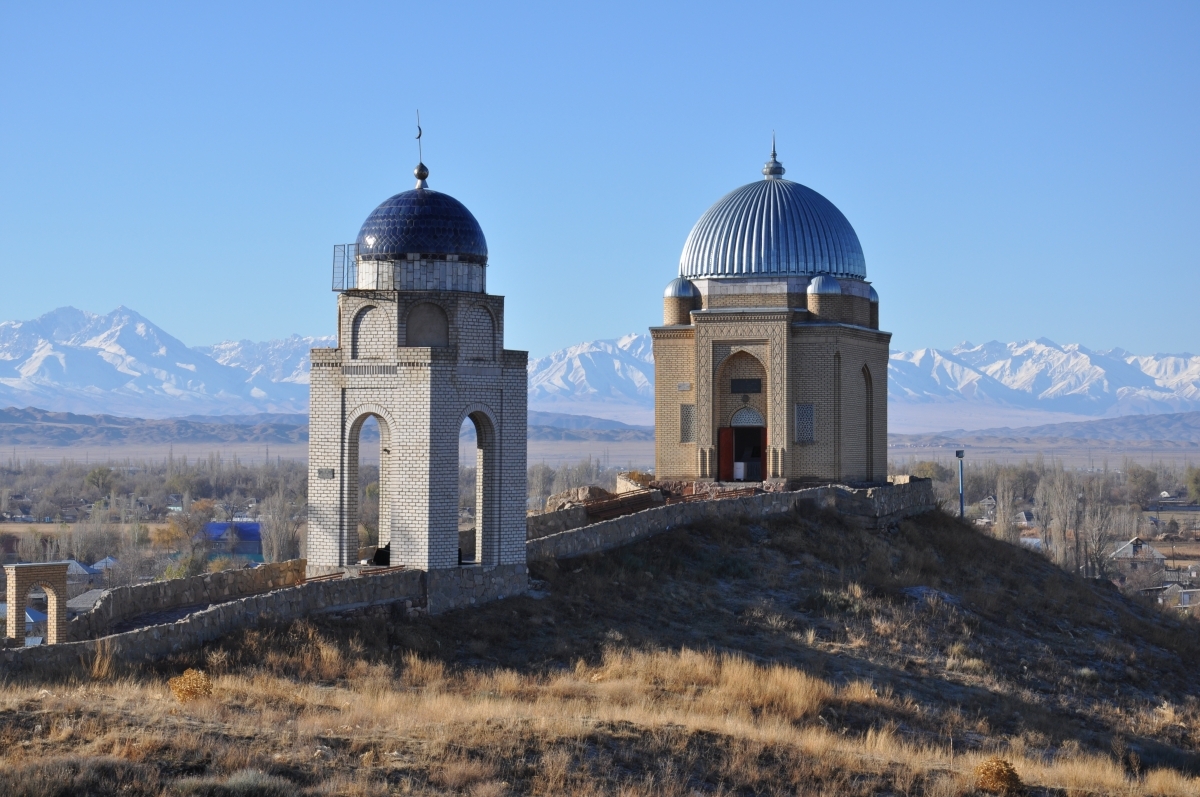
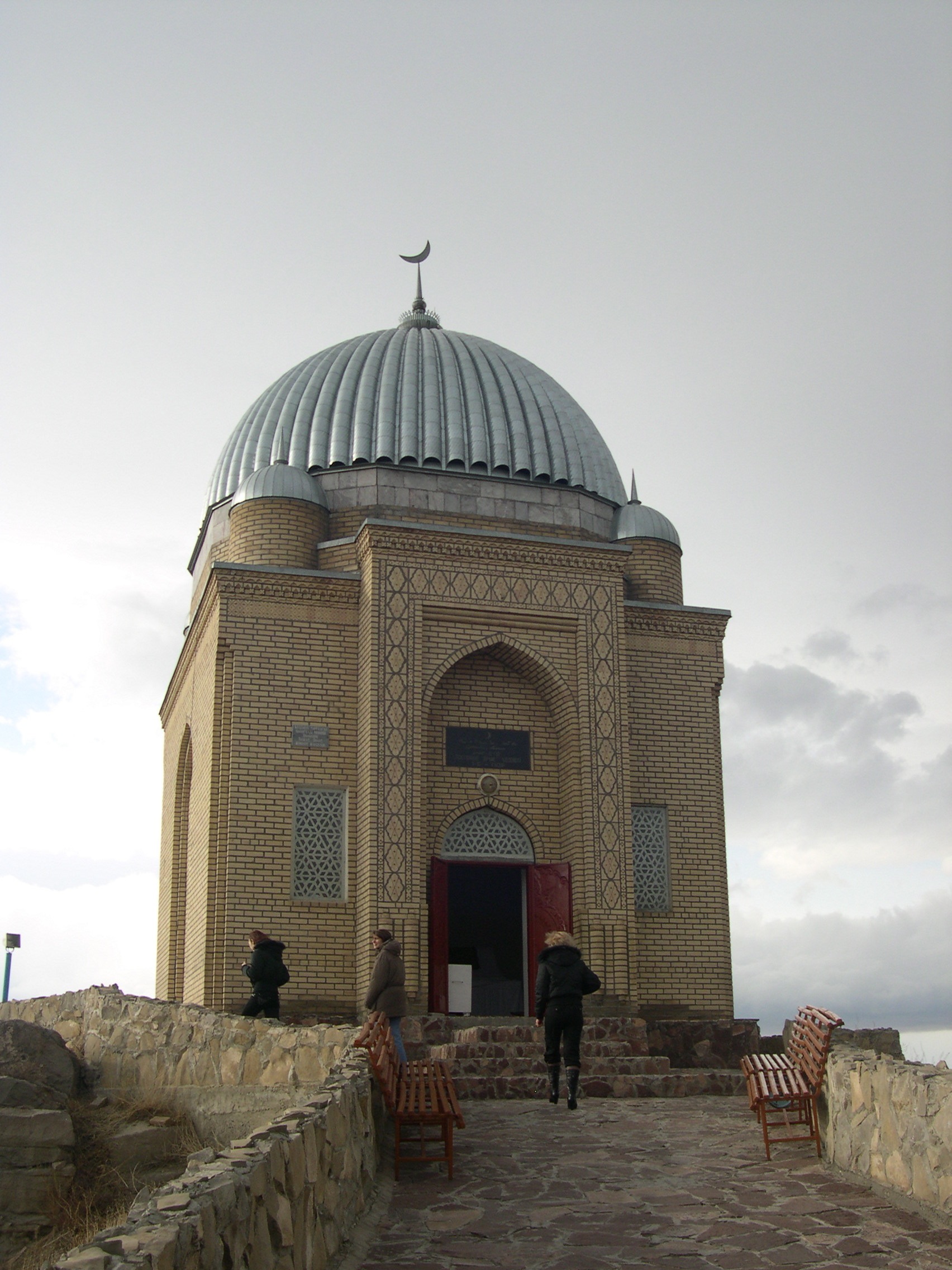
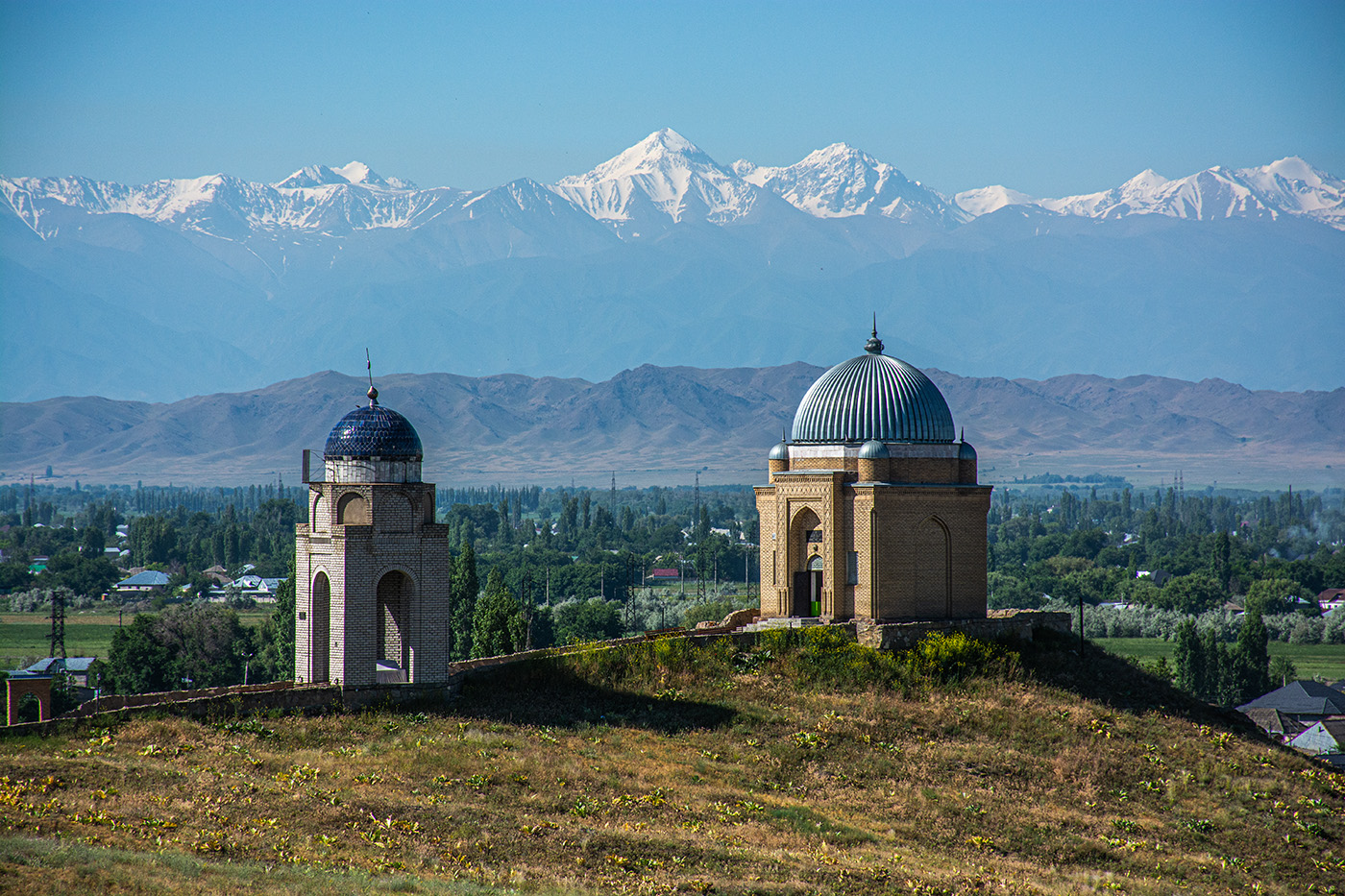
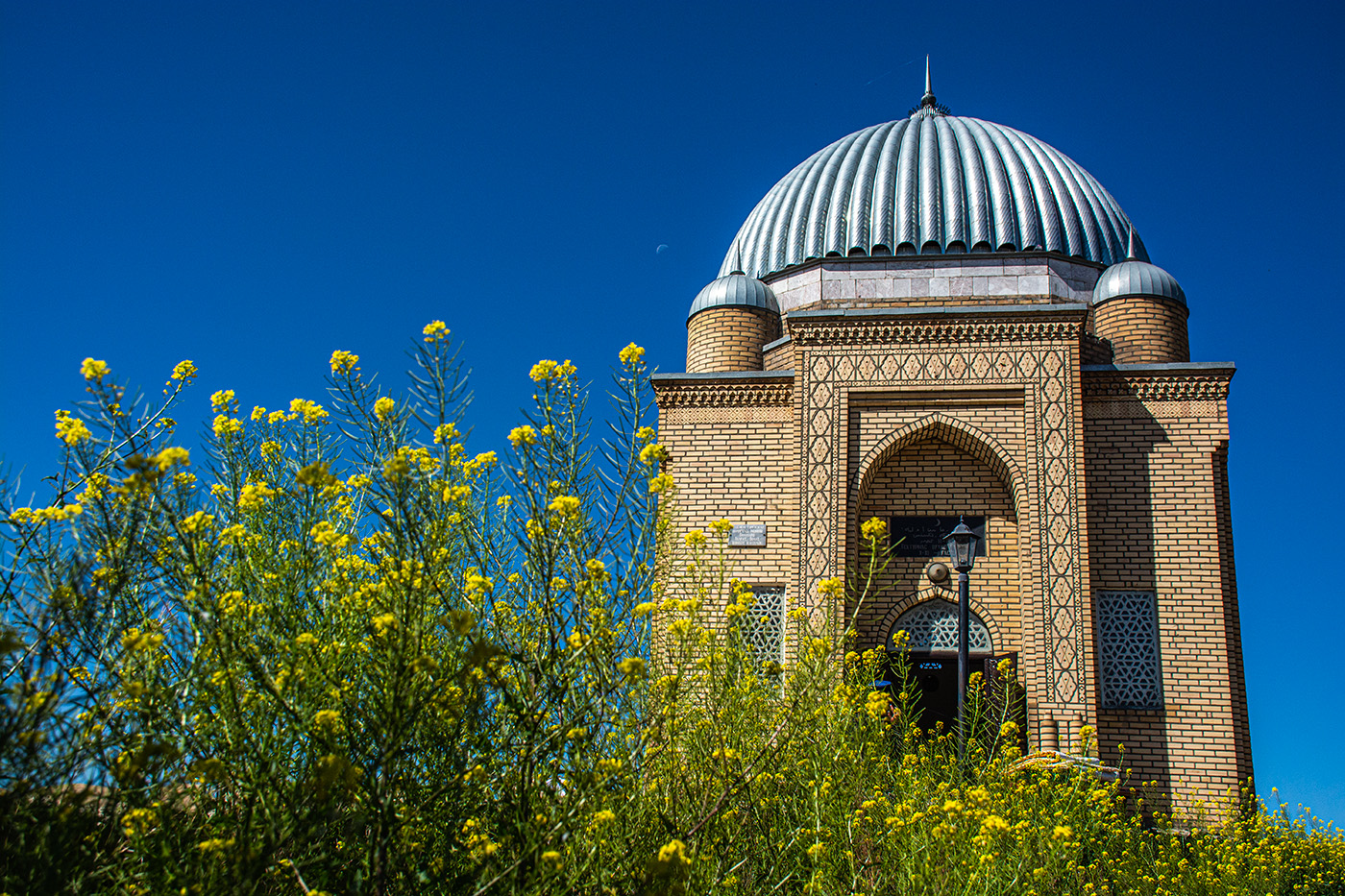
The Tekturmas Ethno-Historical Complex is an important cultural and historical site reflecting the ancient history of the Taraz region and Turkic civilization. It is located on the southeastern outskirts of Taraz city, on the right bank of the Talas River, on the summit of Tekturmas Mountain.
The formation of the complex dates back to the 7th-11th centuries, before the arrival of Islam. Today, its original appearance has not been preserved, and it is known only from photographs of the 1890s showing a square domed structure made of fired brick. Researchers believe that the site was later reconstructed into the modern ethno-historical complex.
The purpose of the modern complex is to show the sacred heritage of the ancient Auliyeata region, promote Turkic history, strengthen spirituality, and develop tourism. It is a large architectural and historical ensemble consisting of several structures.
According to historical data, the corners of the old mausoleum were reinforced with four-sided pillars, and traces of plaster remained on the walls. Only one terracotta decorative tile with ornamentation was found among the architectural details. Based on these findings, archaeologist Mikhail Masson suggested that the mausoleum may have been completed in the 15th century.
The complex was studied by scholars: in the late 19th century by Vasily Kallaur, and in 1939-1940 by archaeologist Geronim Paцевich. During research, ancient burial sites were discovered belonging to Zoroastrian, Christian, and Islamic traditions, indicating that the Tekturmas area was a multi-religious cultural space.
Locally, the site is known as Tekturmas, but historical sources associate it with the burial of Saint Sultan Makhmut. According to some accounts, he may have been a military commander of the Karakhanid state. The mausoleum is also considered one of the sacred sites of the 10th-14th centuries.
Near the complex are the graves of well-known figures in Kazakh history, including the batyrs Mambet and Bayzak, as well as theologian Fasakhuddin Sabitov. This further increases the sacred significance of the site.
Historical events also left their mark here. In 1864, during the capture of Auliye-Ata by Russian troops, the mausoleum was damaged, and in 1935 it was dismantled for construction materials. Later, local residents built a small pilgrimage structure nearby. The current mausoleum was reconstructed based on this tradition. It is about 11 meters high and crowned with a blue dome.
In 1982, the Tekturmas mausoleum was included in the list of republican-level monuments of history and culture of the Kazakh SSR and placed under state protection.
The foothills of Tekturmas Mountain are also of great historical importance. Here, ancient Zoroastrian necropolises, early Christian (Nestorian), and medieval Islamic burial sites have been discovered. This confirms that the area was an important hub of the Great Silk Road.
The bridge over the Talas River leading to the complex is decorated with symbolic elements: signs of the Western Turkic Khaganate and the mythical bird Samruk, as well as white marble lion sculptures placed nearby.
Today, the Tekturmas Ethno-Historical Complex is being actively reconstructed and developed as a tourist and spiritual center. It includes monuments such as Auliye-Ata - Karakhan and Lauha, observation platforms, and new architectural elements. The complex has become a popular pilgrimage and tourist destination.
In the future, it is planned to become part of a major tourist route together with the Karakhan Mausoleum, Aisha Bibi Mausoleum, and the “Ancient Taraz” complex, turning into an important center for regional tourism development.
Source: el.kz