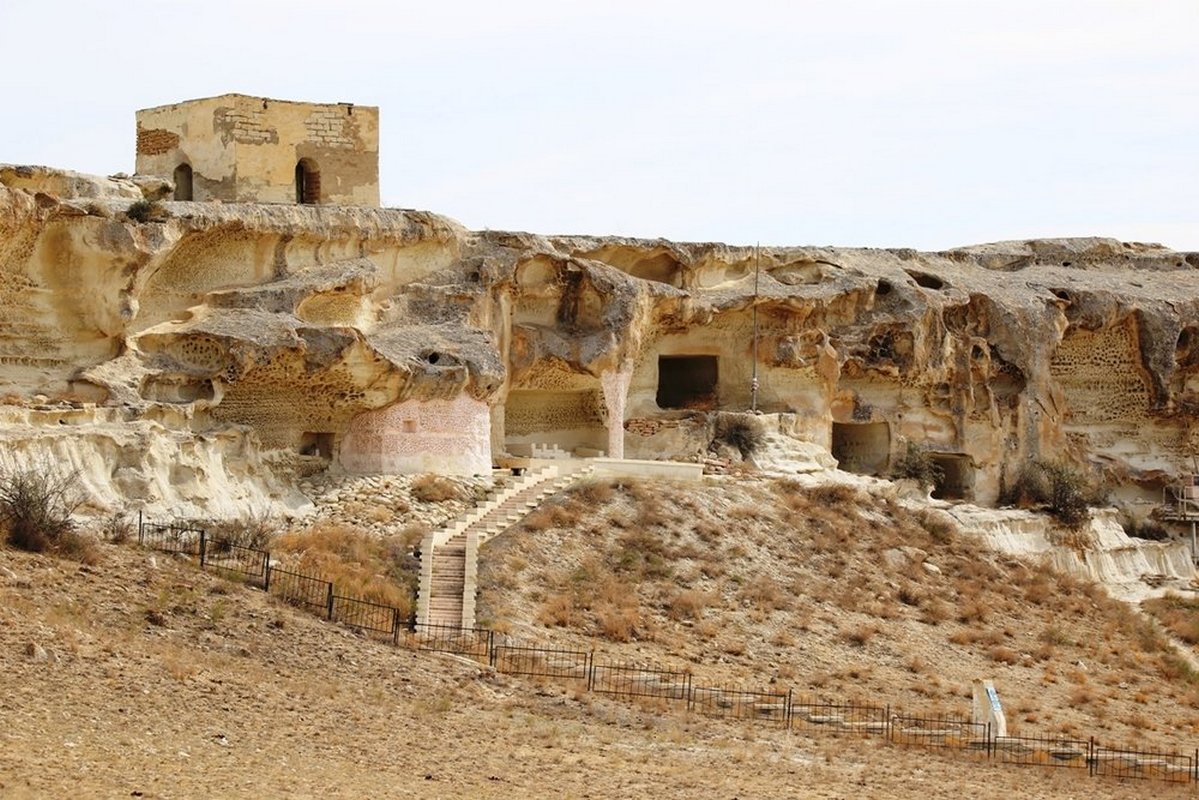
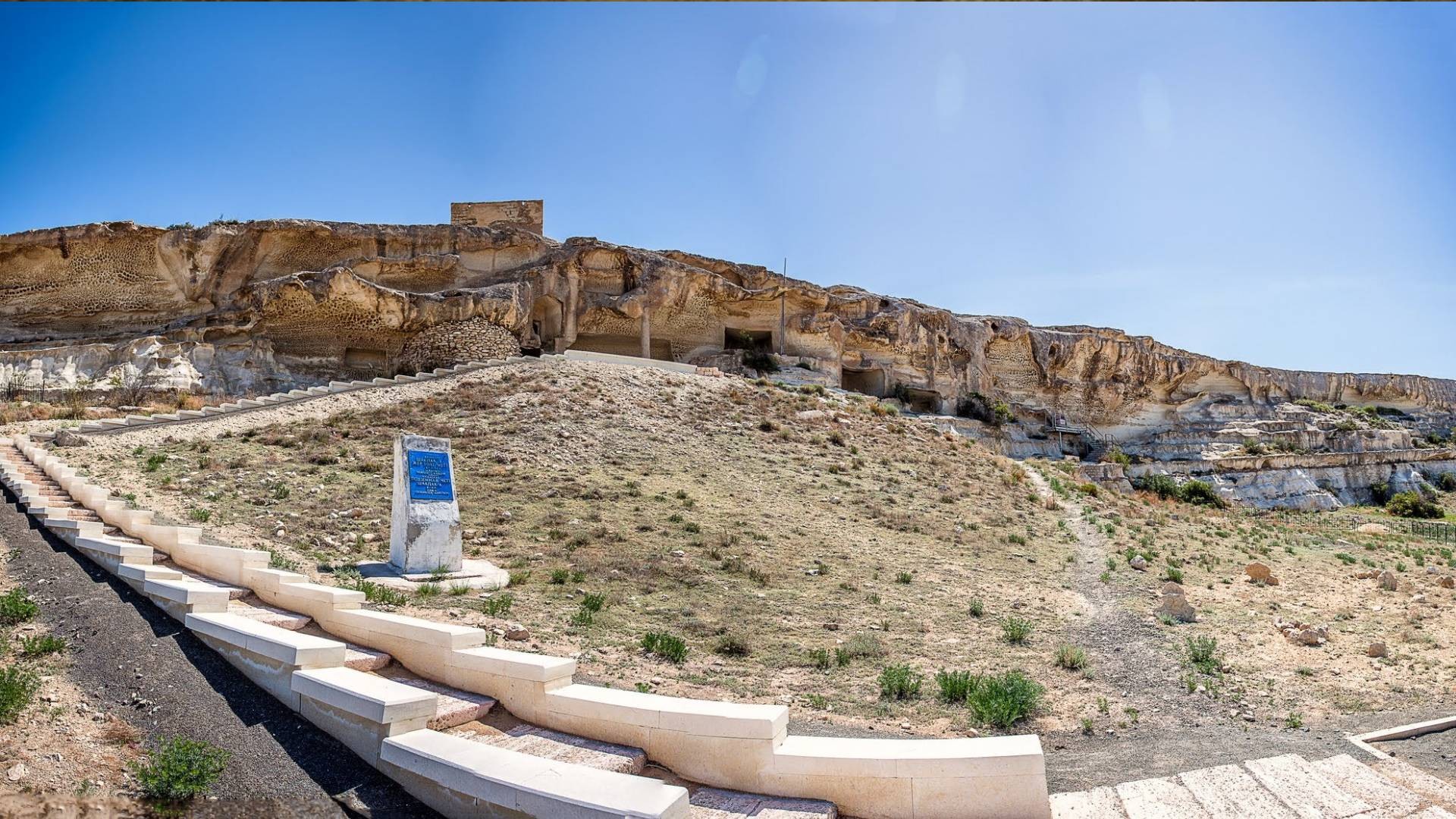
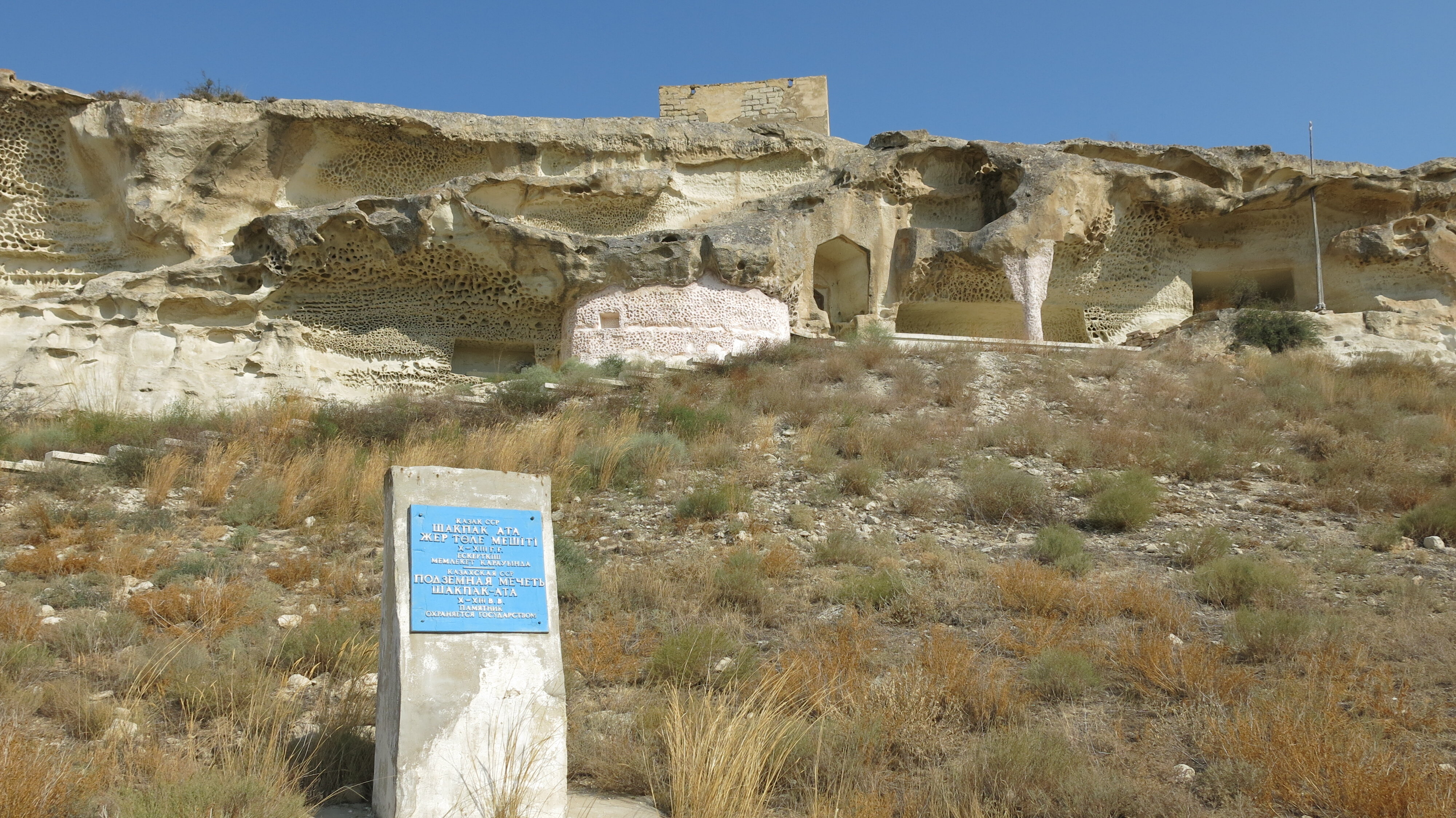
The Shakpak Ata Underground Mosque and Necropolis is one of the oldest and most sacred historical and cultural monuments in the Mangystau region of Kazakhstan. It is located in the Tupkaragan District of Mangystau Region, approximately 30–40 kilometers northwest of the village of Taushyk, at the foot of Ongazy Mountain. The complex is included in the list of historical and cultural monuments of national significance and attracts thousands of pilgrims and tourists from Kazakhstan and abroad every year.
Shakpak Ata is regarded as one of the 362 saints of Mangystau. According to local legends, he was a deeply knowledgeable Islamic scholar who educated disciples, spread religious teachings, and was also known as a brave warrior during times of conflict. The renowned researcher of Mangystau mythology, Serikbol Kondybay, described Shakpak Ata as a protector of the dead and the ruler of snakes. His real name is believed to have been Shahmardan, and he is considered a grandson of Shopan Ata. The name “Shakpak Ata” is associated with a legendary ability: it is said that when he touched one fingernail against another, sparks of fire appeared, allowing him to create fire whenever necessary. Because of this extraordinary gift, people deeply respected him and regarded him as a saint.
Scholars date the construction of the mosque to a period between the 9th and 14th centuries. Historian A. Medoev believed that Shakpak Ata lived in the 9th century, while the famous orientalist V.V. Bartold suggested that he may have lived during the 14th century, in the reign of Uzbek Khan. Due to the limited historical evidence available, the exact period of the saint’s life remains uncertain.
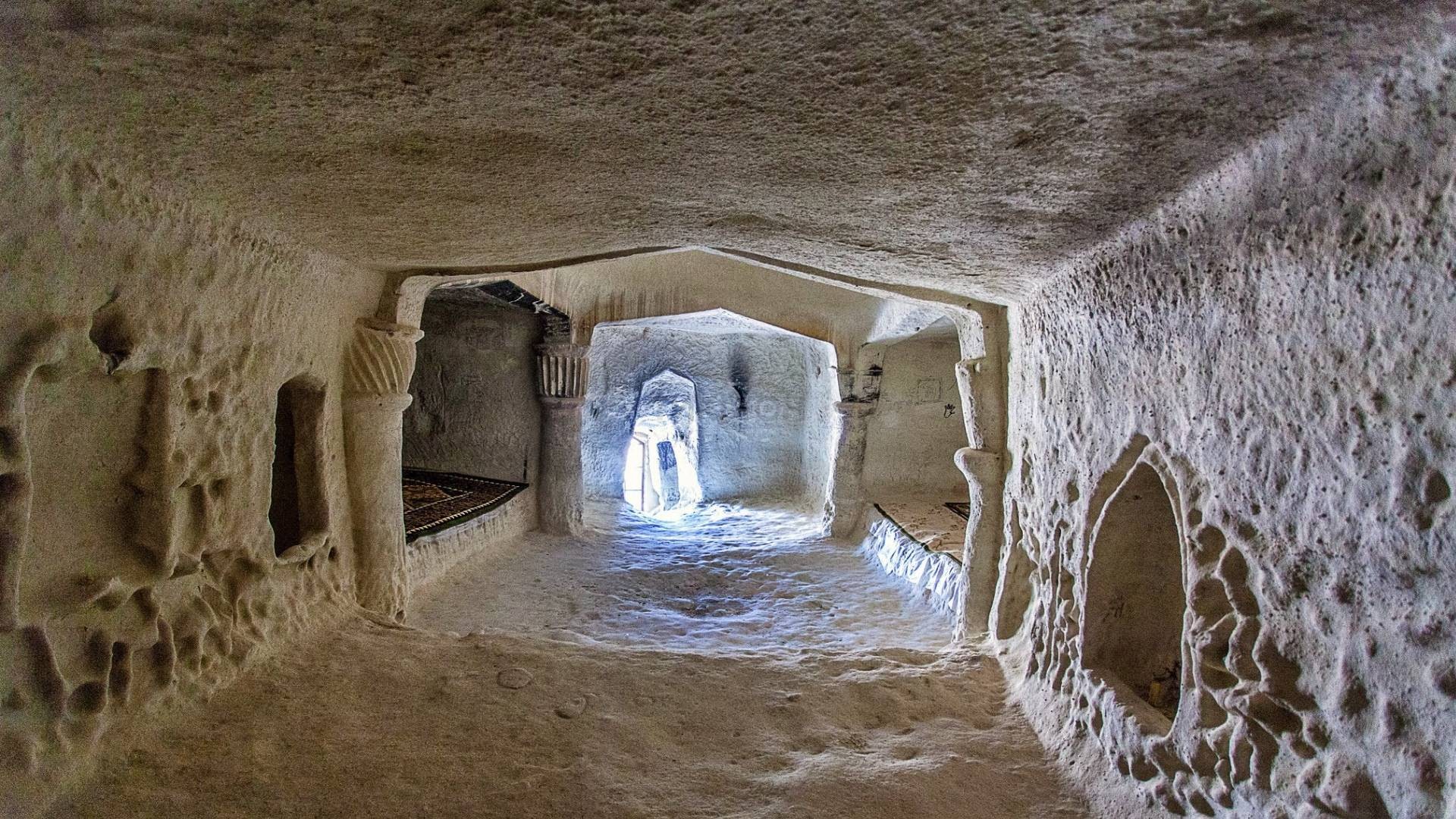
The underground mosque was carved directly into a layer of limestone rock. Its architectural design differs significantly from other underground mosques in Mangystau. The mosque consists of four main chambers, all connected through a central hall. The rooms are oriented toward the four cardinal directions—north, south, east, and west. The central hall is particularly impressive, featuring arched niches and a domed ceiling. A circular opening in the center of the dome allows natural light to enter the interior, demonstrating the advanced engineering skills of the builders of that era.
The interior walls and entrances are decorated with numerous carvings and inscriptions. Shakpak Ata is one of the most unique monuments in the Aral-Caspian region because of its abundance of written texts and images. Around 250 inscriptions in Arabic script have been preserved. Many contain Sufi-inspired verses about the transience of life, morality, and spiritual purity. Although the authors of most inscriptions remain unknown, researchers do not rule out the possibility that some texts may have been written by Shakpak Ata himself.
Among the carvings, images of human palms attract particular attention. Similar symbols can also be found at other sacred sites throughout Mangystau. The mosque walls additionally feature depictions of horsemen, animals, flowers, and weapons. These images provide valuable information about the historical and cultural life of the region.
In addition to the underground mosque, the Shakpak Ata complex contains numerous historical monuments from different periods. The necropolis includes saganatams, kulpytas gravestones, qoytas monuments, and other burial structures dating from the 10th to the 19th centuries. These monuments represent an important part of the architectural and funerary heritage of Mangystau.
Many legends about Shakpak Ata have been preserved among the local population. One popular story tells of a woman who was humiliated because she could not have children. When she followed Shakpak Ata, springs suddenly appeared in the barren land where they stopped, rain began to fall, and the area flourished. After this event, people came to regard the place as sacred and began visiting it to seek help and blessings during difficult times.
Today, the Shakpak Ata Underground Mosque and Necropolis is considered one of the most important sacred sites in Kazakhstan. Its remarkable architecture, ancient inscriptions and carvings, rich legends, and unique natural surroundings have made the complex an invaluable part of the spiritual and cultural heritage of both the Mangystau region and the entire Kazakh nation.
Source: archive.nationalgeographic.kz