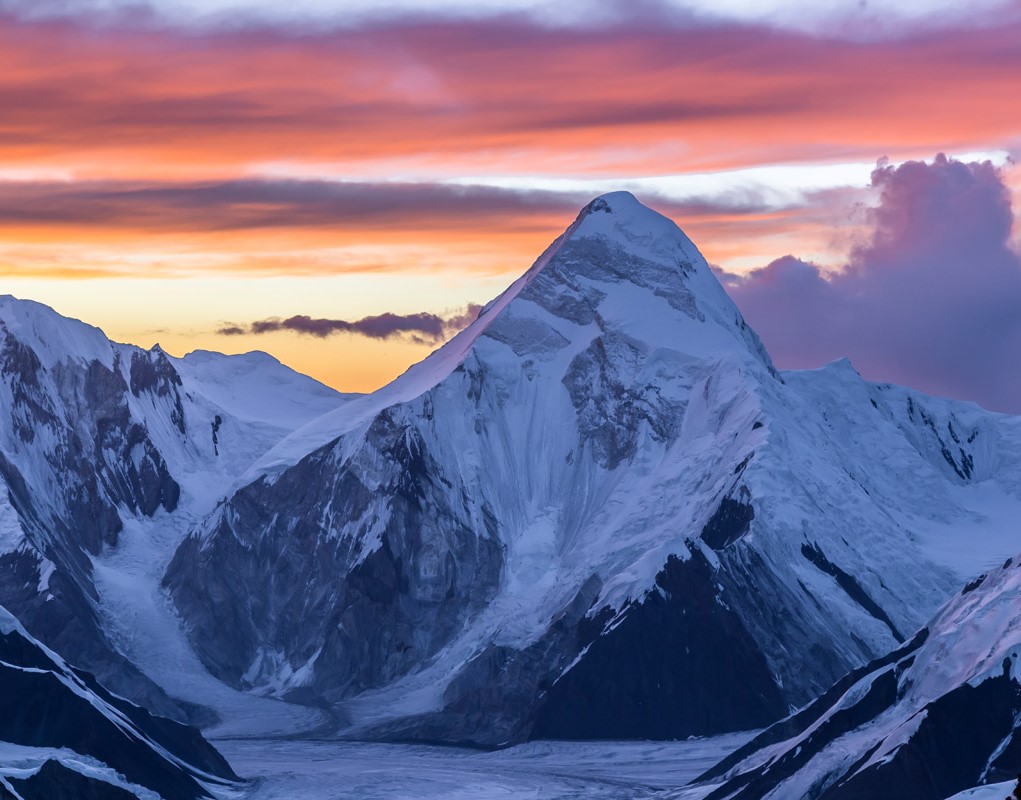
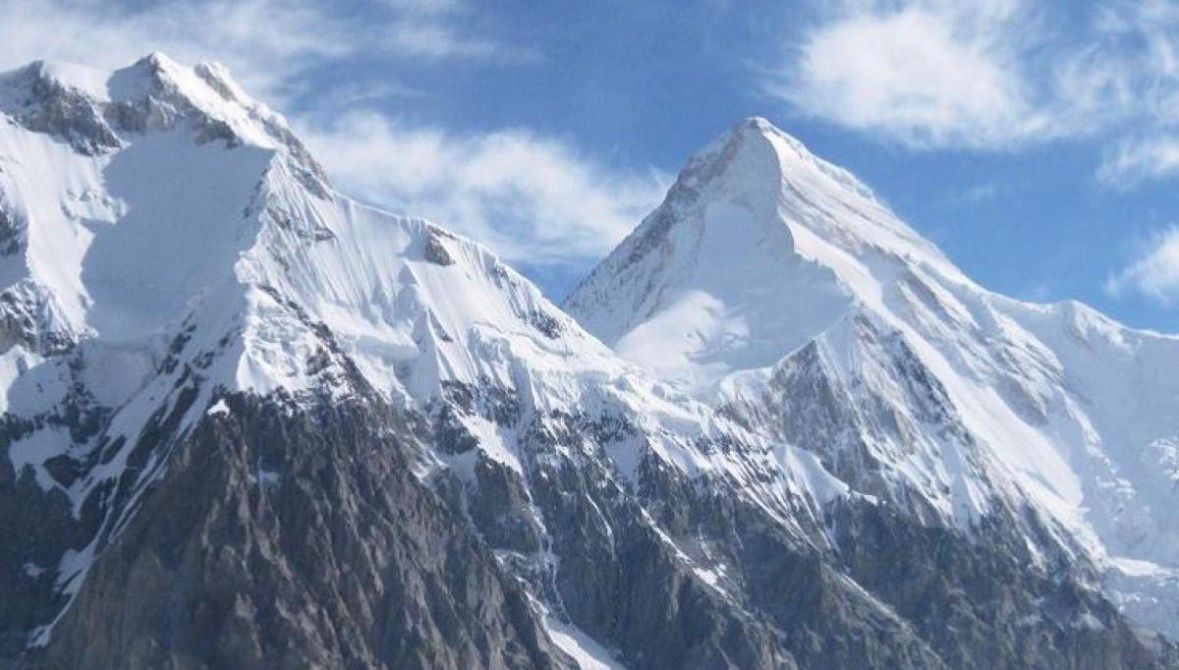
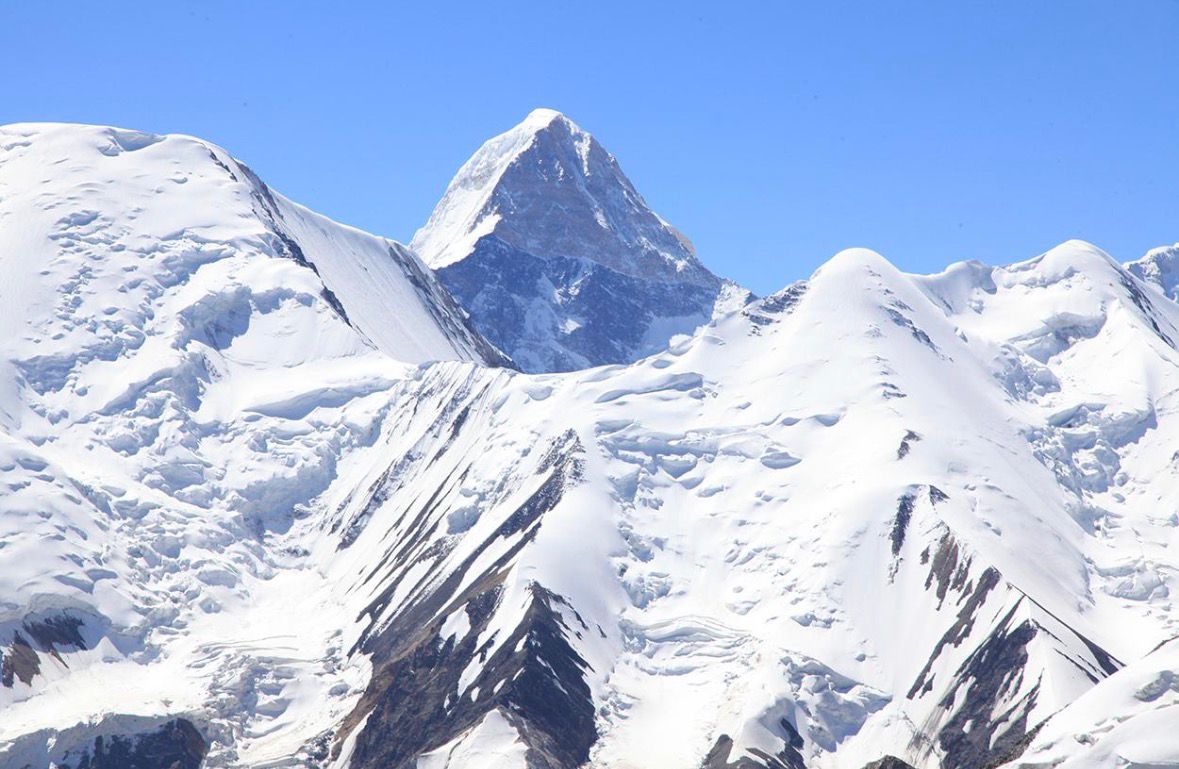
Khan Tengri is the most beautiful and unique peak not only in Central Asia, but in the entire world. Khan Tengri is located in the Central Tien Shan mountain system, within the Tengri-Tag range, at the junction of the borders of Kazakhstan, Kyrgyzstan, and China. Including its glaciers, the peak reaches an elevation of approximately 7,010 meters, and is distinguished by its sharply defined tetrahedral pyramid-like shape.
The name “Khan Tengri” originates from Turkic languages and is commonly interpreted as “Lord of the Sky.” The peak is particularly striking at sunrise, when it stands out vividly among the surrounding Tien Shan mountains, leaving a lasting impression on observers.
In ancient times, this region served as one of the important spiritual and cultural centers of the Turkic peoples. The mountains were regarded not only as natural formations but also as sacred spaces. In Turkic belief systems, Tengri is the supreme deity of the sky, and together with figures such as Umay and Erlik, forms part of a cosmological framework explaining the structure of the world. Within Tengriism, Tengri is understood as the highest force governing human destiny, life, and social order.
Although references to this region appear in ancient sources and chronicles, it was not the subject of systematic scientific study for a long period. Indirect mentions of the peak can be found in Chinese historical records and Byzantine texts. However, due to its extreme altitude and inaccessibility, the area remained largely unexplored for centuries.
Systematic scientific exploration of the Tien Shan began in the 19th century, when expeditions were gradually organized to study the region. At that time, access to these mountainous areas remained highly challenging due to limited technical capabilities.
One of the earliest scientific descriptions of Khan Tengri is associated with the work of Russian geographer Pyotr Petrovich Semenov-Tyan-Shansky, who first observed and documented the peak during his expeditions in 1856–1857. In his descriptions, the mountain is depicted as a massive snow-covered pyramid rising into the sky.
Locally, the peak was also known as “Kan-Tau” (“Blood Mountain”), a name derived from the reddish coloration of its slopes at sunset.
Later, significant contributions to the cartographic study of the Tien Shan were made by the expeditions of German geographer and mountaineer Gottfried Merzbacher (1902-1903, 1907-1908). He estimated the height of the peak at approximately 7,200 meters and provided detailed descriptions of the region’s geographical structure.
In the 20th century, Khan Tengri became one of the most technically demanding and prestigious objectives in mountaineering. It was ascended by Soviet and international climbers via multiple routes. From the 1930s onward, numerous expeditions explored its southern and surrounding slopes. Subsequent studies allowed for a more accurate understanding of the region’s topography and physical characteristics.
Today, Khan Tengri is recognized as a symbol of global mountaineering. The peak features numerous established climbing routes, with ascents typically requiring several days to two weeks depending on the route.
At the base of the mountain lies the international mountaineering camp “Khan Tengri”, which annually hosts hundreds of climbers and tourists and serves as a venue for international sporting and mountaineering activities.
Today, Khan Tengri stands as a unique natural landmark where natural beauty, historical heritage, and spiritual significance converge.
Sources: astana.citypass.kz