The Begazy-Dandybai Culture is a unique archaeological culture of tribes that inhabited Central Kazakhstan during the Late Bronze Age (9th–8th centuries BCE). The culture was named after the regions of Begazy and Dandybai, where the most significant traces of this ancient civilization were discovered and preserved.
The culture was thoroughly studied and scientifically described by the famous Kazakh scholar, archaeologist, and ethnographer Alkey Margulan. Under his leadership, major archaeological expeditions were carried out in 1947–1949 and 1952, leading to discoveries that became important not only for the history of Kazakhstan but also for the understanding of ancient Eurasian civilizations.
The Begazy-Dandybai culture is located in present-day Karaganda Region, approximately 40 kilometers from the settlement of Aktogay. Tribes of this culture inhabited vast territories stretching from Ulytau in the west to the Abyraly and Shyngys mountains in the east, and from the Zhetikongyr region southward to the Irtysh River. They settled along the Nura, Sarysu, and Karakengir rivers, as well as in the regions of Kyzylaray, Bugyly, Karkaraly, and Bayanaul.
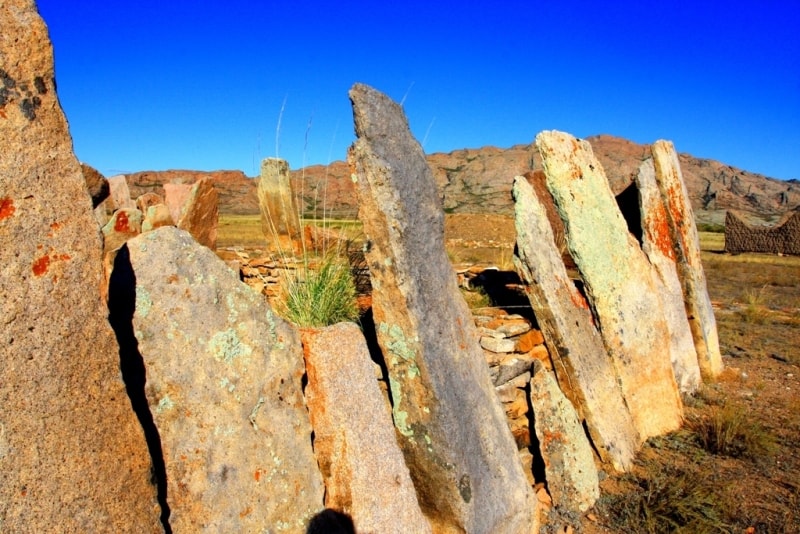
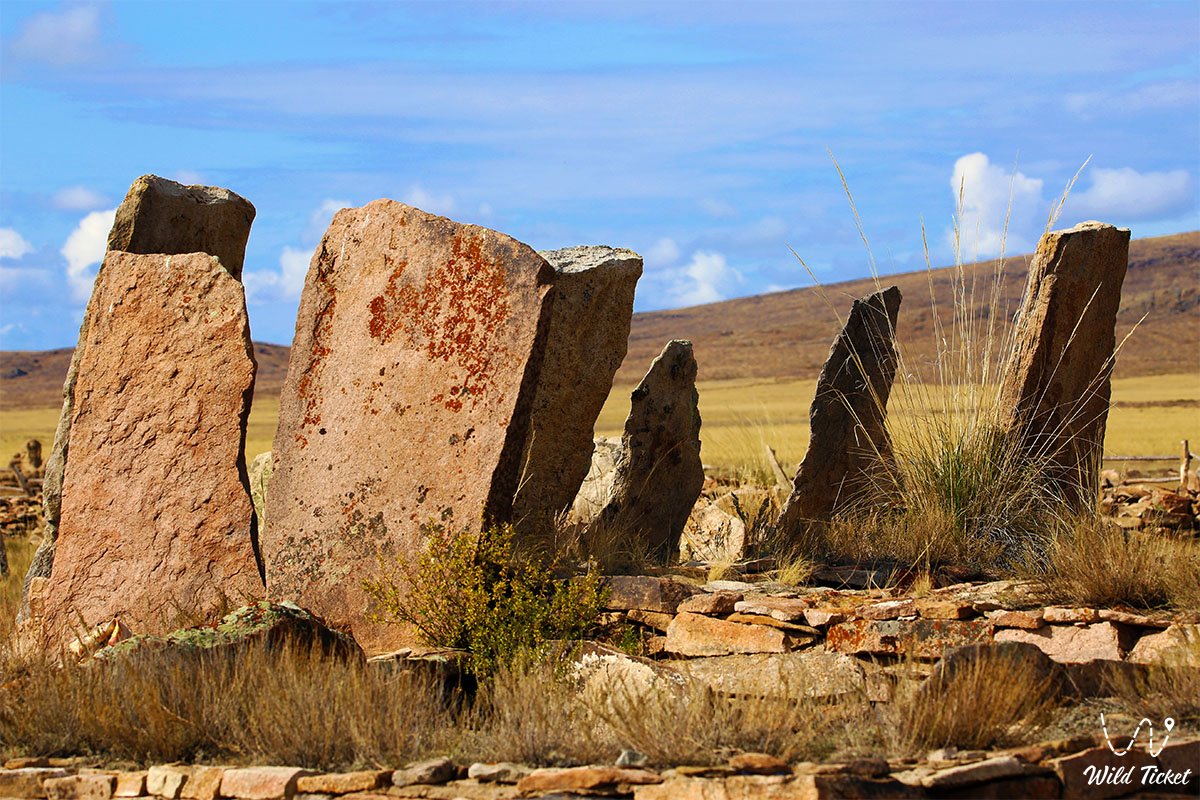
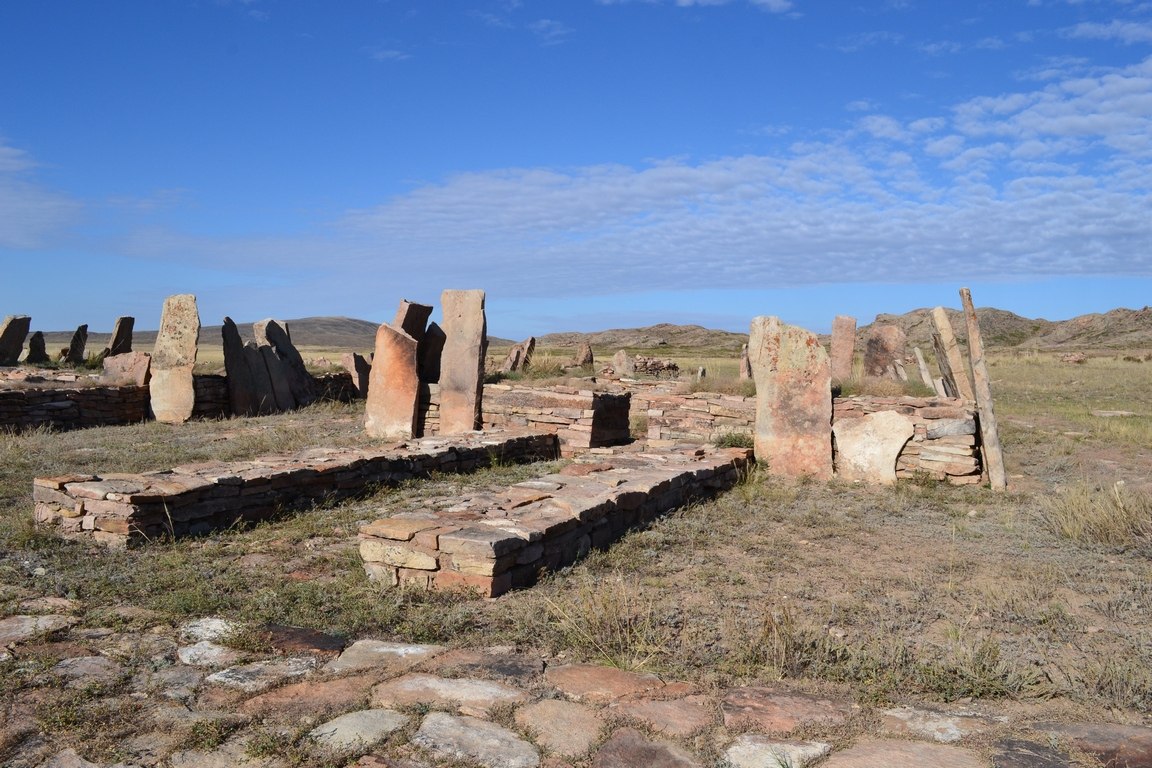
Although the culture developed on the basis of the earlier Andronovo culture, it introduced new burial traditions, architectural forms, and social structures. One of its most distinctive features was the construction of large stone mausoleums built for tribal leaders and members of the elite. These mausoleums were usually circular or rectangular in shape, with roofs covered by massive stone slabs and wooden beams arranged in a stepped, pyramid-like structure.
The deceased were buried in large stone cists together with weapons, jewelry, household items, and ritual objects. Alongside the traditional crouched burial position, extended burials on the back also appeared, reflecting changes in religious beliefs and worldview.
Ceramic pottery of the Begazy-Dandybai culture was highly distinctive. Clay vessels were decorated with ornaments resembling fir trees, crescents, notches, and geometric patterns. Some jugs and bowls featured decorative bands around the neck and rim. Pottery found in burial sites was especially refined and ornamented using bone stamps and carving techniques.
During this period, large settlements emerged in Central Kazakhstan, including Kent, Bugyly, Shortandybulak, Akkozen, Ulytau, and Karkaraly. Houses were built of stone and often contained four to six rooms. Alongside these, semi-underground dwellings and lightweight structures similar to yurts also existed. Special ritual and worship areas made of stone were often located inside or near the houses.
The main occupations of the population were copper mining and metallurgy, pottery making, agriculture, and cattle breeding. The tribes worshipped natural forces such as the sun, fire, and water, and also revered sacred animals including horses, sheep, camels, wolves, and bears. Rock carvings depicting these animals have been discovered at sites such as Koyshoky, Aksu-Ayuly, and Kyzylaray.
The tribes of the Begazy-Dandybai culture had a relatively advanced social organization with influential leaders, developed spiritual beliefs, and elements of political and administrative systems. Metallurgy and craftsmanship reached a high level of development, and the society showed signs of forming early state-like associations.
These tribes maintained close cultural and economic ties with the Zamaraevo culture of the Southern Urals and the Karasuk culture of the Altai and Yenisei regions. The main feature of the Begazy-Dandybai culture was the emergence of new cultural traditions based on earlier Bronze Age foundations. Changes in architecture, burial practices, crafts, and spiritual life demonstrate that society had entered a new stage of development.
Today, the Begazy-Dandybai culture is considered one of the most important archaeological cultures in the ancient history of Kazakhstan. Artifacts discovered in burial grounds — including pottery, weapons, jewelry, and ritual objects — provide valuable insight into the lifestyle, beliefs, and culture of the ancient tribes of Central Asia.
Source: kk.wikipedia.