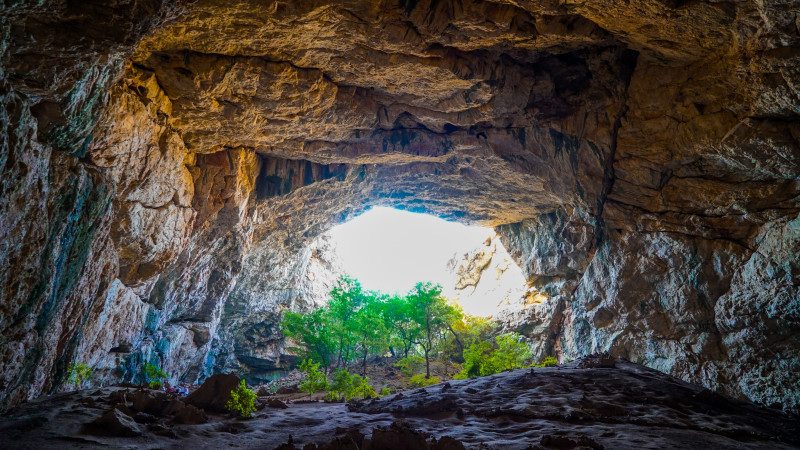
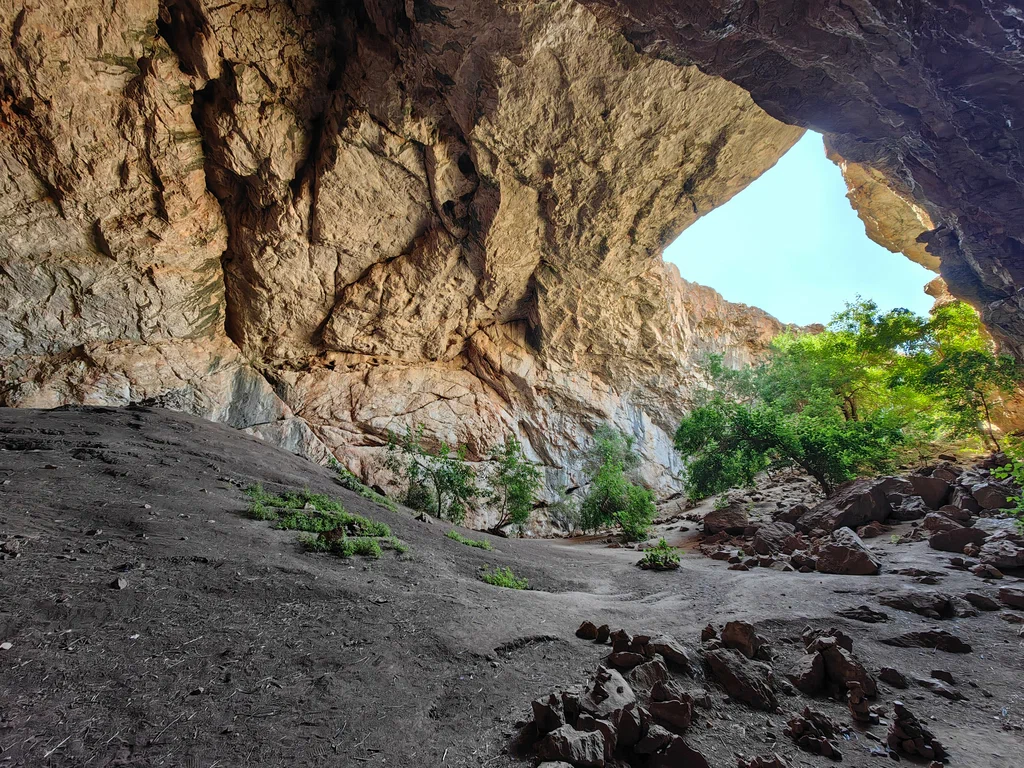
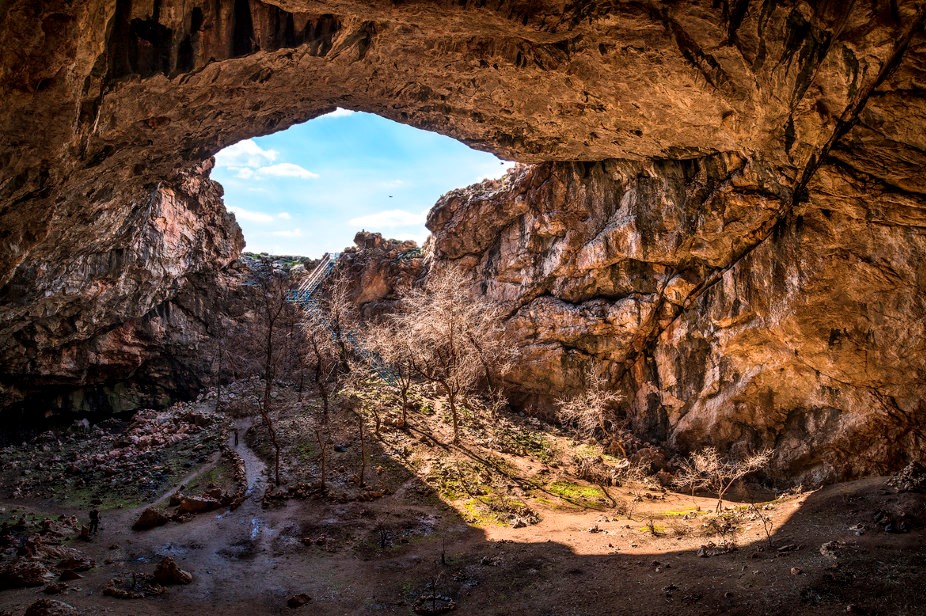
Akmeshit Holy Cave is a natural cave formed within layers of limestone rock, located in the Baydibek district of the Turkestan region. Its total length is 254 meters, width 65 meters, and height about 25 meters. Water occasionally drips through cracks in the cave walls.
From the inside, the upper opening of the cave resembles the dome (shanyrak) of a traditional Kazakh yurt.
According to local legends, a holy man once lived here with his family, setting up a yurt and moving up and down using a ladder. Even today, childless couples and sick people come to stay overnight, make pilgrimages, and pray. There are many legends about this cave.
One of them is associated with the warrior Yesirkep Koigeldy. During a military campaign against the Kalmyks, a heavy rain suddenly began, and more than ten thousand soldiers took shelter in the cave. They performed the morning prayer there.
When the question arose of naming the unnamed cave, one of the warriors suggested naming it after the hero. However, Yesirkep Koigeldy firmly refused, saying:
“This is a sacred land of the Karatau mountains. It protected us and our horses from the rain and allowed us to pray. The stones inside are white like cotton and create a unique impression. That is likely its sacred nature. Therefore, let us call it ‘Akmeshit’.”
Since then, the sacred site has been passed down through generations under the name “Akmeshit.”
According to researchers who studied its geography and structure, the cave was formed through the natural erosion of limestone layers. Its inner opening resembles the dome of a yurt.
Inside, there is a large crack about 7–8 meters long. Visitors climb along this path, offering prayers and wishes to God. The exact origin of this tradition is unknown.
Another legend says that in ancient times, there was a mosque-like space inside the cave where people gathered for prayer and worship.
Local historians claim that secret passages once led into this mosque, but about two centuries ago part of the dome collapsed, creating a large opening, and due to geological changes, the old passages were lost.
Biolocation studies of the cave have shown that there are no harmful geomagnetic or microwave emissions that could affect human health. In other words, the cave does not have any negative biological impact on the human body.
Source: kk.wikipedia, egemen.kz