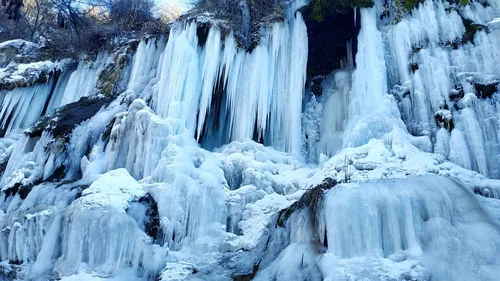
The Zhylaq Ata Dripping Waterfall is a sacred water feature that forms part of Kazakhstan's hydrological heritage. It is known for its continuous slow dripping flow of water rather than a strong or fast waterfall stream. Because of this unusual characteristic, it is locally referred to as a “dripping waterfall.” The site is regarded as both a natural phenomenon and a spiritually significant place.
The waterfall is located in a rocky, mountainous or hilly area with a rugged stone landscape. Water seeps through underground layers or rock fractures and emerges at a single point, where it continuously drips downward in a steady rhythm. The surrounding environment has a humid microclimate that supports moss, lichens, and other moisture-loving plants. This creates a small but stable natural micro-ecosystem around the site.
The defining feature of the Zhylaq Ata waterfall is its uninterrupted dripping flow. Over time, mineral deposits may form on the rocks due to the water’s composition. The water may contain natural minerals such as calcium and magnesium, which leads some local residents to believe it has healing properties.
The name “Zhylaq Ata” is connected to local folklore. The word “zhylaq” is associated with “tears” or “dripping,” reflecting the constant falling of water droplets. The word “ata” in Kazakh culture often refers to a respected elder or a saintly spiritual figure. According to legends, Zhylaq Ata is considered a sacred personality, and the waterfall is sometimes interpreted as a symbol of his tears or prayers.
For local communities, the waterfall is considered a sacred place. Visitors come here to pray, make wishes, and seek spiritual peace. It is seen as a symbol of purity, patience, and spiritual cleansing. Some people believe the water has sacred qualities and collect it for personal or ritual use.
Although there are few written historical records about the site, it is preserved in oral traditions and local folklore. Such places reflect the traditional Kazakh worldview, where nature and spirituality are closely connected.
Today, the Zhylaq Ata Dripping Waterfall is considered a locally significant natural and cultural landmark. It attracts pilgrims, tourists, and researchers interested in natural heritage and folklore. Infrastructure in the area remains limited, so the site is largely preserved in its natural state. It is regarded as a unique combination of geological rarity and spiritual heritage within Kazakhstan’s natural landscape.