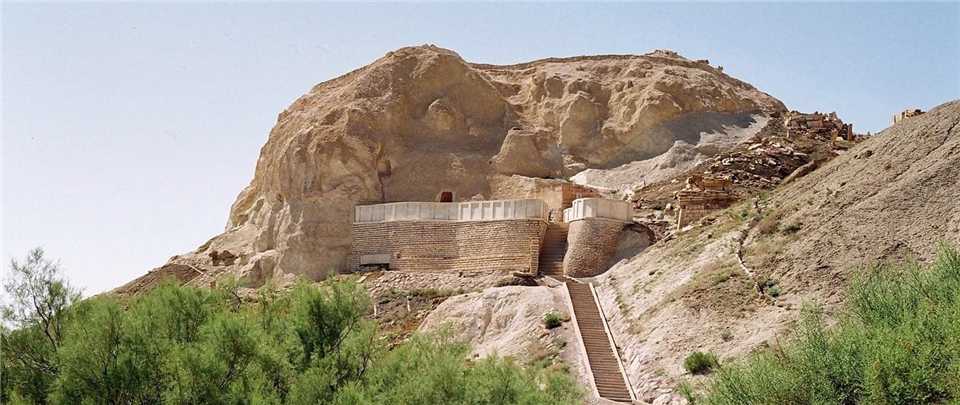
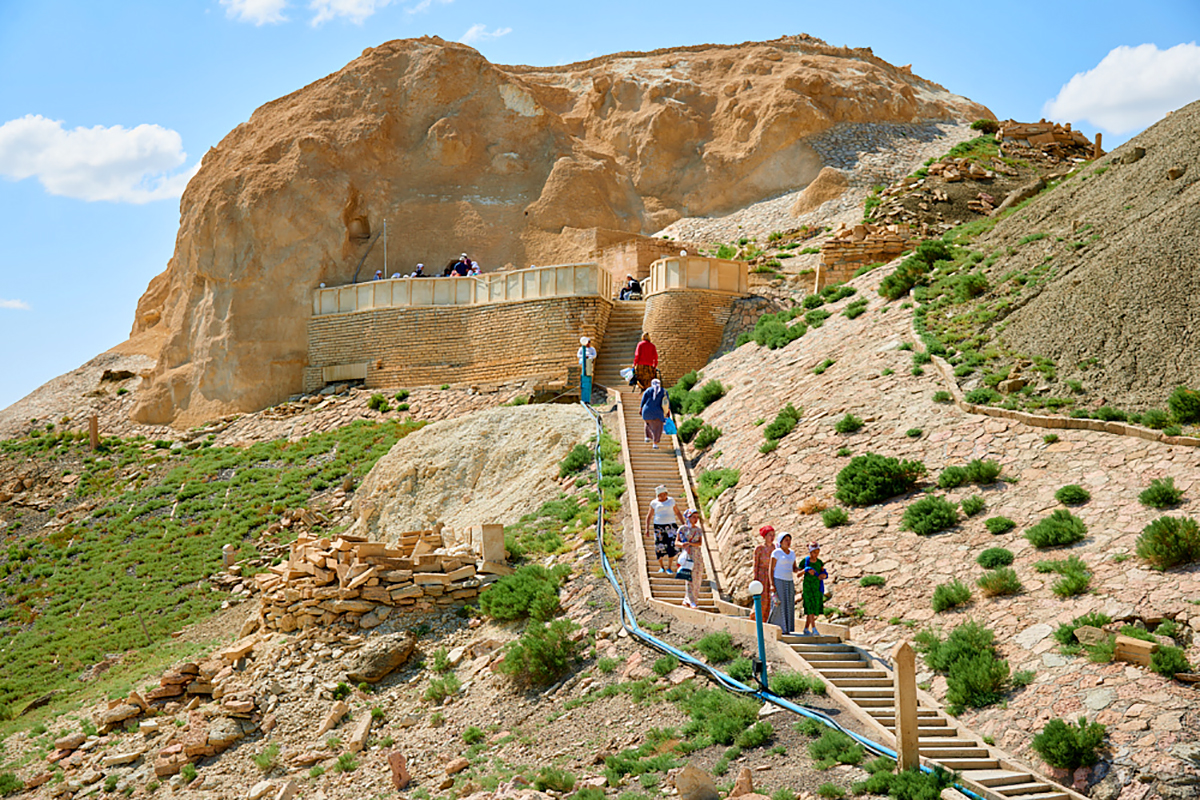
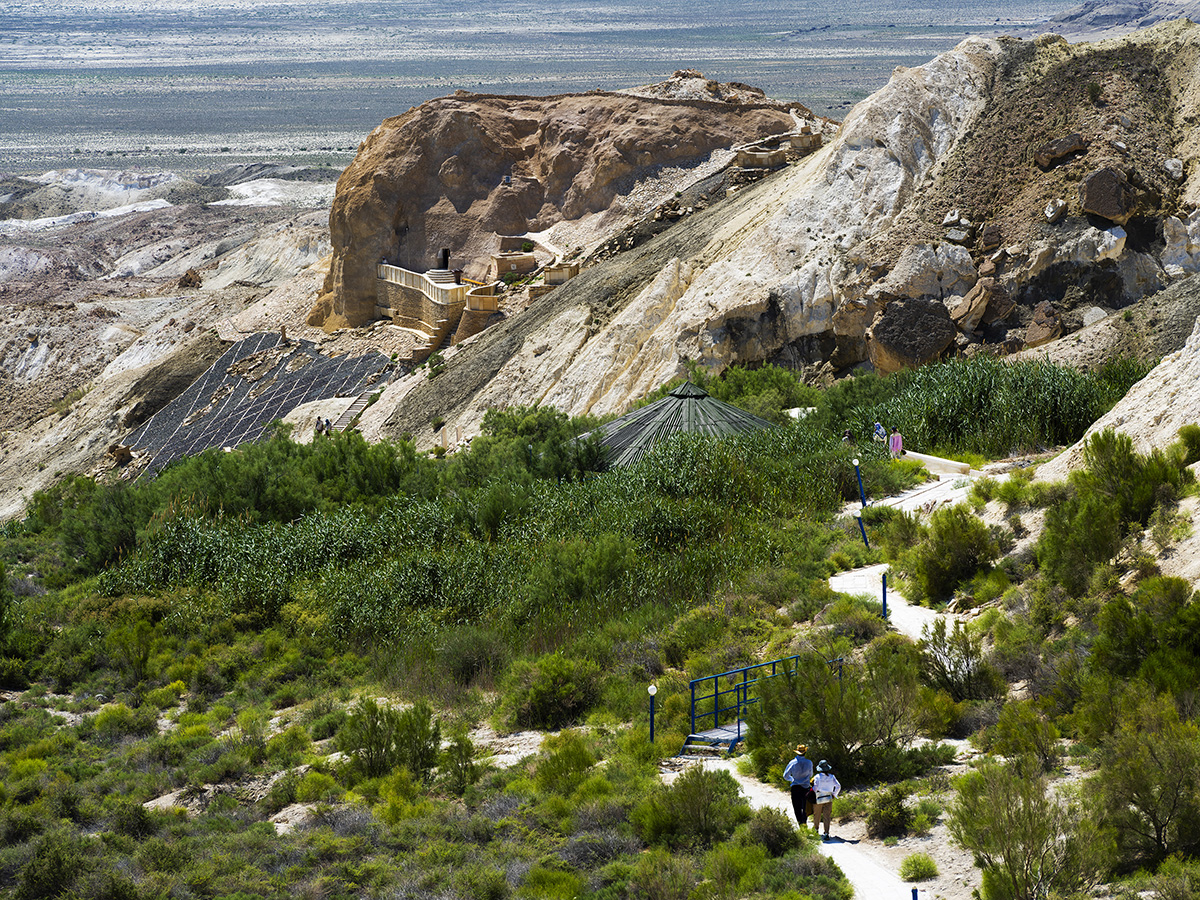
The Underground Mosque of Beket Ata in the Oglandı area is located approximately 290 kilometers from the city of Aktau. When speaking about Mangystau, it is impossible not to mention this underground mosque. The name Beket Ata remains a spiritual symbol to this day: people turn to him in both joy and sorrow, asking for support and blessings. Every year, pilgrims and tourists from all over the world come here not only for ziyarat but also to see the unique architecture of this place.
On the way, visitors usually first stop at the Shopan Ata Mosque and pay their respects. Shopan Ata is considered the spiritual mentor of Beket Ata and is revered as one of the saints of Mangystau. After that, about 70 kilometers further along the route, travelers reach the Beket Ata complex. However, to get directly to the underground mosque itself, it is necessary to walk about 1.5 kilometers down a specially carved staircase path. This sacred site, built in the 18th century, is one of the most famous historical monuments of the region.
The mosque, carved into a light-colored stone gorge, consists of 4 chambers. The entrance is very low and narrow. The first chamber is a dome-shaped entrance hall illuminated from above. On the western side is a prayer room with a mihrab facing south. In the southeastern section, one of the rooms contains the burial place of Beket Ata himself. In the rear chamber stands a sacred staff which, according to tradition, he used while praying and blessing people. The rooms are circular in shape, with heights ranging from 2.7 to 3.5 meters. Niches for lamps are built into the walls.
The Beket Ata Mosque is a spiritual and historical monument, a heritage of Sufi architecture. Researchers suggest that this place may have served not only for religious worship but also as an observatory for monitoring the movement of celestial bodies. Considering that Beket Ata received extensive knowledge in Khorezm, this theory seems quite plausible. According to legends, he was able to predict in advance the severity of winters, droughts, and periods of rainfall.
According to historical and folk sources, Beket Myrzagululy lived from 1750 to 1813. His birthplace is believed to be the present-day Atyrau Region, Zhylyoi District, the village of Aqqiiztogai, although he spent most of his life in Mangystau. Among the people, he is known as a healer, fair biy, wise man, and defender of the people, as well as a warrior who protected his homeland during times of conflict. In his teachings, he called on people to live honestly, kindly, and in peace with neighboring nations.
In his youth, he studied for 14 years at the Shergazy Khan Madrasah in Khiva, where he learned not only religious disciplines but also sciences such as astronomy, biology, chemistry, medicine, and literature. After returning to his homeland, he continued the work of his teacher and promoted the tradition of building underground mosques, contributing to the spread of knowledge and spirituality among the people.
Today, visitors to the underground mosque of Beket Ata note the special atmosphere of this place and speak of its strong spiritual energy. It is believed that the true sacredness of this site cannot be conveyed in words - it can only be felt by visiting it in person.
Source: archive.nationalgeographic.kz