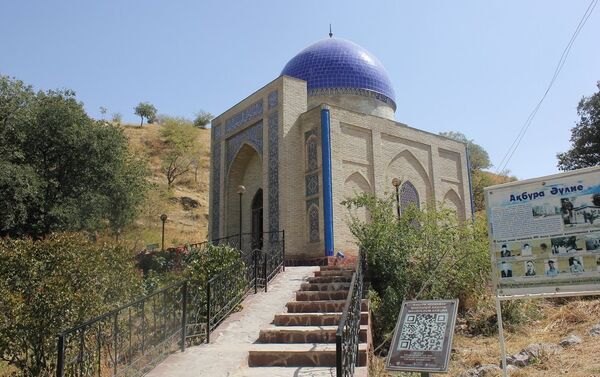
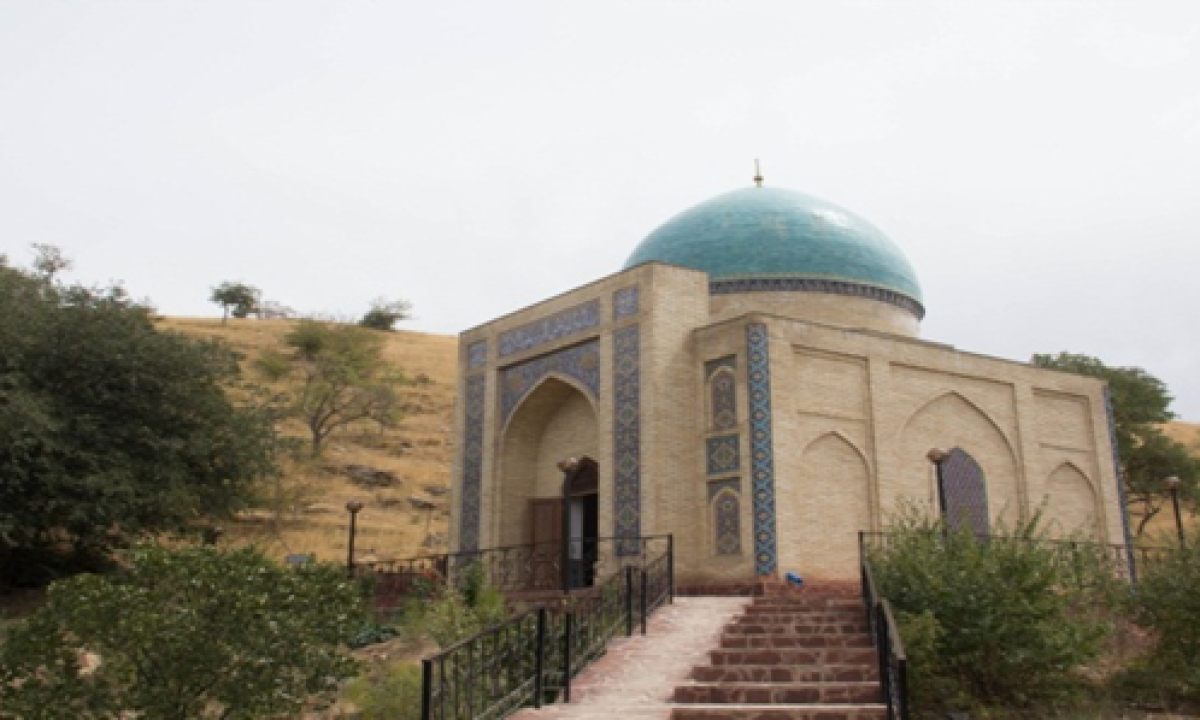
Akbura Mausoleum is located 6 kilometers east of Atbulak village in the Kazygurt district. It is an architectural monument of a square shape with a single dome. The walls of the mausoleum are built from burnt brick and decorated with various ornaments, while the dome is covered with a sky-blue glazed coating. The structure measures 9.8 meters in length, 9 meters in width, 6 meters in height, and the dome reaches a height of 3 meters. A nearby healing spring and the mausoleum itself have long been a place of pilgrimage and spiritual reverence.
According to folk legends, Akbura-ata was a contemporary and a disciple of Khoja Ahmed Yasawi. His real name, as legends say, was Akberdi. Folk stories tell that he traveled on a white camel (bura) and constantly performed dhikr (zikr). Because of this, he later became known as Akbura-ata.
One legend says that during the time of Khoja Ahmed Yasawi, a sheikh with extraordinary abilities lived near a spring. His white camel (bura) was so fast that even birds could not keep up with it. During dhikr, foam appeared from the saint’s mouth, and his figure in white clothing resembled a powerful bura. It is said that when he arrived in Turkestan, he recited prayers, and Khoja Ahmed Yasawi greeted him with the words: “My bura, have you come?”
There is another tradition connected to Akberdi-ata’s remarkable abilities. It is said that after performing the two sunnah rak’ahs of the morning prayer at the spring, he would suddenly disappear. Before the obligatory part of the prayer began, the saint would manage to reach Turkestan, perform prayer together with Khoja Ahmed Yasawi, and then return to the spring to continue his prayers and dhikr.
In some ancient manuscripts written in Old Turkic, it is mentioned that Akbura-ata performed the sunnah of the morning prayer in Kazygurt and the obligatory prayer in the Kaaba. These legends reflect the deep veneration of the saint among the people and the belief in his extraordinary spiritual abilities.
Source: ruh.kz