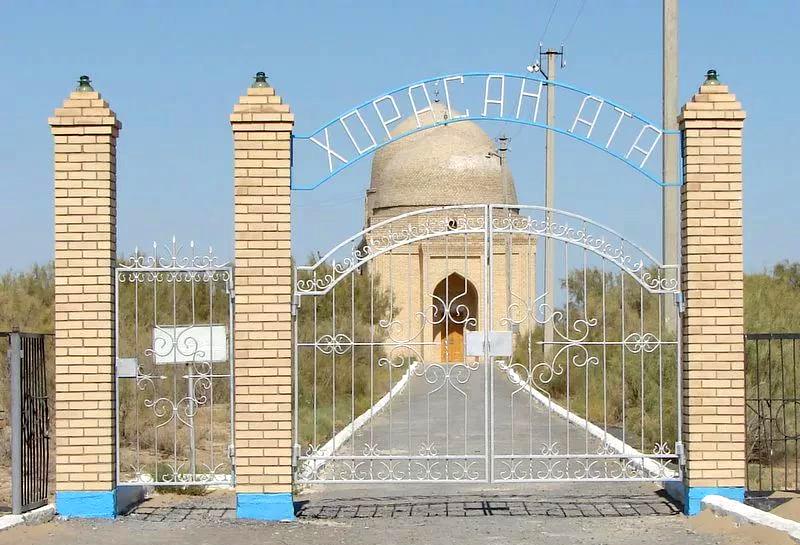
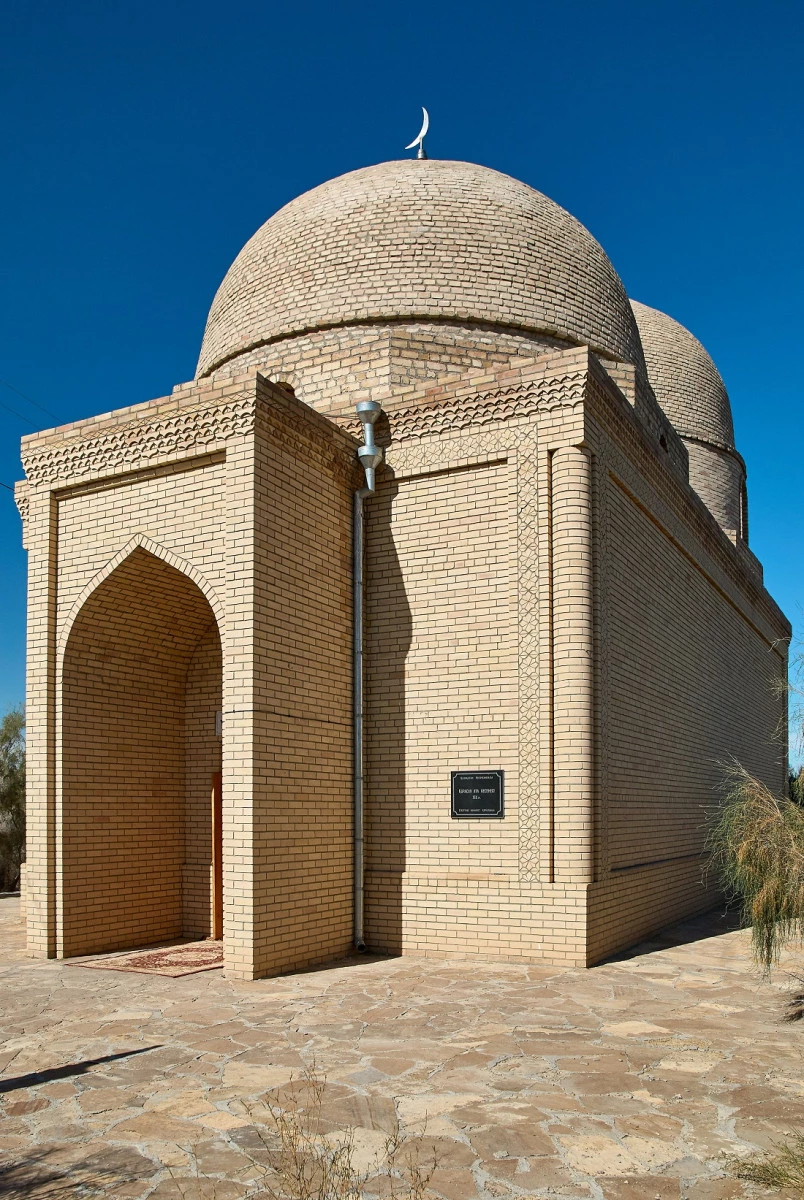
Khorasan Ata Mausoleum is a sacred site included in the list of historical and cultural monuments of republican significance in the Kyzylorda region. It is also part of the list of national sacred sites of Kazakhstan. It is located in the Kyzylorda region, 21 km southwest of Zhanaaryk village in the Zhanakorgan district.
Abd al-Jalil bab Khorasan Ata, according to the genealogy “Nasab-nama,” is considered a descendant of the fifth generation of Muhammad al-Hanafiyya, the son of Ali ibn Abi Talib (Hazrat Ali). He acted as a guide and mentor, having a significant influence on strengthening Islam among the Turkic peoples for centuries. He viewed the spread of Islam not only as a religion but also as a teaching harmoniously integrated with the nomadic culture of the Turks. Therefore, he was honored among the people as a very wise, healing, and far-sighted saint. A special feature of this sacred place is the presence of a replica of the Kaaba from Mecca.
According to legend, the son of Khorasan Ata was a learned imam. Khorasan Ata himself supposedly flew every Friday on the winged horse Akmaya from the “Totykus” island to Mecca and returned after the morning prayer. Upon learning this, his son Hussein asked: “If you allow me, I will bring the Kaaba from Mecca here.” The father, wishing to test his intention, agreed. The son then brought the Kaaba, placing it on a carpet. Khorasan Ata, impressed by his power, did not allow the Kaaba to be placed on the ground and only outlined its contour. Later, a mound of sand formed on that spot, and a local version of the Kaaba was built there.
Today, this place is considered especially sacred for pilgrims. Visitors circumambulate the Kaaba seven times, recite prayers, and drink holy water from a nearby well, seeking spiritual purification. This ritual is regarded as spiritual preparation for the true Hajj in Mecca.
The structure is built of clay. The replica of the Kaaba measures approximately 6.5 × 6.5 meters, with a height of about 5 meters. The entrance door is located on the north-eastern side. It is believed that inside one can pray in any direction without laying a prayer mat, and the prayer will still carry spiritual merit. The famous thinker Khoja Ahmed Yasawi also visited this place and, in his hikmets, emphasized the spiritual significance of Khorasan Ata.
The building was restored in 1995. Traces of ancient walls are preserved inside. In addition, visiting and drinking water from the well on the northern side is an important part of the ziyarat (pilgrimage) tradition.
Source: qazir.kz