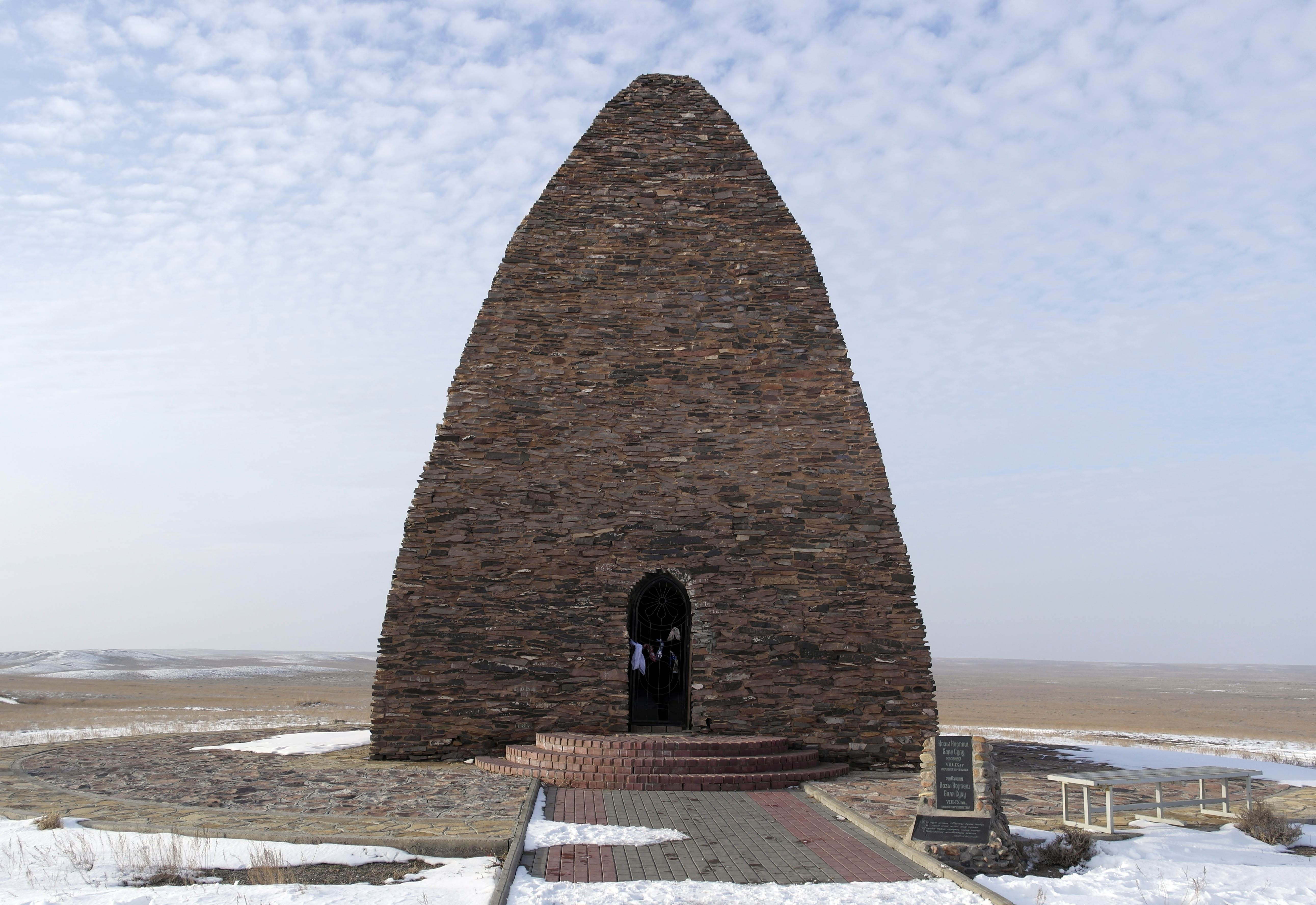
Mausoleum of Kozy Korpesh and Bayan Sulu is a monument of architecture dating to the 8th-10th centuries and is recognized as a heritage site of republican significance. This historical landmark is dedicated to one of the most famous and beloved figures of Kazakh folklore - Kozы Korpesh and Bayan Sulu, symbols of tragic and eternal love. The story, widely spread across the Turkic world, is considered an important part of ancient cultural and spiritual heritage.
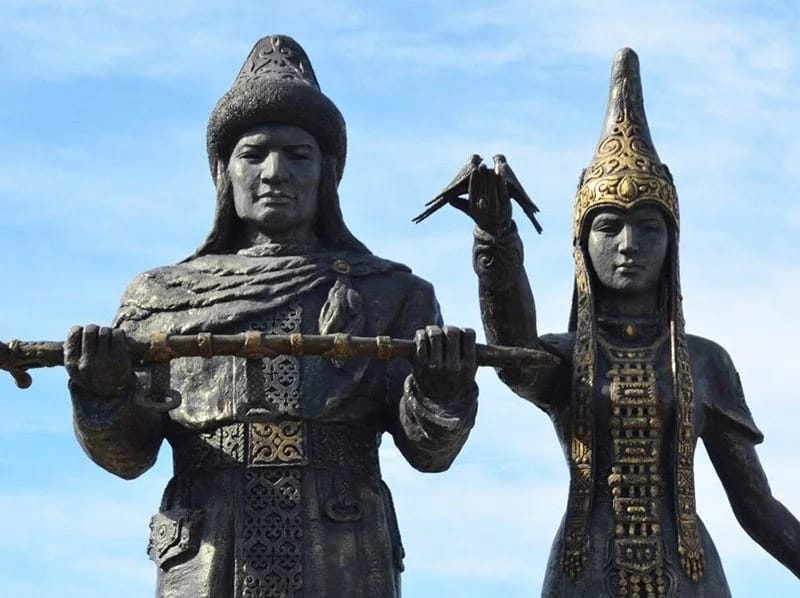
The monument has been repeatedly studied by researchers as one of the key examples of medieval architecture. In 1856, Chokan Valikhanov documented the mausoleum and nearby stone sculptures, creating drawings that became important scientific materials. These sketches of stone figures still hold great historical value. According to folk traditions, the sculptures near the mausoleum are associated with Kozы Korpesh, Bayan Sulu, and their relatives.
Later, the site was studied by Nikolay Abramov in 1858 and Nikolay Pantusov in 1898. In 1952, an archaeological expedition of the Academy of Sciences of the Kazakh SSR led by Alkey Margulan conducted a detailed scientific investigation of the monument. In 1982, the mausoleum was officially included in the list of republican-level historical and cultural monuments and placed under state protection.
The mausoleum is located on the picturesque bank of the Ayagoz River. The river bends around the monument in a wide arc, creating a striking natural landscape. From the right bank, there is a beautiful panoramic view of the river valley. To the south of the mausoleum lies a large ancient cemetery with stone grave markers.
According to legend, Sarybay and Karabay once agreed to betroth their unborn children. However, Sarybay died during a hunt before his son was born. Later, Kozы Korpesh and Bayan Sulu, bound by this promise, grew up separately but eventually fell in love. However, Karabay broke his promise and decided to give his daughter to a local warrior named Kodar, who had previously saved his herds. This created a tragic conflict between the lovers. The confrontation between Kozы and Kodar ended with Kozы’s death. Overcome with grief, Bayan took revenge by tricking Kodar into digging a well and causing his death. Unable to bear her loss, she also died.
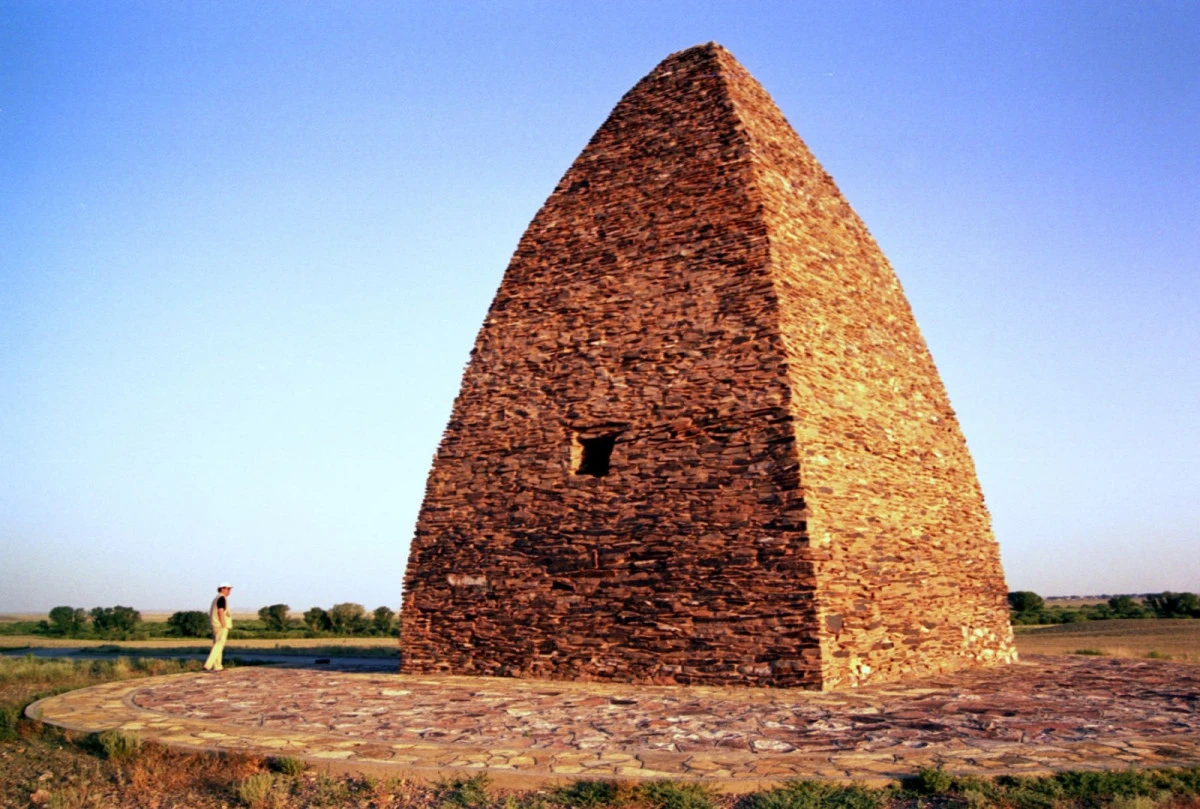
From an architectural point of view, the mausoleum is a square-based tower structure. Its height is approximately 11.2 meters. The walls gradually taper upward and end in a rounded top. The inner chamber measures 3.3×3.3 meters with a height of 4.85 meters. Traces of the original interior decoration are still visible on the walls.
The structure was built from stone slabs using clay mortar. Over time, it has undergone several restorations, which have altered its external appearance to its present form. Inside the chamber are two tombstones dedicated to Kozы Korpesh and Bayan Sulu. The entrance is a three-step passage, and a circular stone-paved area with a diameter of about 20 meters surrounds the monument.
Today, this mausoleum is not only an architectural monument but also a sacred site, preserving ancient traditions and folk legends, and representing an important part of Kazakhstan’s historical and cultural heritage.
Source: ruh.kz