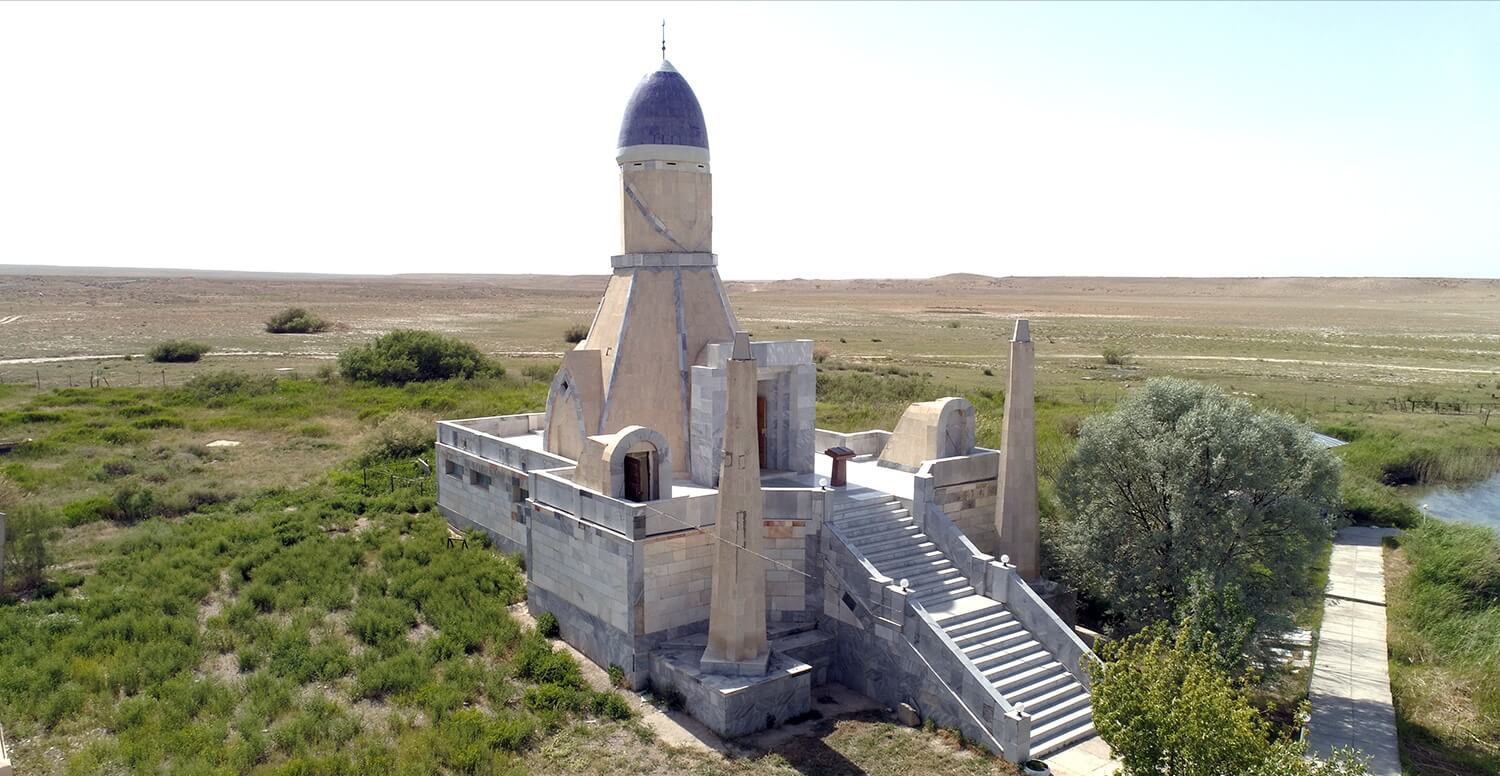
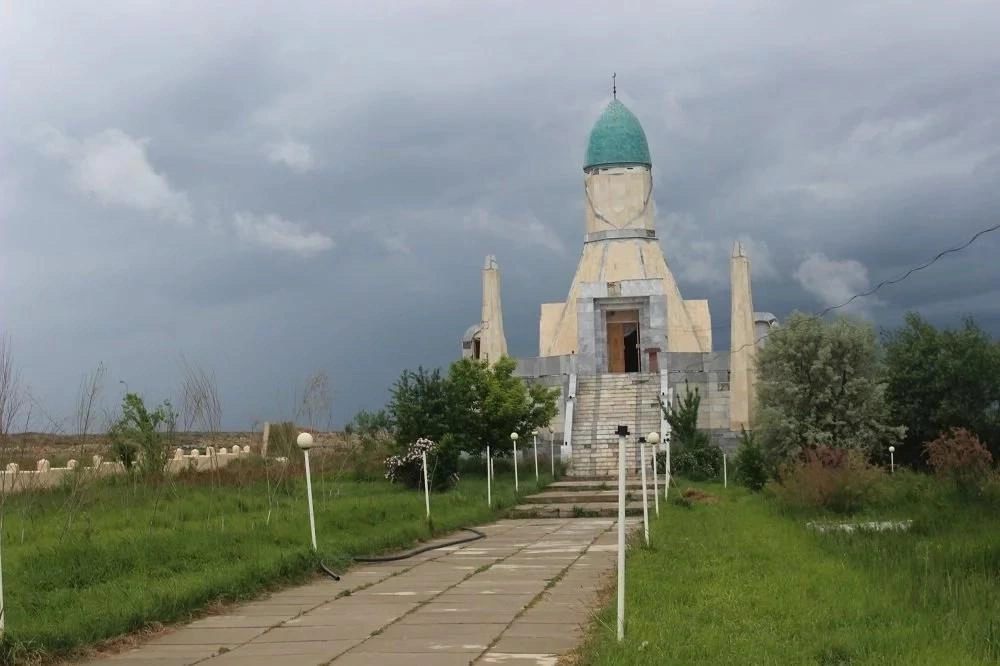
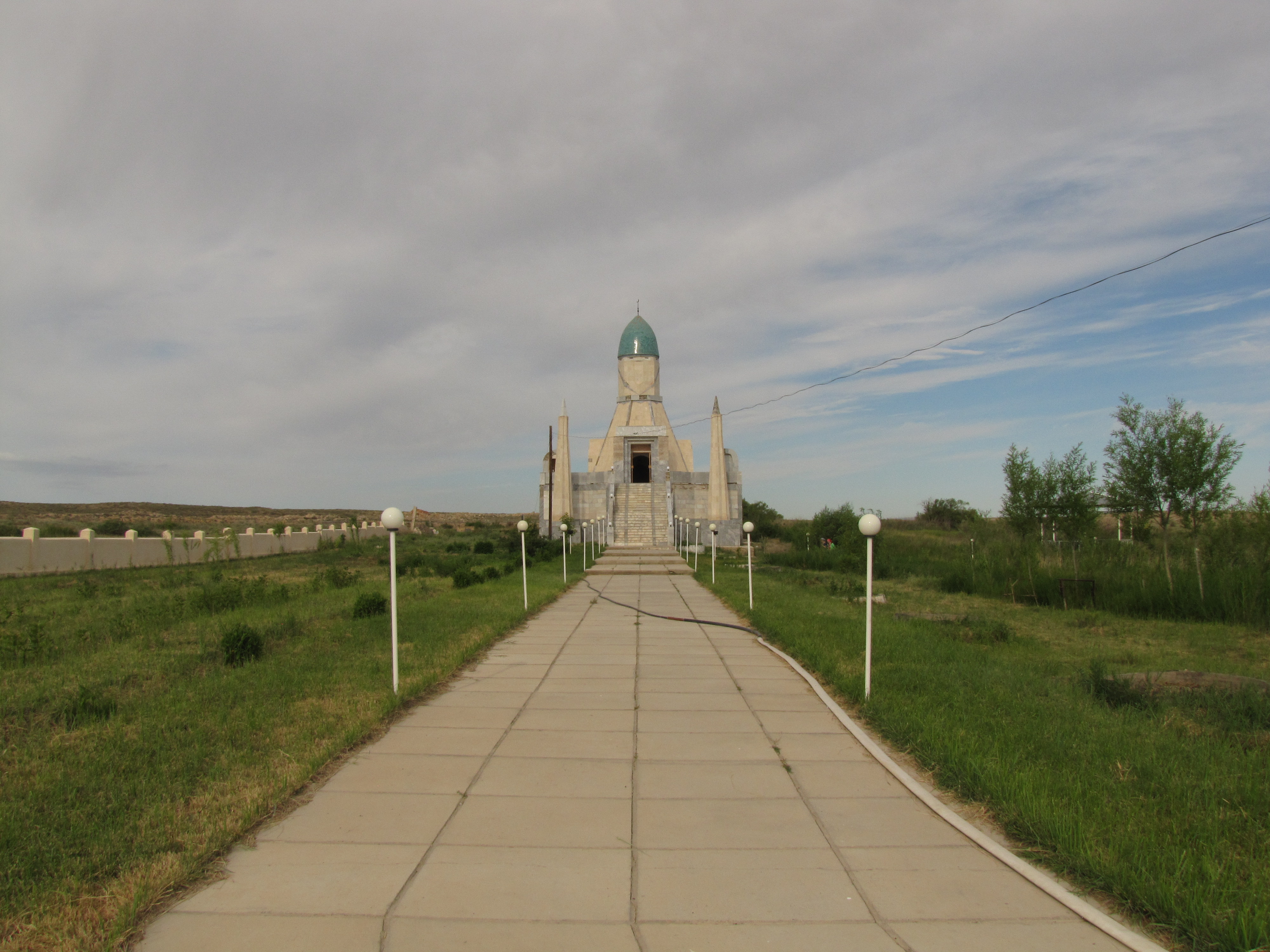
The Mausoleum of Baba Tukty Shashty Aziz is a sacred site of Kazakhstan. It is located in the Zhylybulak area near the village of Kumkent in the Sozak District of the Turkistan Region. For centuries, this place has been regarded as a holy site where people come to pray and pay their respects. The mausoleum stands in the northeastern part of the Karatau Mountains, on the shore of Lake Kyzylkol, and is surrounded by a large ancient burial ground.
In Kazakh tradition, Baba Tukty Shashty Aziz holds a special place among revered saints. He has long been considered a spiritual protector, to whom people turned in times of hardship, asking for help and guidance. According to popular belief, he could appear in dreams and give warnings or advice, and in times of war he served as a source of spiritual strength for warriors. His name is frequently mentioned in folk stories, legends, and epic tales.
According to folklore sources, Baba Tukty Shashty Aziz was not only a saint but also a figure with extraordinary strength and courage. In ancient times, shamans of Tengriism revered him as a spirit and protector, and later, with the spread of Islam, he became recognized as a Muslim saint. Historical and legendary accounts often describe him as a contemporary and close companion of Ishaq Bab, a preacher of Islam in Central Asia and the territory of Kazakhstan.
One of the most well-known legends associated with Baba Tukty Shashty Aziz is the story of the birth of Edige Batyr. According to legend, the saint was praying by a river when he met a fairy maiden. They later married. However, after Baba Tukty Shashty Aziz broke one of her conditions, she said: “I am carrying your six-month-old child. I will leave him in Kumkent; go and find him there,” and then flew away into the sky. The saint went to the place mentioned and found a swaddled baby, whom he named Edige. In the epic “Edige Batyr,” Baba Tukty Shashty Aziz is portrayed as the father of the hero. Historical sources also mention him as a contemporary and close companion of Ishaq Bab, who spread Islam in Central Asia.
Historical records also mention that in earlier times, Polish settlers lived in this area. A wealthy Polish man once decided to build a bathhouse and ordered the bricks of the mausoleum to be used for construction. Although the worker was opposed to destroying the sacred structure, he was forced to comply due to threats. However, as he began dismantling one corner of the mausoleum, both of his hands suddenly began to tremble. It is also said that three Polish men later died in a fire in the bathhouse built from those bricks.
The legendary Kazakh strongman Kazhymukan Munaitpasov, who never lost on the wrestling mat, would say before competitions: “O spirit, may the soul of Baba Tukty Shashty Aziz support me!” In the past, Kazakh warriors never entered battle without invoking ancestral spirits. The name of Baba Tukty Shashty Aziz is also frequently mentioned in epic works such as “Alpamys Batyr,” “Koblandy Batyr,” and “Shora Batyr.” The ruler of the Golden Horde, Edige Bi, also considered Shashty Aziz his ancestor.
In historical sources, Baba Tukty Shashty Aziz is again described as a contemporary and close companion of Ishaq Bab, who is known as a preacher of Islam in Central Asia and Kazakhstan.
Today, the Mausoleum of Baba Tukty Shashty Aziz remains a sacred place that preserves the spiritual and cultural heritage of the Kazakh people, combining historical facts and folk legends that reflect the worldview and traditions of the nation.
Source: qazir.kz