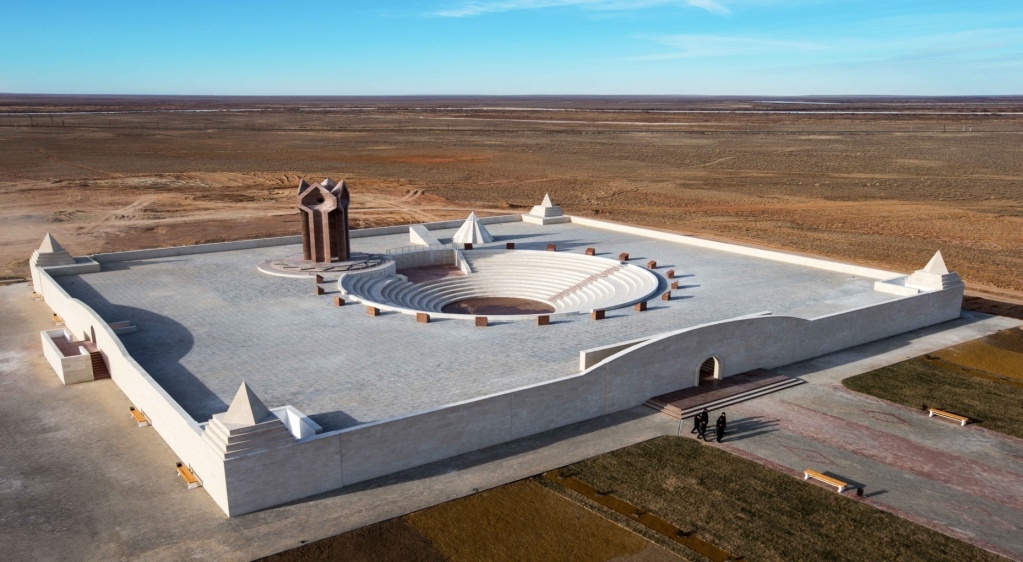
The Korkyt Ata Memorial Complex is one of the most significant historical and cultural monuments dedicated to the spiritual heritage of the Turkic peoples. It is located in the Karmakshy District of Kyzylorda Region, approximately 18 kilometers from Zhosaly village, on the banks of the Syr Darya River. This sacred site is closely connected with the name of Korkyt Ata, a legendary philosopher, musician, and sage who became a symbol of wisdom, art, and spirituality for Turkic nations.
Korkyt Ata lived during the 8th–9th centuries and is remembered as a great thinker, poet, composer, kobyz player, and historical figure shared by all Turkic peoples. According to legend, Korkyt sought immortality and traveled across the world trying to escape death. Everywhere he went, he encountered signs of his own grave being prepared, which led him to realize the inevitability of death. Eventually, he settled on the banks of the Syr Darya River, where he devoted himself to playing the kobyz, creating melodies that became an eternal spiritual legacy. His musical compositions and wise sayings have survived through generations and remain an important part of Turkic culture.
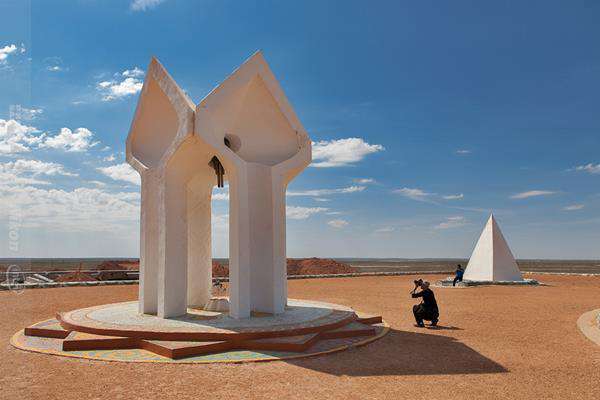
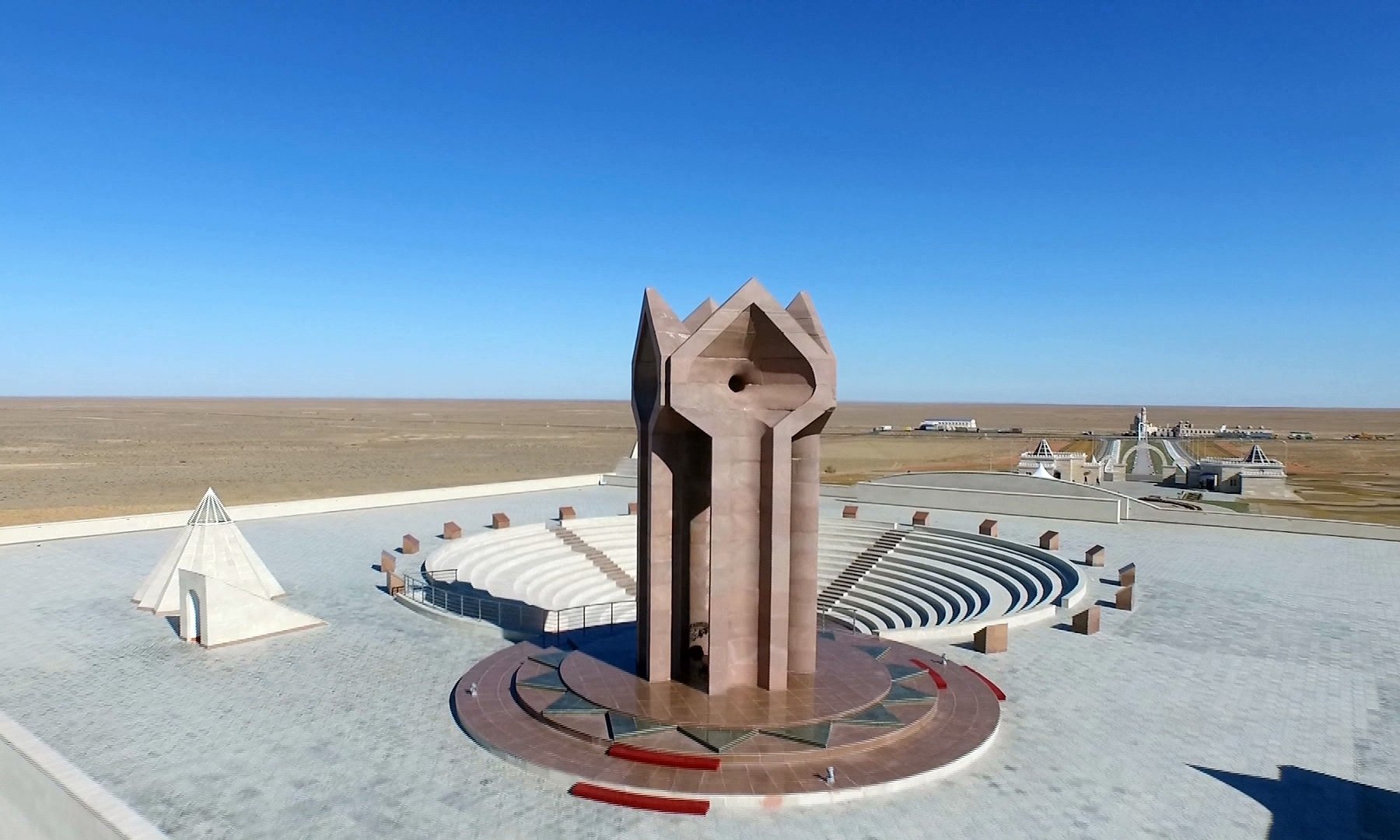
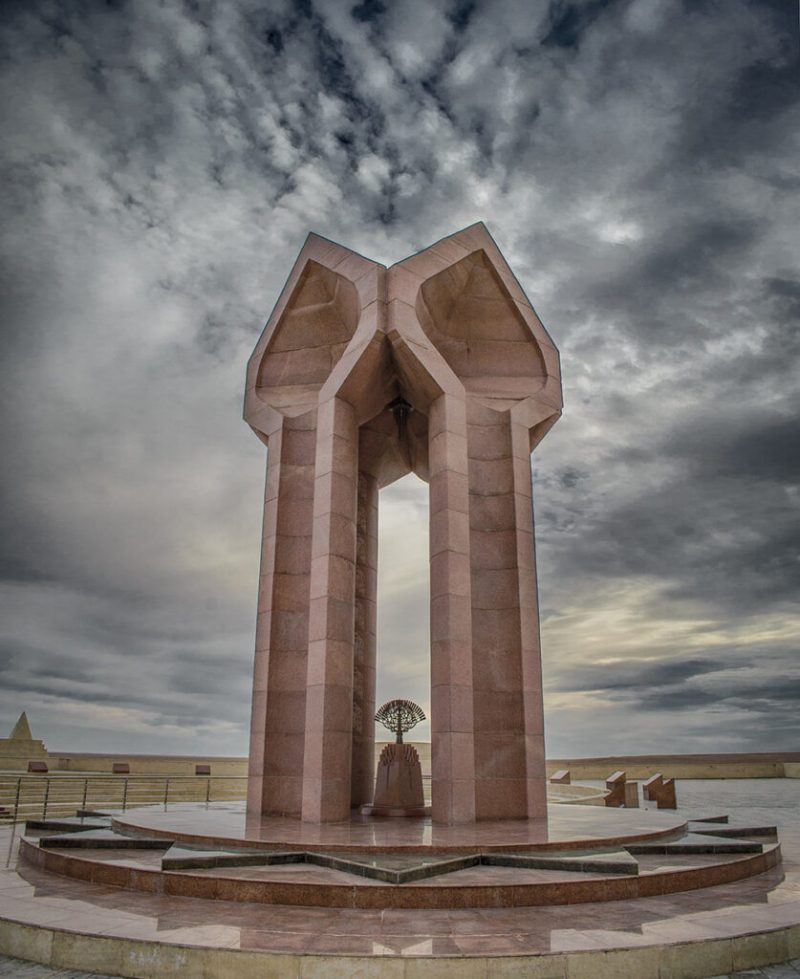
The first monument dedicated to Korkyt Ata was erected in 1980. The project was designed by architect Bakytzhan Ybyrayev and physicist-acoustician Serik Isatayev. The monument consists of four vertical stelae, each reaching a height of eight meters. Together they resemble the shape of a kobyz, the traditional musical instrument associated with Korkyt. In the center of the structure are forty metal tubes that produce haunting sounds similar to the voice of the kobyz when the wind blows through them. This unique acoustic feature symbolizes the eternal music and spiritual legacy of Korkyt Ata.
Research conducted by the renowned scholar Alkey Margulan mentions that Korkyt’s kobyz was once placed near his burial site. According to popular belief, the instrument could produce music on its own. Because of such legends, Korkyt Ata is revered not only as a historical figure but also as a spiritual symbol of the entire Turkic world.
In 1997, the memorial complex underwent major restoration and reconstruction. The territory was expanded, and new facilities were added, including an amphitheater, a hotel, service buildings, and other architectural structures. These improvements significantly increased the cultural and tourist importance of the site.
In January 2000, the Korkyt Ata Museum was opened within the memorial complex. Later that year, in November, it became a branch of the Kyzylorda Regional Museum of History and Local Lore. The museum’s primary mission is to preserve and promote the rich history, archaeology, and spiritual heritage of the Syr Darya region, as well as the legacy of Korkyt Ata.
Another large-scale reconstruction was carried out in 2014. New museum and administrative buildings were constructed, and the exhibition halls were completely modernized. Today, visitors can explore comprehensive exhibitions covering the history of the Syr Darya region from ancient times to the present day.
The museum’s collections include numerous valuable artifacts related to archaeology, ethnography, music, and literature. Among the exhibits are materials connected with Korkyt Ata, traditional musical instruments, rare books and manuscripts, and important historical documents.
One of the most important sections of the museum is dedicated to the Chirik-Rabat Culture, which flourished in the Syr Darya region during the 4th–2nd centuries BCE and is associated with the ancient Saka tribes. The archaeological site of Chirik-Rabat is known for its impressive defensive structures and ancient settlements. The exhibition features pottery, weapons, and other artifacts discovered during archaeological excavations.
Another major section presents the Jetiasar Archaeological Culture. The Jetiasar complex includes dozens of ancient fortified settlements located along the lower reaches of the Syr Darya River. These sites provide valuable information about the economy, crafts, and daily life of the people who once inhabited the region.
The museum also highlights the history of the Oghuz-Kipchak period. Between the 9th and 11th centuries, the Syr Darya region was one of the key centers of the Oghuz state. During this time, the city of Jankent served as the capital of the Oghuz Kingdom. Archaeological discoveries such as ceramics, household objects, and religious artifacts help visitors understand the culture and traditions of that era.
Another important exhibition is devoted to the medieval city of Syganak, which played a crucial role in the history of the Kipchak Khanate, the White Horde, and later the Kazakh Khanate. Located along the Silk Road, Syganak became an important political, cultural, and commercial center that contributed greatly to international trade and cultural exchange.
Today, the Korkyt Ata Memorial Complex is recognized as one of Kazakhstan’s most sacred and significant cultural sites. Every year it attracts tourists, researchers, artists, and pilgrims from across Kazakhstan and abroad. More than just a historical monument, the complex serves as an important cultural center that preserves and promotes the spiritual values of Turkic civilization.
The Korkyt Ata Memorial Complex stands as a bridge between the past and the present, honoring the history, culture, and traditions of the Turkic peoples. It plays a vital role in preserving this shared heritage and passing it on to future generations.
Source: kazmuseum.kz