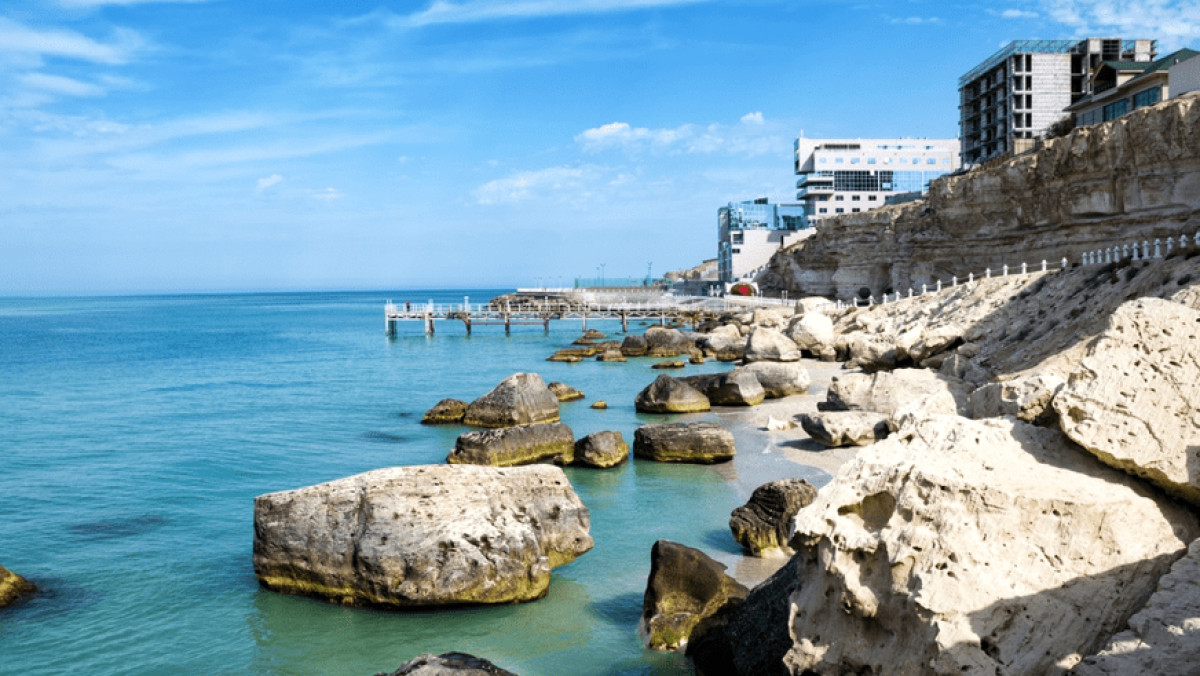
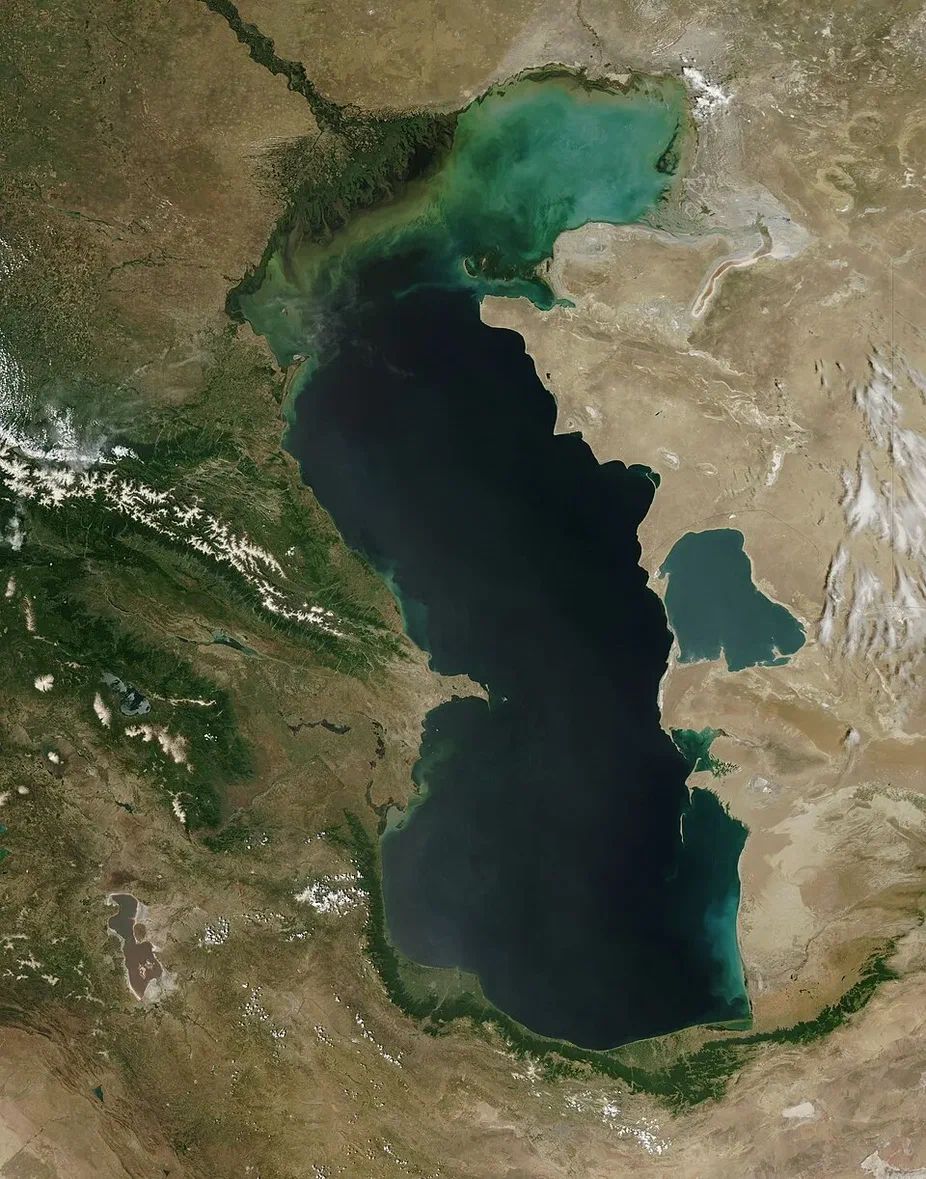
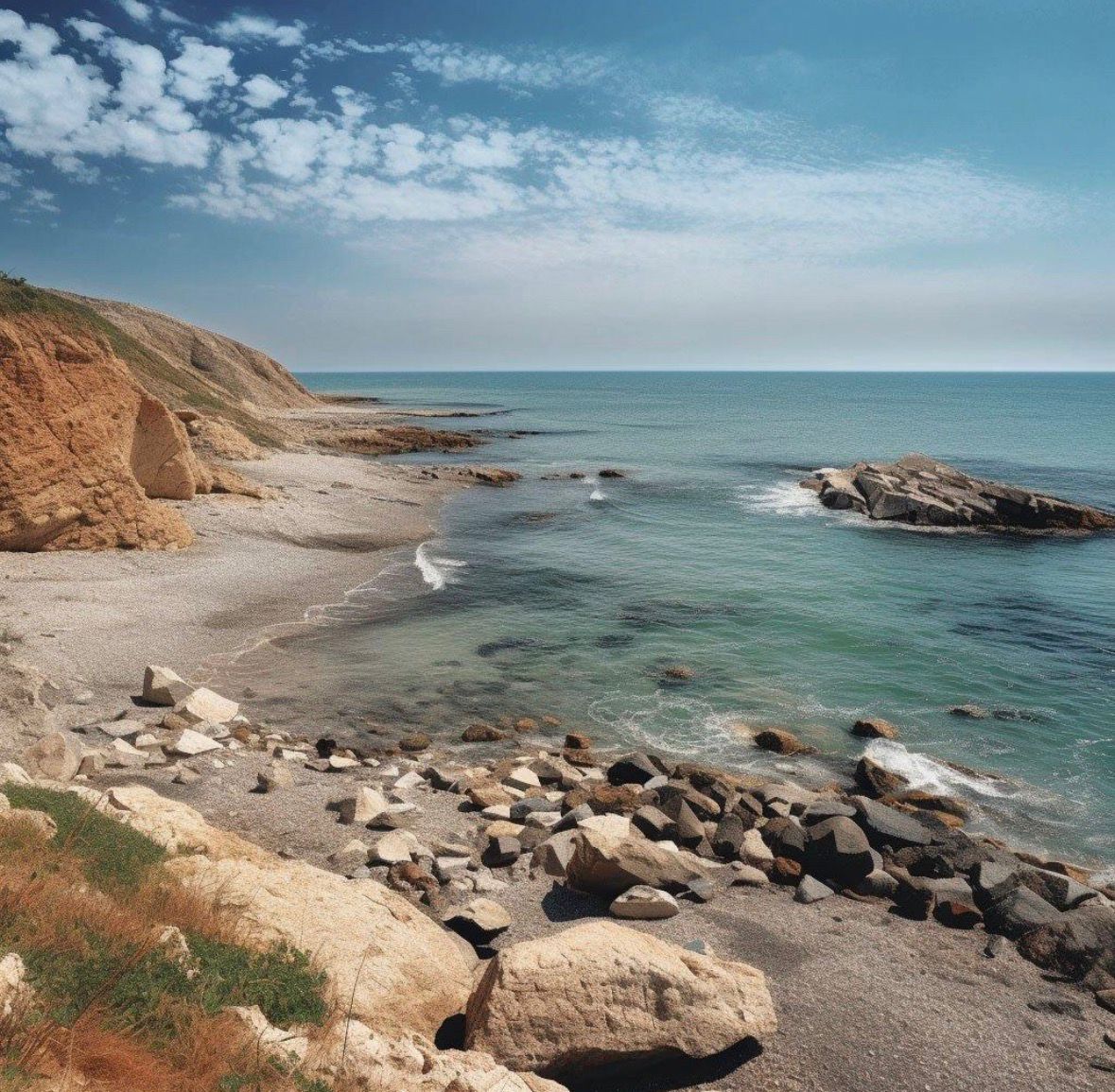
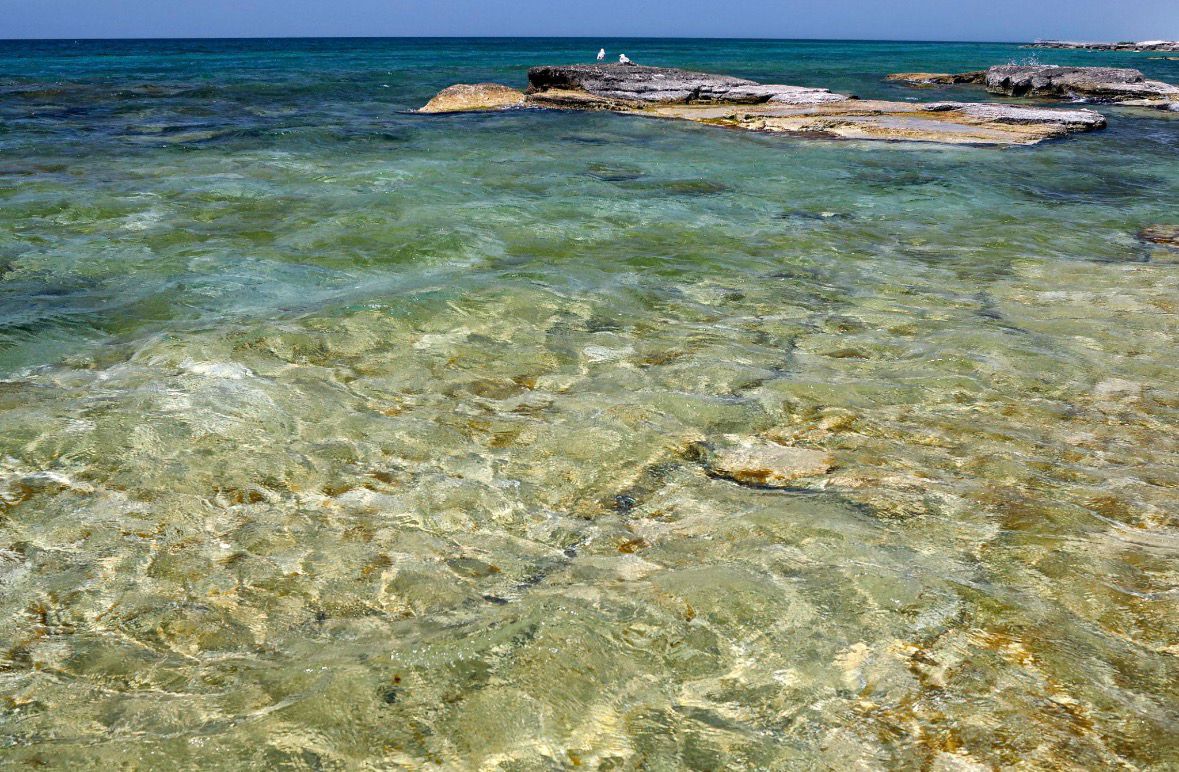
The Caspian Sea (historically known as the Caspi, Hyrcanian, Khvalyn, Khazar Sea, and other names) is the largest enclosed body of water in the world, located in the center of the Eurasian continent. Although it is called a sea because of its immense size, it has no connection to the World Ocean and is actually a landlocked basin.
The sea covers an area of 376,000 km², stretches for about 1,200 km from north to south, and has an average width of approximately 300 km. Its coastline extends for nearly 7,000 km, of which 2,340 km belong to Kazakhstan. The remaining shores are shared by Russia, Azerbaijan, Turkmenistan, and Iran. The surface of the Caspian Sea lies 28 meters below sea level. Its maximum depth reaches 1,025 meters, while the average depth is about 180 meters.
The largest bays of the Caspian include Mangystau Bay, Kazakh Bay, and Kara-Bogaz-Gol Bay. There are around fifty islands in the sea, the most notable being Kulaly, Chechen, and Artem Islands. The major peninsulas are Mangystau, Absheron, Agrakhan, Krasnovodsk, and Cheleken.
The formation of the Caspian Sea is the result of a long and complex geological history. Scientists believe that this region was once part of the ancient Tethys Sea. Over millions of years, tectonic movements and climatic changes caused the sea to expand and contract repeatedly, eventually shaping the Caspian Sea as it exists today.
Based on its depth and underwater relief, the Caspian Sea is divided into three sections. The Northern Caspian is shallow, with depths generally ranging from 10 to 20 meters. The Middle Caspian reaches depths of up to 788 meters, while the Southern Caspian contains the deepest part of the sea at 1,025 meters.
During summer, water temperatures reach 24-26°C in the north and 27-28°C in the south. In winter, the shallow northern areas often freeze, while the southern waters remain relatively warm at around 10°C.
Approximately 130 rivers flow into the Caspian Sea. The most important is the Volga River, which provides about 80% of the total inflow. Other significant rivers include the Ural, Terek, Sulak, Samur, and Kura Rivers.
The salinity of the sea varies considerably. Near the mouths of the Volga and Ural Rivers, salinity is very low, whereas in the southeastern part of the sea it can reach 13‰. Water circulation is influenced by winds, river inflows, and the shape of the coastline.
The Kara-Bogaz-Gol Bay plays a crucial role in maintaining the ecological balance of the Caspian Sea. It promotes evaporation and helps regulate the sea’s salinity levels.
Throughout history, the water level of the Caspian Sea has fluctuated significantly. Scientists attribute these changes to climatic variations, tectonic activity, and human influence. In particular, a notable rise in sea level occurred during the late twentieth century, resulting in the flooding of many coastal areas.
The Caspian Sea is rich in natural resources and marine life. It is home to sturgeon, herring, bream, roach, pike-perch, carp, and sprat. The Caspian region is one of the world's leading producers of black caviar. The sea is also the habitat of the unique Caspian seal.
Beyond its natural wealth, the Caspian region possesses great historical and cultural significance. Archaeological evidence suggests that humans inhabited this area since ancient times. Numerous remains from the Neolithic, Bronze Age, and Early Iron Age have been discovered along its shores. Throughout history, the region was home to various peoples, including the Saka, Sarmatians, Caspians, Massagetae, and other tribes.
During the Middle Ages, the Caspian region became an important center of international trade and diplomatic relations. The Khazars and Kipchaks played a major role in its history. Later, the region became an arena of political and economic interaction among powerful states, including the Golden Horde, the Russian Empire, and Persia.
Following the dissolution of the Soviet Union, five independent states-Kazakhstan, Russia, Azerbaijan, Turkmenistan, and Iran-shared the Caspian coastline. This led to discussions regarding the legal status of the sea. To address these issues, the first Caspian Summit was held in Ashgabat in 2002.
Today, the Caspian Sea remains one of the most important inland bodies of water in the world due to its vast natural resources, rich biodiversity, and unique historical and cultural heritage.
Source: el.kz