






 Қазақша
 Русский

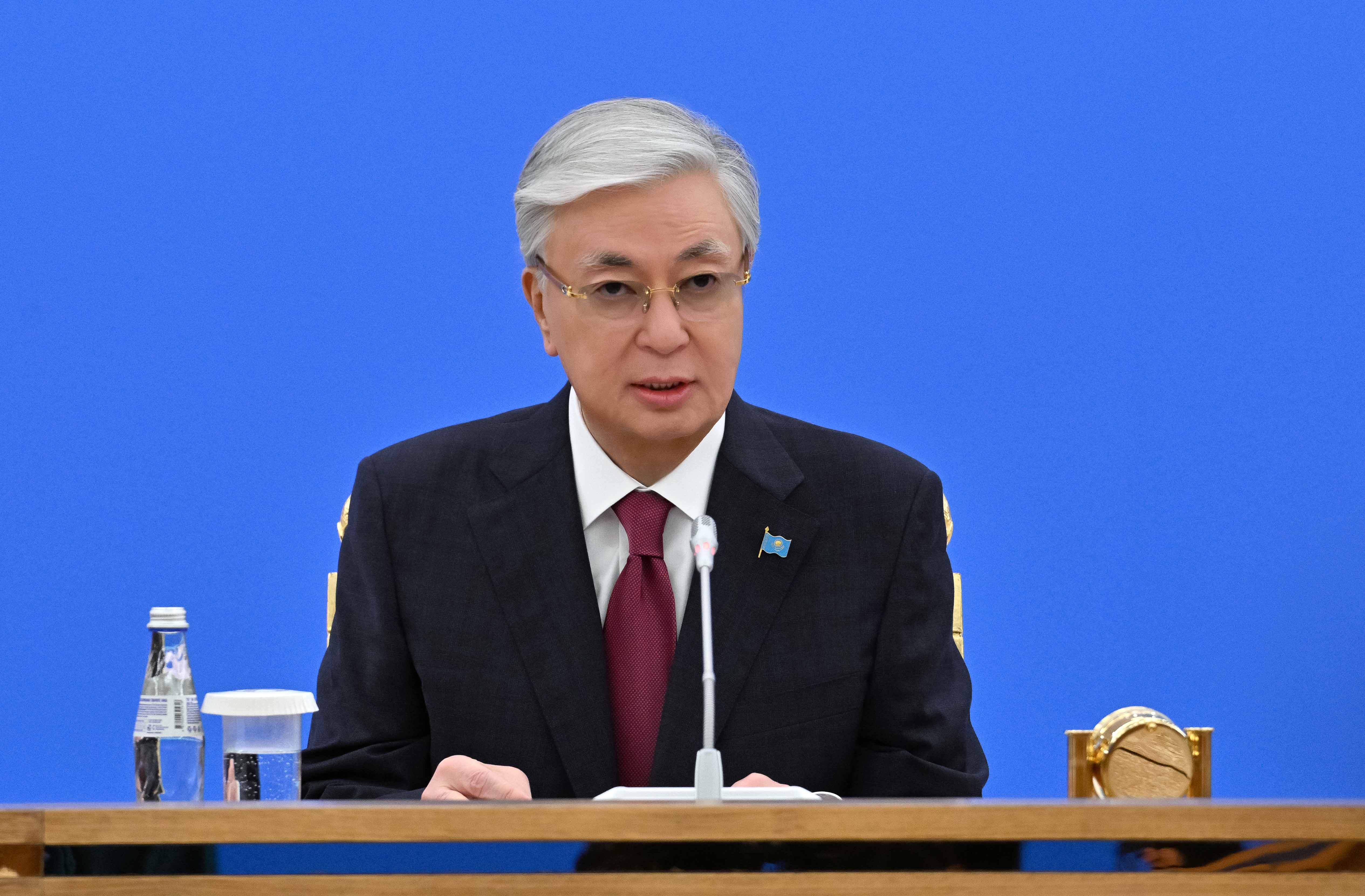
A meeting of the Working Group on Parliamentary Reform was held in Astana with the participation of President Kassym-Jomart Tokayev.
State Counsellor Erlan Karin opened the event by briefing the President on the Working Group's activities, noting the extensive scale of proposed constitutional amendments aimed at transforming the Parliament. The State Counsellor presented the Group's general vision, emphasising that these reforms will modernise the political system to meet contemporary demands.
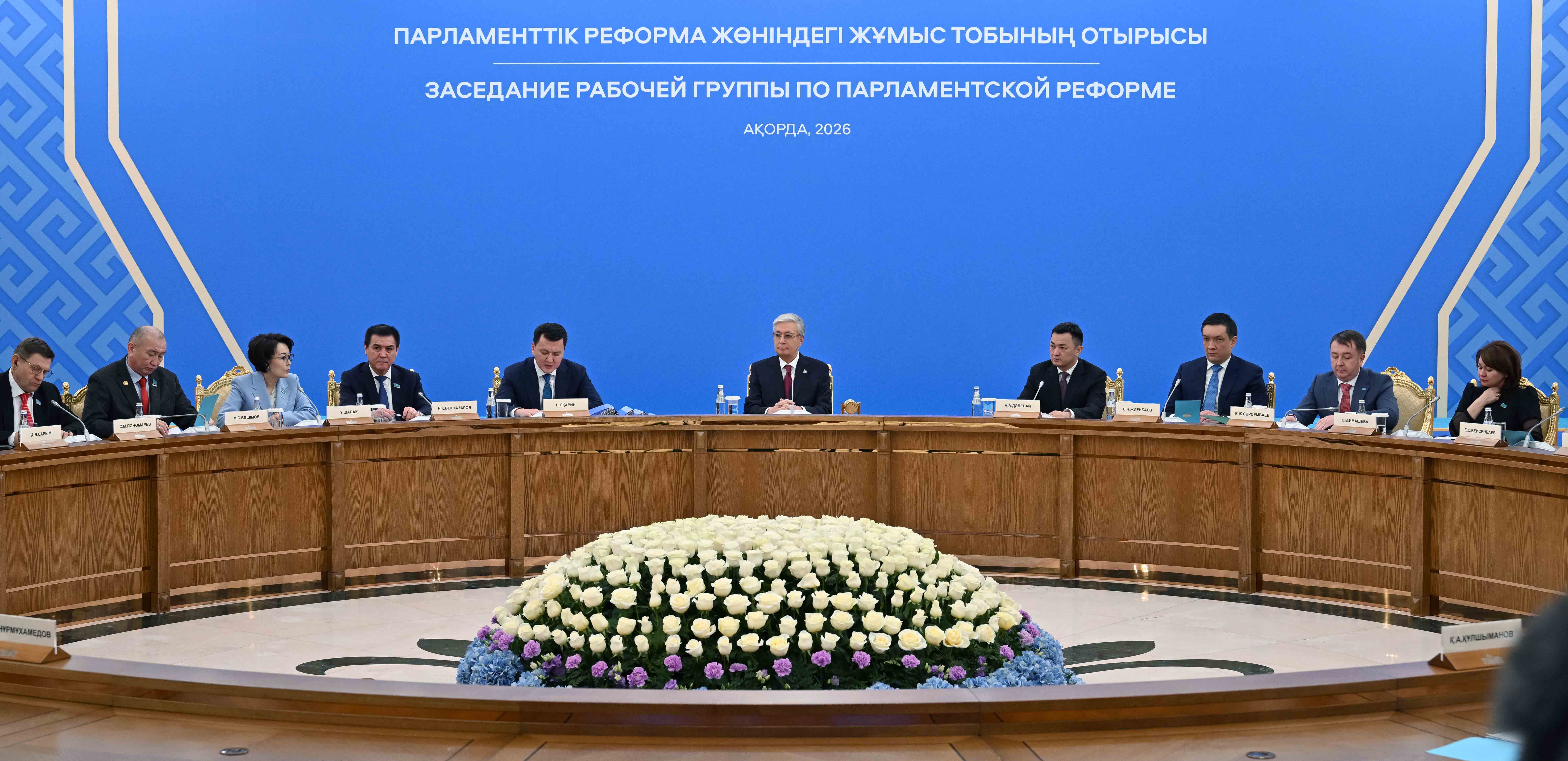
Assistant to the President for Legal Affairs Yerzhan Zhienbayev outlined key approaches to the constitutional reform developed by the Working Group based on public proposals. Specifically, since last October, the sessions have addressed a comprehensive range of issues regarding the functioning of a new unicameral Parliament, including its size, terms of office, electoral procedures, legislative mechanisms, and interaction with other branches of power.
Natalya Pan, Director of the Institute of Parliamentarism, reported on contributions received from citizens, experts, and public associations via the e-Otinish and eGov platforms. Over several months, all seven political parties, dozens of NGOs, business entities, legal scholars, and experts submitted their initiatives. In addition to parliamentary reform proposals, the Working Group received approximately 1,600 submissions concerning the general constitutional framework and the enhancement of political and social institutions.
Elnur Beisenbayev, head of the Amanat party faction in the Mazhilis; Azat Peruashev, leader of the Ak Zhol party; and Askhat Rakhimzhanov, head of the National Social Democratic Party faction, emphasized the historic scale of the upcoming constitutional changes. They noted that during regional meetings with deputies, citizens demonstrated a profound interest in the political transformation.
Further contributions were made by Nurlan Beknazarov, Chairman of the Senate Committee on Constitutional Legislation, Judiciary, and Law Enforcement, along with Mazhilis deputies Unzila Shapak, Marat Bashimov, Nikita Shatalov, and political scientist Burikhan Nurmukhamedov.
In his closing remarks, the Head of State noted that nearly six months of discussion have fostered a clear public understanding of the goals behind the transformation of the country’s supreme legislative body.
President Tokayev stated that he has closely monitored public discourse following his September Address to the People. He is carefully reviewing all discussion outcomes, expert opinions, draft amendments, and citizen proposals regarding the reform.

Regarding the significance of the political restructuring, the President emphasized that it entails a profound reconstruction of the institutional foundation and a systemic reformatting of the legislative branch.
"Tomorrow, at the meeting of the National Kurultai, I will present specific ideas on this matter. In effect, a qualitatively new political model is being formed in the country. Implementing the parliamentary reform will require the revision of several sections of the Constitution simultaneously. Therefore, taking into account previous amendments to our Basic Law, the draft amendments proposed by the Working Group allow us to state that we are, in essence, considering a new Constitution of Kazakhstan," the Head of State concluded.