






 Қазақша
 Русский

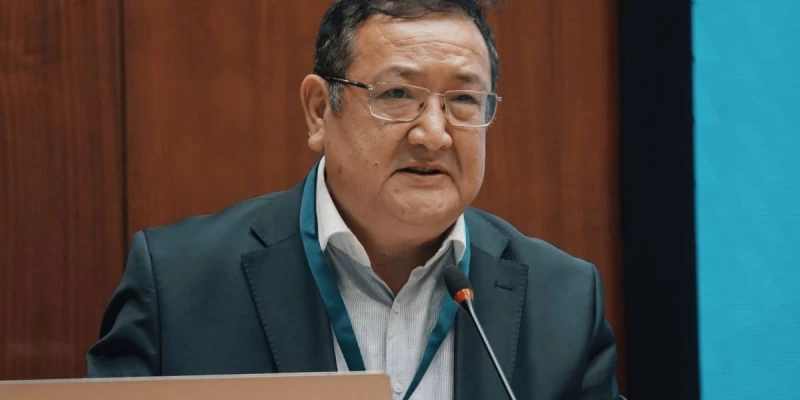
About ten years ago, several materials were published about a Kazakh scientist working in the United States who gained worldwide recognition in the field of chemistry. Having outpaced his compatriots living in China and stood head and shoulders above others in a country with a billion population, his boundless passion for science led him to the powerful United States.
After conducting research at the renowned Massachusetts Institute of Technology (MIT), which ranks among the top three universities in the world, and opening a laboratory under his own name at Texas Tech University, Nurshat Nurazhy became a scholar actively sought after by many higher education institutions. Nevertheless, while assisting students in his ancestral homeland and lecturing at regional universities, his inclination increasingly turned toward Kazakhstan, and in 2019 he permanently relocated to the country.
Today, the professor supervises more than sixty specialists and is engaged in developing projects that have no analogues in the world. We recorded the account of Nurshat Nurazhy, Professor at the School of Engineering and Digital Sciences of Nazarbayev University and Head of a laboratory at the Astana National Laboratory of the same university, about his return to the country and his current scientific achievements.
FROM THE LAND OF BILLIONS TO THE MASSACHUSETTS INSTITUTE
I was born in the Chapchal District of the Ili Region of China. My father was a physics teacher, and my mother was a mathematics teacher. Apparently noticing my aptitude, they enrolled me in school from the age of five. After I completed the first two grades with excellent results, my father immediately advanced me to the fourth grade. Thus, at the age of fifteen, I submitted my documents to Xinjiang University.
From childhood, I was quick with calculations. Nevertheless, I liked chemistry. I was fascinated by how mixtures produce various reactions and change color. In general, for a person who understands it, chemistry is a very interesting field. Thus, I decided to connect my future with this field.
However, it was not possible to begin my studies immediately. Since I studied at a Kazakh-language school, I attended a one-year language course, after which I was admitted and studied on an equal footing with Chinese students. After graduating, I began working as a researcher at the Xinjiang Institute of Chemistry of the Chinese Academy of Sciences. I did not want to stop there. Since there were many scholars and intellectuals in our lineage, I also wanted to pursue a scientific path, go abroad, and participate in research conducted there.
Thus, in 1995, I enrolled in a master’s program at the Graduate Institute of the Chinese Academy of Sciences in Beijing, and later, becoming the first among Kazakhs of China, I applied for doctoral studies. During this period, I won a competition for scientific projects announced by the Xinjiang Science Committee and received a monetary award. As the youngest scientist, I was appointed the responsible project leader. In 1999, I was awarded the “Western Light” Prize of the Chinese Academy of Sciences.
Nevertheless, I often thought about improving my qualifications in the United States, a country that consistently stays ahead in science. Eventually, I achieved my goal and in the 2000s won a doctoral scholarship at the City University of New York. After successfully defending it, a period filled with scientific success and achievements began.
In total, to date, more than 150 of my scientific articles have been published in journals. The highest impact factor of the journals in which my articles appeared is 32 (current h-index: 34, Google Scholar). In 2005, I received the Rose Kfar Rose Dissertation Award in excellence for thesis and graduate study for my doctoral research and scientific results.
In 2007, my article published in the world’s most prestigious chemistry journal, Journal of the American Chemical Society, was recognized as the most accessed article of the year. Another research article of mine was ranked among the top ten most accessed articles in 2006 in the journal Supramolecular Chemistry. In addition, the editors of the German journal Angewandte Chemie International Edition recognized another of my scientific articles as a “Hot Paper.”
In 2008, at a meeting held in San Francisco by the Materials Research Society to evaluate doctoral research, I received a Silver Award among thirteen foreign scientists.
After that, professors from various prestigious universities began to show interest in me. Offers were received from the Massachusetts Institute of Technology (MIT), the University of California, Berkeley, and Harvard University. However, without much hesitation, I accepted the offer from MIT.
MIT is one of the world’s most prestigious technical universities and a major research university and center with the largest research infrastructure. I wanted to work there together with Michael Rudner and Robert Cohen from the Department of Chemical Materials Science and Engineering. During the seven years I worked there, we conducted research in new energy, hydrogen, water materials, solar energy, and sensitive materials, achieved many results, and carried out extensive work.
However, I wanted to engage not only in science but also in teaching. Thus, in 2015, I was invited as a professor to Texas Tech University. In the same year, for my outstanding contribution to nanotechnology, I received the Joseph Wang Award 2015 (Joseph Wang Award 2015 from Cognizure Publisher in Excellence for Outstanding Research Work).
EVEN IF YOU LIVE IN CHINA OR AMERICA, YOU DO NOT FEEL INDEPENDENCE
At Texas Tech University, all conditions were created for me, the necessary equipment was provided, and a laboratory named “Nurshat Nurazhy” was established. In addition, I began teaching young scientists. Another convenience of working at this institution was the opportunity to freely assist scientists coming from Kazakhstan. I brought them to my laboratory and supported their doctoral research. Later, I traveled with them to Kazakhstan, participated in their dissertation work and defenses, and helped with publishing articles.
In general, my acquaintance with scientists in the ancestral homeland began ten years earlier. While I was working in the laboratory of Professor Paul Dubin, the world-renowned polymer scientist Sarkyt Kudaybergenov sent his student Alexander Diduk to us for two months. When his student informed Sarkyt aga that a Kazakh scientist was working there, he was apparently surprised, saying that there were no chemists from Kazakhstan working there. I corresponded with Sarkyt aga by mail, and he constantly invited me to the country. Thus, after ten years, having received an invitation to Sarkyt aga’s 60th anniversary, I headed to the ancestral homeland for the first time.
The moment I first set foot at Almaty Airport is still unforgettable. Even if you are Kazakh, living in China or America, you do not feel independence. You do not feel that you are the master of a unified, sovereign state of your own. When I saw our own dark-eyed soldiers standing at customs, I was deeply moved and shed tears.
At a two-day celebratory event at Satbayev University, I met scientists who had arrived from several countries around the world and delivered a scientific presentation. After that, professors in the country wanted to take me to several universities. They gave me a choice: “Would you like to go to a university in Karaganda, or to Shakarim University in Semey?” Without hesitation, I chose Semey, because I deeply wanted to visit the sacred land where Abai was born. Sarkyt aga is a native of Semey. I call him my elder brother in science. After lecturing at the university, he took me to Abai District and showed me around. We visited the mausoleums of Abai and Shakarim. All of us read the novel The Path of Abai in our childhood. Visiting Zhidebay, the Konyr-Aulie Cave, and Karauyl described in that book left impressions that will remain with me for a lifetime. Truly, I was fortunate to come to the ancestral homeland for the first time and immediately visit Abai’s land.
After that, I began coming to the country every year. Sometimes, I even came twice a year. Each time, I tried to pay attention not only to Almaty and Astana but also to educational institutions in the regions. Thus, I wanted to travel across our vast land as much as possible. I visited S. Amanzholov East Kazakhstan University in Oskemen two or three times. We also visited educational institutions in Aktobe and Aktau. I lectured for three weeks at E. Buketov Karaganda University. There, I worked closely with my second elder brother in science after Sarkyt aga, Niyaz Ibrayev. When we counted later, we found that we had trained more than twenty doctoral students together.
At that time, students studying in the regions were interested in the life of a Kazakh scientist abroad. During lectures, they would bombard me with questions such as: “How did you go to America? How did you get a job at the famous MIT?” I encouraged them by explaining that science does not recognize nationality and that a village child who truly dedicates themselves can work at the world’s largest centers.
You know that professors’ salaries and working conditions at MIT and Texas Tech University are high and comfortable. The fact that they even established a laboratory under my name speaks for itself. However, every time I came to the ancestral homeland to lecture, it was obvious that the conditions here were not very good. At that moment, I realized that I was needed by the country and that I could give what I had learned to the Kazakh state. Another thing drawing me to the ancestral homeland was our Kazakh identity. Blood does pull.
If you look at it this way, Kazakhstan did not give me anything. It did not educate me, feed me, or clothe me. Until I went abroad and stood shoulder to shoulder with scientists there, entering the scientific horizon, I knew nothing about Kazakhstan. In fact, my ancestors lived in Narynkol. When my father was one year old, they moved across the border. My forefathers were volost administrators and wealthy people. Nevertheless, my heart always leaned toward the ancestral homeland, and I kept my gaze turned toward the country.
At that time, I won a competition of the United States Air Force in the field of scientific research. Together with a research team, I conducted a three-year scientific study at the advanced laboratory of the special base researching military aircraft in the United States (The Wright-Patterson US Air Force Lab in Ohio). I became the first Kazakh to join such a renowned research group. During those same years, I also received a scientific award from the American Chemical Society related to petroleum research.
The prestigious British journal Journal of Material Chemistry A recognized me as one of the world’s top researchers. I served as an expert evaluating scientific projects for the US National Science Foundation. In addition, I work as a member of the editorial board of the journal Materials Science in Semiconducting Processing published by Elsevier.
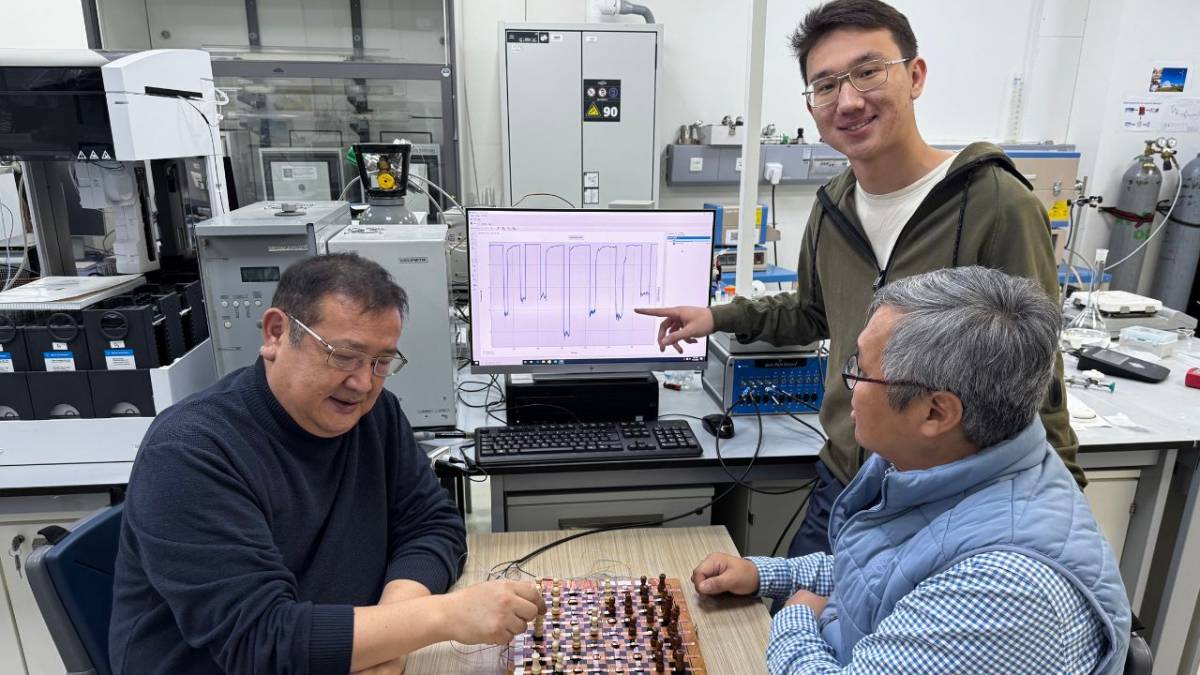
No matter how high my reputation rose and how great my success became, my longing for the homeland only grew stronger, and I was eager to return. During that period, I accepted an invitation from Nazarbayev University and in the autumn of 2019 permanently relocated to the ancestral homeland.
I will repeat again: being born in Kazakhstan or not is not an obligation. Every Kazakh who chooses the path of science must consider it a duty to come to the historical homeland and work. I always emphasize the following to Kazakh scientists coming from abroad: “I studied at prestigious institutions abroad and gained experience in renowned places. You should not say, ‘Give me this, give me that. Build me a laboratory, give me money.’”
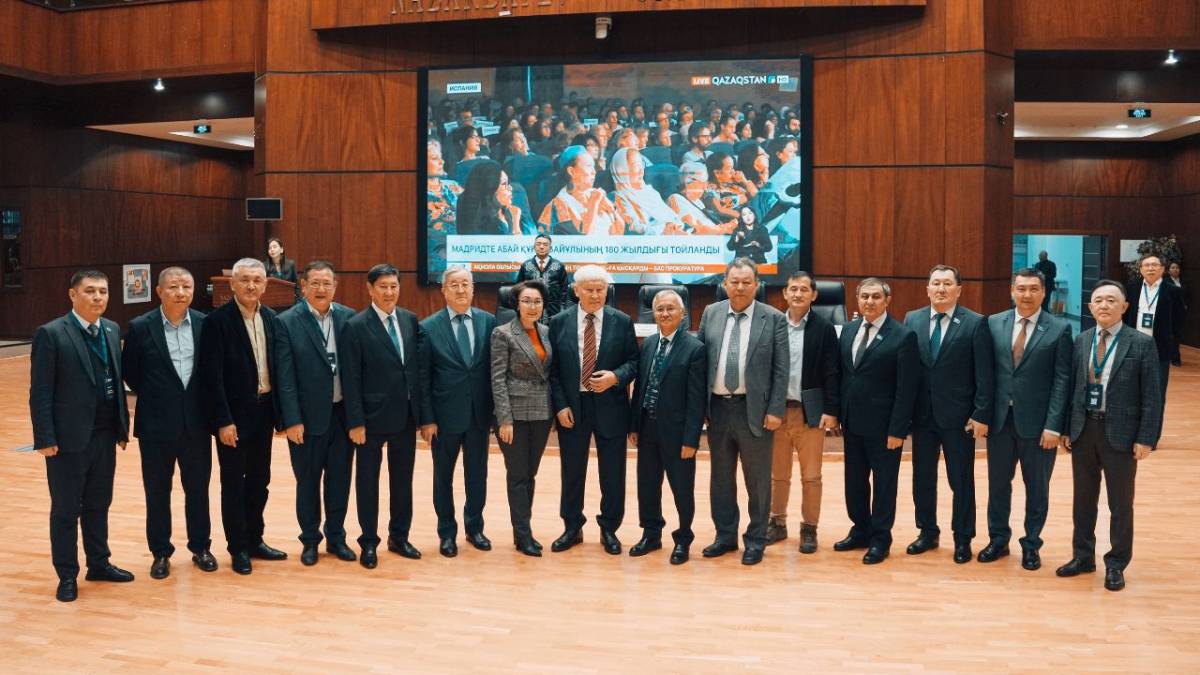
Last November in Astana, at the Forum of Kazakh Scientists Abroad organized by the Otandastar Qory Foundation, I spoke on the topic “Love for the Motherland Is the Path of a Scientist,” explaining why, how, and for what reason I returned to the country. No matter how high scientists’ fame rises, if their roots are Kazakh, I wish they would push everything aside and consider it their duty to return, saying, “I also have something to give to my country.” Coming to the ancestral homeland, adapting to the system, competing, winning grants, and building your own scientific environment and team in your historical homeland is an invaluable happiness.
WE DEVELOPED A TECHNOLOGY THAT DOES NOT EXIST IN THE WORLD
Leaving behind my familiar environment in America and coming to Nazarbayev University, I did not sit looking at specialists saying, “I worked at a world-famous place, I had my own laboratory.” I did not ask for anything. My only goal was to prove that Kazakhstan can compete with major powers and to build a unique laboratory and compete with foreigners.
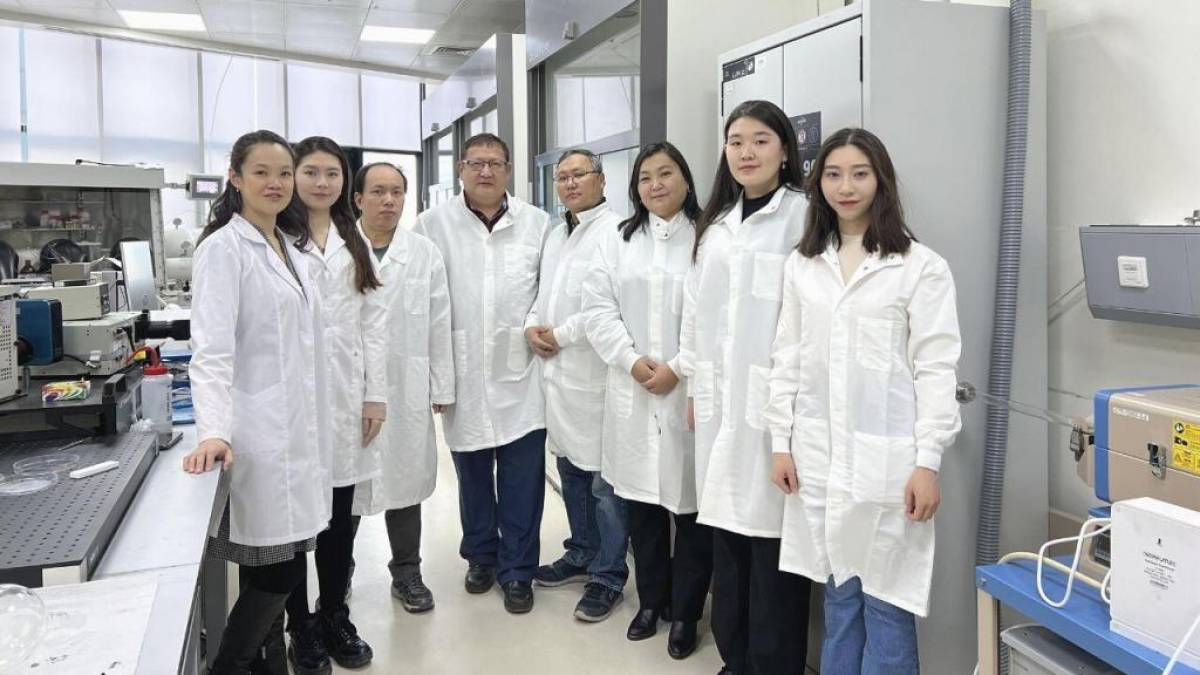
It should be noted that when I arrived in the country, I had nothing. I personally developed the doctoral program of the Faculty of Chemistry and Engineering. I participated in scientific projects and won many grants. With those funds, I built laboratories and invited specialists. I formed nine teams working in nine different areas. Over six years, I established six laboratories. Currently, I am one of the professors with the largest number of laboratories. Today, more than sixty specialists work on my team, including doctoral students from abroad. I am not boasting, but there is a unique atmosphere in my team.
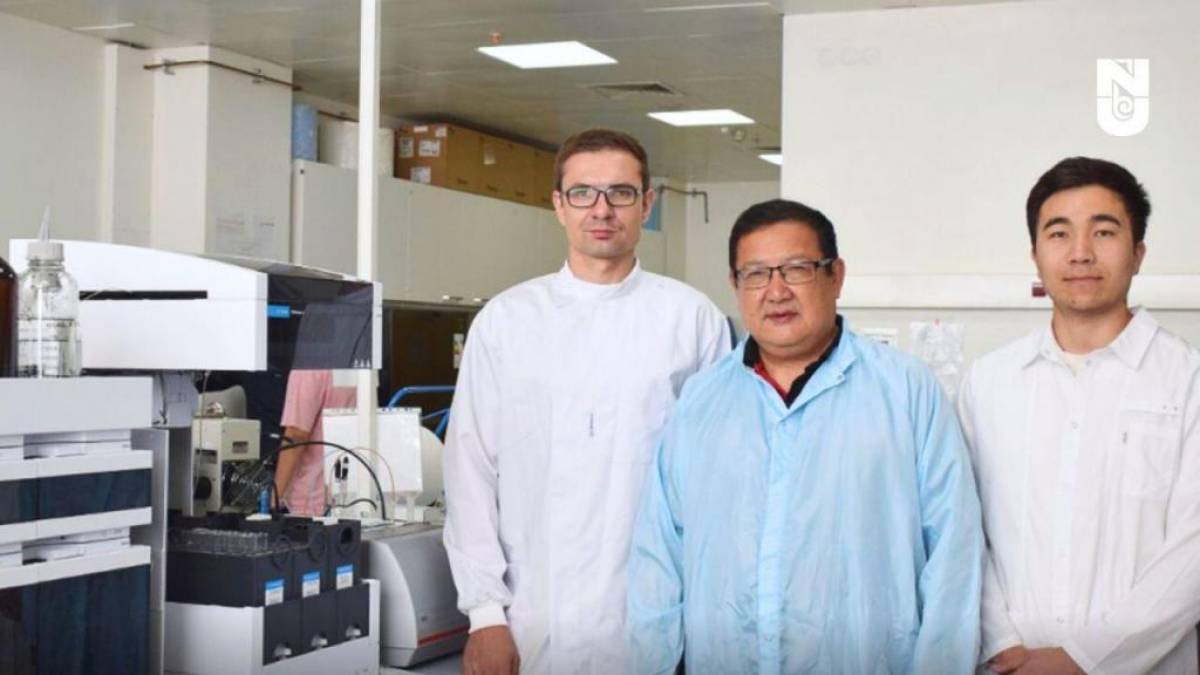
Another noteworthy point is that we prepared and published five monographs in the Kazakh language. We are doing everything possible to make Kazakh a language of science. If we ourselves do not love and promote our mother tongue, who else will need it?
My first five-year plan after returning to the ancestral homeland was to establish laboratories. I have accomplished this. Today, my second five-year plan is to move toward production. The state now needs tangible industrial products. Over five years, we must bring our scientific achievements into production.
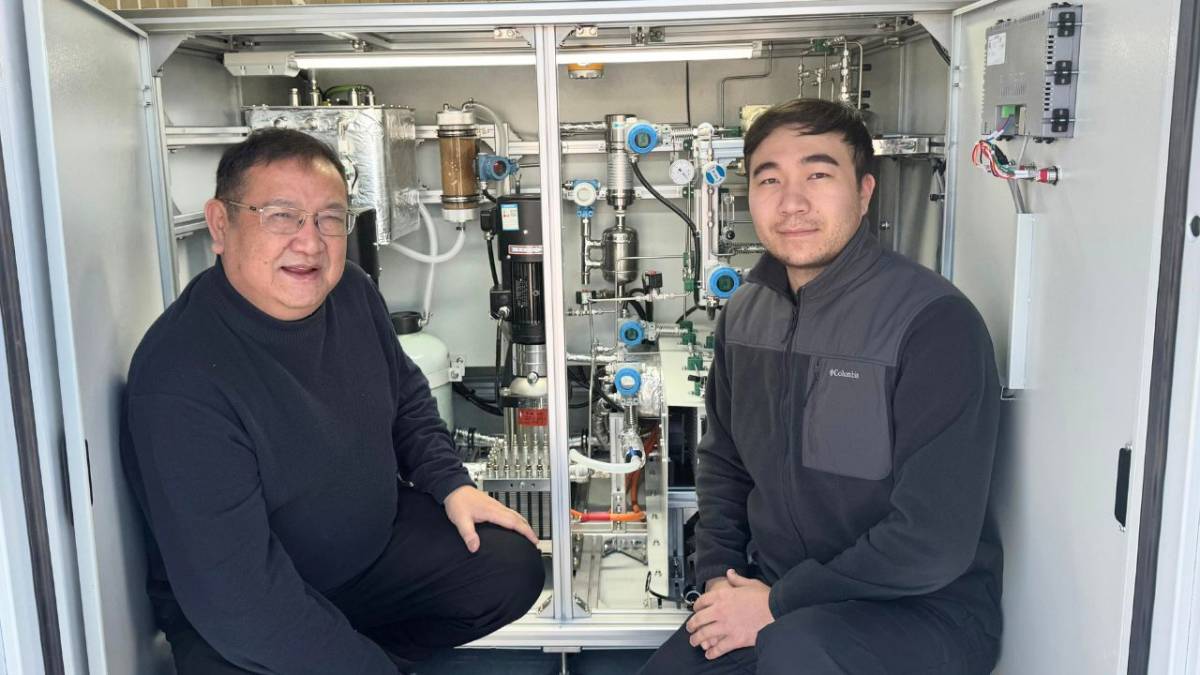
Three of my major projects will bring great benefits to the country. For the first time in Kazakhstan, we have developed a domestic technology capable of producing green hydrogen for real industrial application and created a small plant. This technology exists in the world, but it has not yet been implemented in our country. Today, this technology is used in oil refining to break down heavy hydrocarbons, in agriculture to produce ammonia and mineral fertilizers, and in metallurgy to extract metals through ore reduction. Considering that Kazakhstan has joined the Paris Agreement and aims to achieve decarbonization by 2060, this technology is regarded as one of the main tools for reducing dependence on coal and oil.
At present, there are no factories in our country that produce original domestic medicines. There are pharmaceutical plants, but they only add components to medicines developed abroad and release them as domestic products. We have now invented a technology for drug development that has no analogues in the world. We intend to change the operational system of current pharmaceutical plants. Just as the iPhone replaced Nokia, we have created an advanced technology that exists nowhere else. Using it, we have already developed two medicines and obtained patents. One is a blood pressure–lowering medicine made from rice husks and corn cores; the second is an effective treatment for kidney tumors.
Recently, Prime Minister Olzhas Bektenov and Ministers Sayasat Nurbek and Akmaral Alnazarova visited and showed strong interest in this project, expressing their support. We now plan to develop five more medicines, and later aim to produce sixteen more. Imagine if we strengthen our research and produce thirty different medicines — Kazakhstan could become a unique country like Israel, possessing exclusive drug-development technology. Accordingly, many companies would open, and many citizens would be provided with jobs.
Third, in our country there is a shortage of clean drinking water in agricultural areas. I am firmly determined to seriously take up this issue and turn it into production.
Over these six years since relocating to the country, I have never regretted my decision — on the contrary, I have rejoiced. I taught everything I knew and built a strong team in a short time. For three years now, I have been a member of the National Council on Science and Technology under the President, where we make strategic proposals regarding competition in science and technology. In addition, I am an expert of the Science Committee of the Ministry of Science, annually evaluating and reviewing scientists’ projects. Having returned to the ancestral homeland, I have not confined myself to my laboratory alone — I continue to contribute to the advancement of science beyond the university as well.
Now is the time for us to truly be with our country. Opportunities for those who want to come, produce, and develop are abundant. Many grants are being allocated to young scientists. In addition, more than 500 young researchers have received housing.
However, I wish the Government would develop measures to attract our strongest scientists from abroad. For example, how does the Chinese government attract its scientists scattered around the world? It developed a special scientific program for scientists working at the world’s leading universities, even Nobel Prize laureates. With a call like “Come and create something,” it eventually brought everyone back from America.
I wish our authorities would take similar measures to improve our scientific and technical base. If the Ministry of Science, the National Academy of Sciences, and the Otandastar Qory Foundation organize a special competition for Kazakh scientists in demand abroad, it is certain that many would turn their faces toward the homeland and show strong interest. At the recent Otandastar Qory forum, I shared many insights based on my own experience. I addressed them with the message: “Even though you live abroad, your appearance, origin, and language are Kazakh. Never abandon the idea that one day you will return to your historical homeland and stake your claim there.”
If they come, they would revitalize the work of many centers in our country. On the initiative of Sayasat Nurbek, many branches of foreign universities are opening in the country. Those institutions need professors. Now is precisely the time for scientists abroad to engage in this work and contribute to raising the scientific potential of the country.
Source: Turkystan.kz