






 Қазақша
 Русский

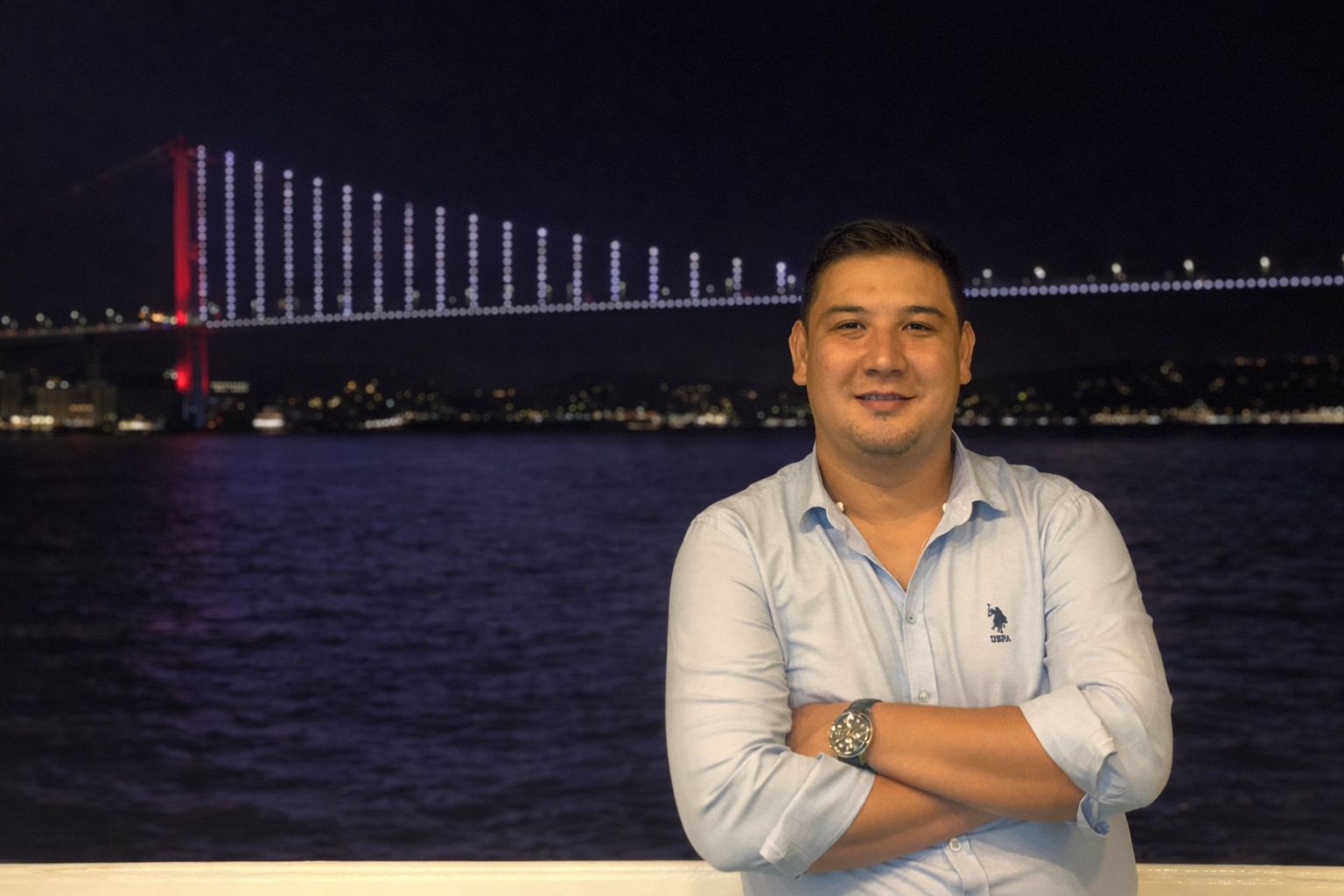
Born and raised in Turkey, Hüseyin Ertuğrul mastered the Kazakh language in just five months and has since made the sacred dombra his lifelong companion. Today, he promotes Kazakh art in Istanbul. With the support of NJSC Otandastar Qory, he teaches students and contributes to preserving the national identity of compatriots living abroad. We sat down with the artist for an interview.
— Could you please tell us a little about yourself?
— My name is Hüseyin Ertuğrul. I was born on November 1, 1993, in Istanbul. In 2012, I moved to Kazakhstan and enrolled at the Khoja Akhmet Yassawi International Kazakh-Turkish University in Turkistan. Prior to that, I did not speak Kazakh. I managed to become proficient in the language within just four to five months of arriving in the country.
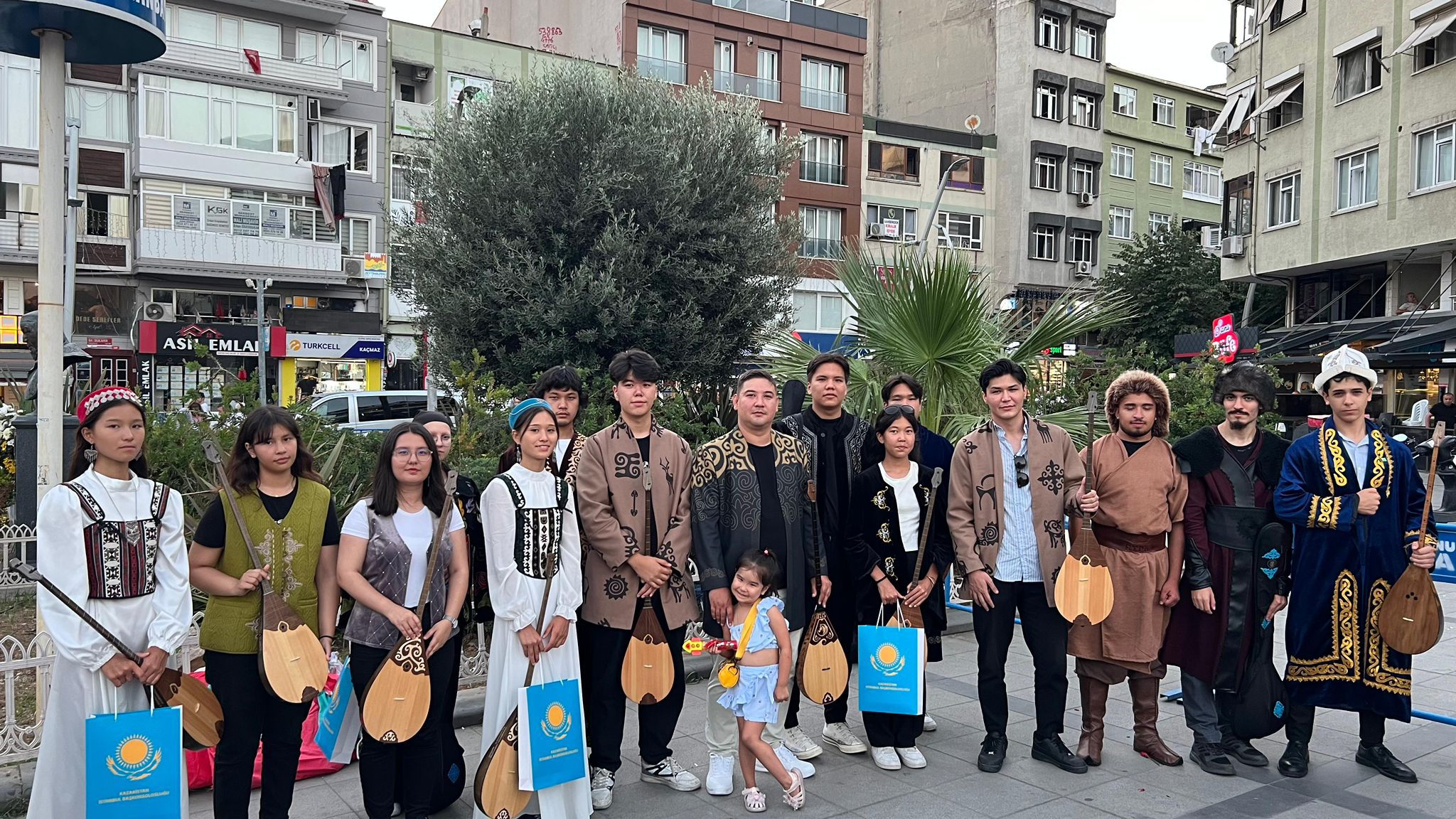
Once I mastered the language, I began performing songs in Kazakh and conducting betashar ceremonies accompanied by the dombra in Turkey. I have participated in numerous competitions with the dombra, earning several awards. I have been playing the instrument for 15–16 years now. Furthermore, we have organized dombra lessons in Turkey with the support of NJSC Otandastar Qory.
— Mr. Ertuğrul, you arrived in Turkistan in 2012 to pursue your studies. What were your first impressions of Kazakhstan?
— When I first arrived in Turkistan in 2012, I was immediately captivated by the region. From the moment I stepped onto this land, I felt as though I were among close friends and family rather than in a foreign country. It was here that my passion for the arts was truly awakened. I was deeply moved by the ancient mosques and mausoleums, the unique sense of serenity, the warmth of the people, and the sincere hospitality of the Kazakh dastarkhan. It was particularly heartening to witness that profound moral values, such as respect for elders and a nurturing attitude toward the younger generation, remain deeply integrated into daily life.
— You mastered the Kazakh language in just four to five months and achieved full fluency. What is the secret behind such a result?
— Mastering the Kazakh language was no small feat; however, the learning process itself proved to be both remarkable and engaging. I did not approach the language as a mere obligation, but rather with heartfelt affection and a deep-seated interest. The Kazakh language is exceptionally rich and possesses a profound spiritual depth. In my view, every Kazakh throughout the world should speak their native tongue and strive for its preservation. Language is far more than a tool for communication; it is a living reflection of our shared history and culture.
— You have been playing the dombra for 15–16 years. Why did you choose the Kazakh kara dombra over Turkish instruments?
— I still vividly remember the moment I first held a dombra. Since then, it has become more than just a musical instrument to me; it is a sacred symbol that reflects the soul of the nation. The saying, "A true Kazakh is not the person, but the dombra," carries profound meaning. The dombra is an instrument with a soul, capable of wordlessly conveying the destiny, joys, and sorrows of the Kazakh people. For instance, I am particularly fond of Kazangap’s kui “Kokil.” Its depth and emotional resonance never fail to move me.
— You perform the Betashar ceremony in Turkey. How is this tradition perceived by the Turkish public and the Kazakh diaspora?
— For the Turkish people, this is an entirely new and unique cultural phenomenon, which sparks a great deal of interest. For the Kazakh diaspora, it is an opportunity to reconnect with their roots and find spiritual warmth. In these moments, I feel as though I am a "golden bridge" connecting two nations.
— Which dombra competition has been the most significant for you?
— In 2015, I won second place in a traditional song and terme competition in Astana. However, for me, the greatest victory is not a specific award, but the moment I step onto the stage and reach the hearts of the audience through the dombra.
— You conduct dombra classes with the support of NJSC Otandastar Qory. What are the key features of your teaching methodology?
— My students include not only Kazakh children born in Turkey but also citizens of Turkey, Kyrgyzstan, and the Uyghur community. Their ages range from young children of 6–7 years old to adults up to 45. I do not limit myself to traditional methods alone. In my classes, I strive to awaken a genuine love for the instrument rather than focusing solely on technical proficiency. I share the history and legends associated with various kuis. Practical exercises, listening sessions, and ensemble playing further enhance the learning experience. Most importantly, I aim to create a supportive and encouraging atmosphere, free from apprehension. For me, this is not merely a job, but a spiritual mission.
— What is the significance of learning the dombra for children raised abroad?
— For a child growing up in a different cultural environment, the dombra serves as a precious heritage that reminds them of their identity. It plays a crucial role in shaping a child’s national consciousness. When a child holds a dombra, they begin to feel a sense of responsibility for preserving the legacy of their ancestors.
— You conduct dombra classes with the support of NJSC Otandastar Qory. What are the specific features of your teaching methodology?
— My students include not only Kazakh children born in Turkey but also citizens of Turkey, Kyrgyzstan, and the Uyghur community. Their ages range from young children of 6–7 years old to adults aged 45. I do not limit myself to traditional methods alone. In my classes, I strive to awaken a genuine love for the instrument rather than focusing solely on technical proficiency. I share the history of the kuis and the legends associated with them. Practical exercises, listening sessions, and ensemble playing further enhance the learning experience. Most importantly, I aim to create a supportive and welcoming atmosphere, free from apprehension. For me, this is not merely a job, but a spiritual mission.
— What is the significance of learning the dombra for children raised abroad?
— For a child growing up in a foreign environment, the dombra serves as a precious heritage that reminds them of their identity. It plays a crucial role in shaping a child’s national consciousness. When a child holds a dombra, they begin to feel a sense of responsibility for preserving the legacy of their ancestors.
— What role does the dombra play in the formation of national consciousness?
— The dombra is far more than a musical instrument; it is a powerful medium for raising a child in the spirit of their national culture. From the moment a child takes the dombra into their hands, they are introduced to the history, customs, and traditions of their ancestors. Through the kui, they gain a true sense of their identity.
— What is the significance of the dombra for children raised abroad?
— The dombra serves as a spiritual bridge that maintains a vital connection to one’s ancestral homeland. It helps a child preserve their language and cultural heritage even while living in a different environment.
— How important is parental support in this process?
— It is paramount. While a child learns from a mentor, it is the trust and encouragement of the parents that truly drives their progress and guides them forward.
— What are the similarities between Kazakh and Turkish music?
— They share common roots and a similar spirit. General shared characteristics are evident in many melodies and rhythms. The primary differences lie in the performance traditions and the specific technical qualities of the instruments.
— What interesting moments have you encountered while promoting Kazakh art?
— It is particularly striking when a Turkish audience hears the sound of the dombra and remarks with astonishment, "This instrument has a soul." In those moments, it becomes clear that art knows no borders.
— You are also a family man with two children. How do you integrate national upbringing into your home life?
— Yes, I started my family in 2018, and I now have a daughter and a son. The family is the primary school for a child. In our home, we speak the Kazakh language; my children are proficient in it and are growing up observing our customs and traditions. It is of great importance to me that they develop an interest in music and are introduced to the sounds of the dombra from early childhood.
— Do you have plans for future performances in Kazakhstan or any prospective collaborative projects?
— Certainly; I have numerous plans and aspirations in this regard. I aim to implement collaborative projects with Kazakh artists to highlight our shared spiritual foundations. Furthermore, my long-term vision includes organizing specialized dombra residency camps for Kazakh youth, providing them with an immersive environment to master the instrument.
— If you were to describe Kazakhstan in three words to someone who has never visited, what would they be?
— To describe Kazakhstan in three words: Vast Steppes. Deep History. Ancestral Heritage.
My message to the youth: Believe in yourselves. Respect your roots. Do not fear making mistakes. Language and art do more than just develop a person’s skills—they build true strength of character.
Interview prepared by: Janel Karzhaubay