






 Қазақша
 Русский

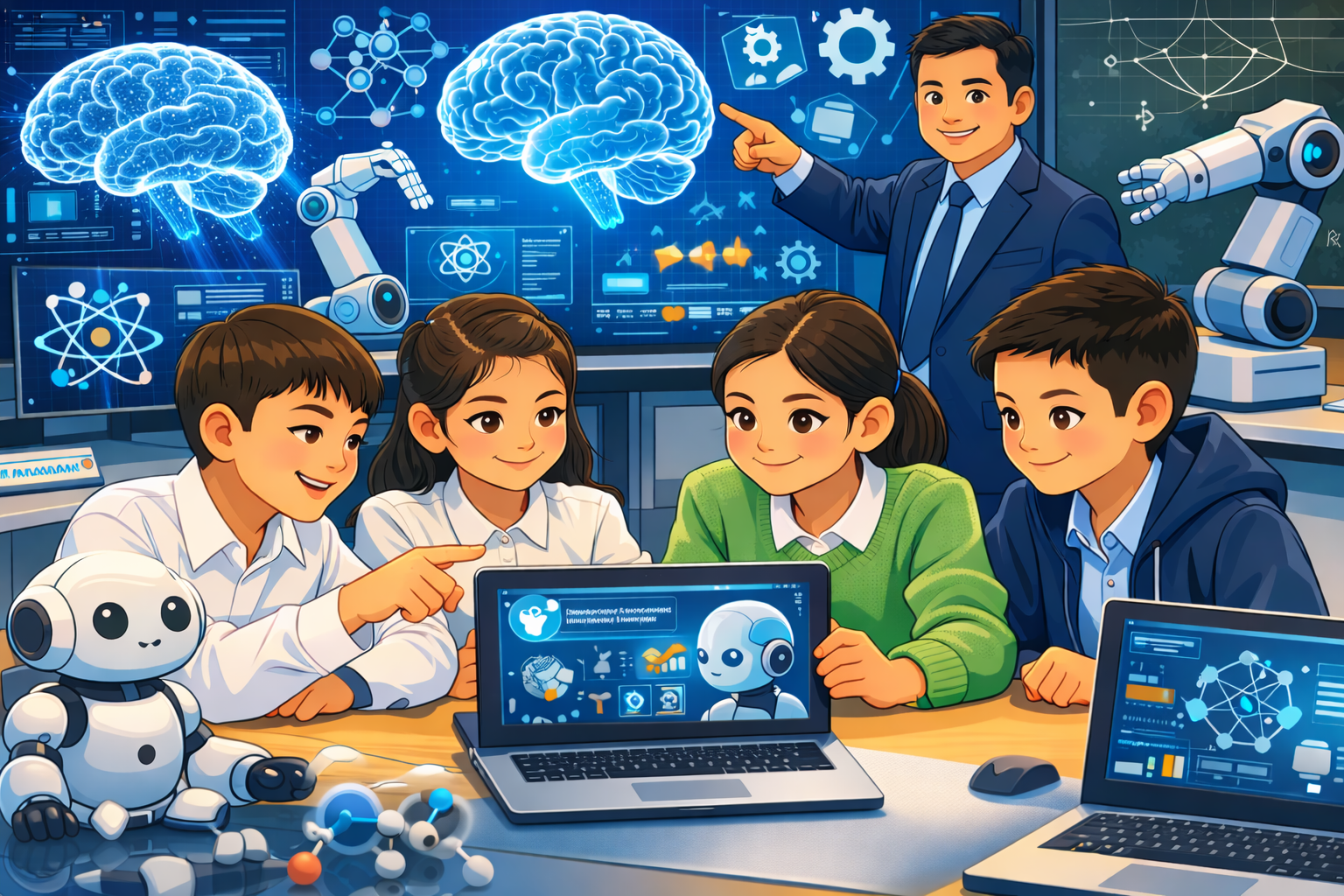
Following the instruction of the Head of State, Kassym-Jomart Tokayev, who declared 2026 the Year of Digitalisation and Artificial Intelligence, the Ministry of Education of the Republic of Kazakhstan, in cooperation with the Massachusetts Institute of Technology, is implementing the “Day of AI Qazaqstan” initiative within the system of general secondary education.
The programme aims to ensure that every school student develops an understanding of how artificial intelligence works, its capabilities, risks and the responsibilities associated with its use. At the same time, it introduces a new format for teaching core subjects—including mathematics, physics, chemistry, biology, natural sciences and informatics—through the use of AI-based tools. This approach is expected to strengthen the practical orientation of learning, expand opportunities for visualisation, and improve the quality of problem-solving and project-based activities. The initiative is being developed with consideration for national values alongside modern artificial intelligence technologies.
The implementation is planned in two stages. The first stage focuses on developing basic AI literacy among students and teachers. The curriculum covers fundamental concepts, examples of AI applications and issues of ethics. Teacher training will follow a cascade model, whereby the Day of AI team will train leading educators who will subsequently obtain certification from the Massachusetts Institute of Technology and will then disseminate the knowledge among their colleagues. To adapt educational resources to Kazakhstan’s context and ensure nationwide scaling, a local team has been established, comprising staff from the Y. Altynsarin National Academy of Education and invited experts.
The second stage will involve the development and launch of a comprehensive interdisciplinary AI curriculum for all grades, integrated across subject areas. This work is being carried out jointly by Kazakhstani educators and the MIT team of MIT RAISE, with pilot implementation and further refinement based on feedback. For each academic year, a set of 8–10 AI literacy lessons is planned, designed to be delivered within a single academic term.
Artificial intelligence classes will be incorporated into subjects related to digital and computational disciplines. In developing the curriculum, international approaches to AI education proposed by UNESCO and the Organisation for Economic Co-operation and Development are being taken into account. Full integration of the course into the national school curriculum is planned by August 2028.
At the same time, the necessary regulatory and methodological framework is being prepared. Educational programmes and teaching materials will be updated, knowledge assessment tools will be developed, and recommendations for schools will be prepared. The initiative also предусматривает professional development for teachers and the establishment of a monitoring system to ensure the quality of the programme’s implementation.