






 Қазақша
 Русский

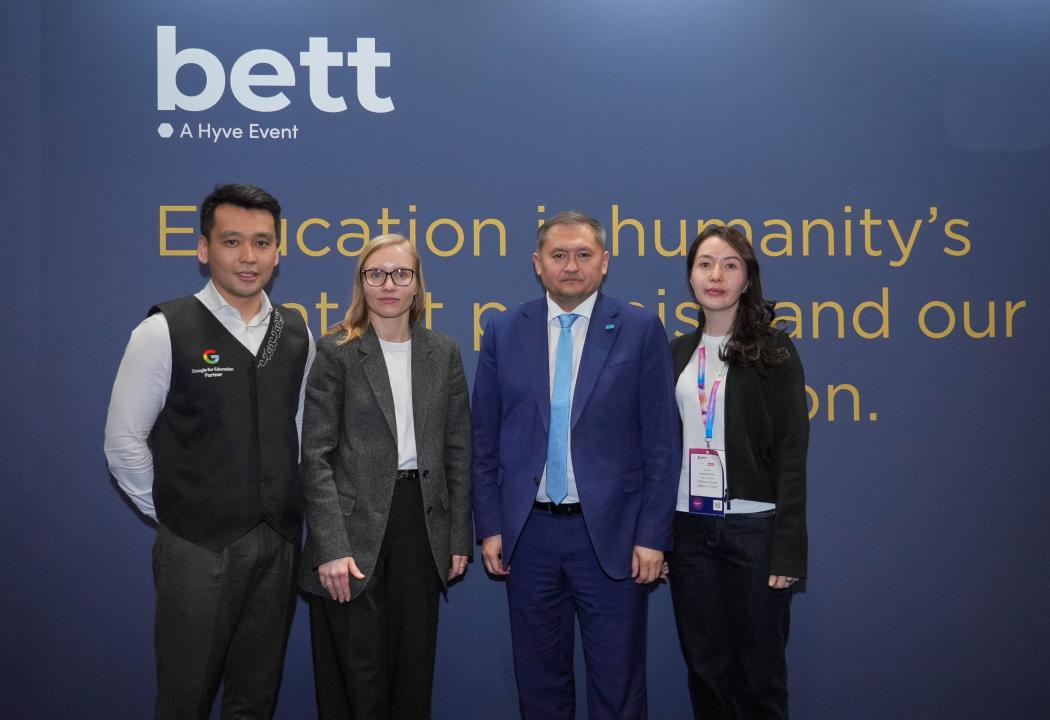
The Minister of Science and Higher Education of the Republic of Kazakhstan, Sayasat Nurbek, participated in the international educational technology exhibition, the British Education Training and Technology Show (BETT Show 2026). This event stands as one of the world's premier platforms dedicated to the future of education, digital transformation, and the pivotal role of artificial intelligence in the learning process.
The Kazakhstan National Pavilion was featured at the exhibition for the second time, showcasing the achievements of the national education system and its innovative development. Nine Kazakhstani universities and organizations participated in the exposition, presenting their academic programs, scientific research, and technological solutions in the fields of digitalization, artificial intelligence, and educational technology. The participation was organized with the support of the Ministry of Science and Higher Education of the Republic of Kazakhstan, reflecting the implementation of state policy in high technologies and the strategic course set by the President, who declared 2026 as the "Year of Digitalization and Artificial Intelligence."
During the exhibition, strategic meetings were held with representatives of leading international technology corporations, including Lenovo, Intel, Microsoft, and Google. The negotiations focused on the prospects for integrating modern digital solutions, AI technologies, and innovative educational platforms into Kazakhstan's higher and postgraduate education systems. Particular attention was paid to the modernization of educational infrastructure and the launch of joint projects involving Kazakhstani universities.
A significant strategic outcome of the visit was Kazakhstan's inclusion in the first international cohort of the OpenAI Edu for Countries initiative. Kazakhstan joined this program alongside Estonia, Singapore, the UAE, Jordan, and Greece, becoming the first country in Central Asia to transition from conceptual discussions of artificial intelligence to its systemic implementation in the educational process.
A separate segment of the visit was dedicated to the development of university partnerships. The delegation, led by the Minister, visited Coventry University, where a model of close integration between education and the real economy and industry was presented. Engineering schools, modern laboratories, 3D immersive learning formats, and a practice-oriented approach demonstrate a system where students gain a clear understanding of their future professional environment and technological processes while still in training.
In the United Kingdom, meetings were also held with Kazakhstani students studying at leading institutions, including University College London. During the meeting, the Minister delivered a lecture titled "Kazakhstan: The Territory of Academic Knowledge," presenting a strategic vision for the development of higher education and science in Kazakhstan, priorities for international academic cooperation, and key initiatives in digitalization and AI integration in education.
A meaningful direction of the visit involved the advancement of scientific and innovative cooperation. The Kazakhstani delegation visited AstraZeneca's Discovery Centre, one of the world's largest research and innovation hubs. Following the meeting, a Memorandum of Understanding was signed, opening new opportunities for practical collaboration in science, research, and innovation. The document provides for joint projects using real-world clinical data, the development of early diagnosis programs, the expansion of preventive initiatives for non-communicable diseases among youth, and cooperation in sustainable development and green technologies.
Furthermore, working meetings were held with representatives of Queen’s University Belfast and Heriot-Watt University to discuss prospects for expanding academic cooperation, implementing joint educational programs, developing scientific research, and launching new formats for university partnerships.
Overall, the participation in BETT Show 2026 and the accompanying meetings confirmed Kazakhstan's consistent implementation of its strategic course toward developing a competitive system of higher education and science. This system is founded on the adoption of digital technologies, artificial intelligence, and the expansion of international academic and scientific-innovative cooperation. The agreements and results achieved provide a solid foundation for the realization of practice-oriented projects and the further integration of Kazakhstani universities into the global educational and research space.